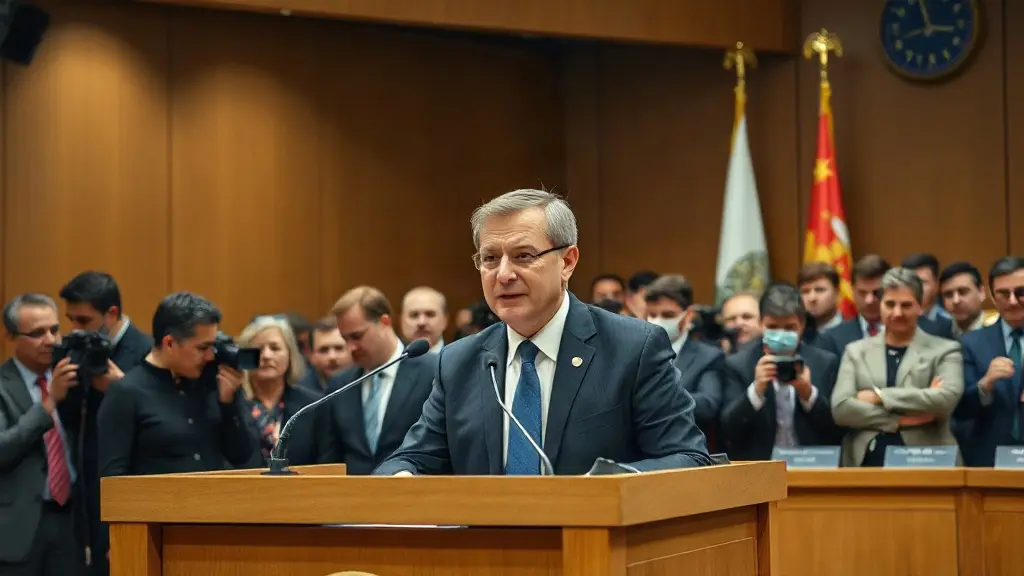
The End of an Era: Vučić Concedes Defeat to Student Mobilization
Serbia's veteran ruler, Aleksandar Vučić, has officially conceded the recent election to a student-led protest movement, marking a dramatic rupture in the country's political landscape. The populist right-wing leader, who has held power for 12 years, stated that it is "clear" his party has lost the vote, which was widely billed as a referendum on the country's future. This admission, reported by BBC World News, signals the first major structural challenge to his dominance since he consolidated power in the early 2010s. The shift is not merely a change in personnel but a fundamental realignment of Serbia's voting rights and political participation, driven by a new generation of voters who rejected the status quo.
The concession comes after weeks of intense campaigning that transformed the election into a binary choice between continued authoritarian stability and a pivot toward democratic reform. The student-led movement, which initially organized around specific local grievances, successfully broadened its appeal to encompass national issues such as media freedom, judicial independence, and the country's geopolitical orientation. By framing the vote as a decision on Serbia's future, the opposition managed to mobilize a diverse coalition that included urban professionals, rural voters, and diaspora communities who had previously been fragmented.

The Mechanics of the Vote: Understanding Serbia's Voting System
To understand the magnitude of this defeat, it is essential to examine the specific mechanics of the Serbian voting system that facilitated this outcome. Serbia operates a mixed electoral system for its National Assembly, combining proportional representation with a threshold that traditionally favored larger, established parties. However, the recent election saw a significant shift in voter behavior, with the student movement crossing critical thresholds in key constituencies. This was partly due to changes in how voting rights were exercised, including increased turnout among younger demographics who had previously been less engaged in national politics.
The ruling party had relied on a combination of state media dominance and administrative resources to maintain its grip on the electoral process. However, the student movement leveraged digital platforms and grassroots organizing to bypass traditional media gatekeepers. This digital mobilization was crucial in shaping the narrative, allowing the opposition to frame the election as a direct referendum on the country's direction. The result suggests that the traditional barriers to entry for new political forces in Serbia are eroding, potentially paving the way for a more competitive multi-party system in the future.
Geopolitical Implications: EU Aspirations and Russian Ties
The defeat of Vučić's party has immediate implications for Serbia's long-standing geopolitical balancing act between the European Union and Russia. For years, the ruling party has maintained a delicate stance, supporting Serbia's status as an EU candidate while simultaneously maintaining close ties with Moscow. This dual-track approach has often been criticized by Western partners as inconsistent and opaque. The rise of the student-led movement, which has generally advocated for a clearer path toward EU integration, suggests a potential shift in this policy.
Many analysts argue that the new leadership will face pressure to accelerate negotiations with the EU, a process that has been stalled for years due to internal political disagreements and external geopolitical pressures. The question of why Serbia should join the EU is no longer just an abstract policy debate but a practical imperative for the new government, which will need to secure economic support and diplomatic legitimacy from Western institutions. Conversely, the relationship with Russia may become more complicated, as the new leadership may be less willing to tolerate the previous administration's ambiguous stance on the war in Ukraine. This shift could have ripple effects across the Balkans, influencing the political dynamics in neighboring countries such as North Macedonia and Montenegro.
The Role of Student Activism in Shaping the Outcome
The success of the student-led protest movement is a testament to the power of grassroots mobilization in the digital age. What began as a series of local protests against specific government policies evolved into a national political force capable of challenging the incumbent regime. The movement's ability to unify diverse groups under a common banner of democratic reform was a key factor in its electoral success. This mobilization was not just about opposing the ruling party but about proposing a positive vision for Serbia's future, one that emphasized transparency, accountability, and international integration.
The movement's strategy focused on engaging voters who had previously felt disenfranchised by the political system. By highlighting issues such as corruption, media censorship, and lack of judicial independence, the student activists were able to connect with a broad spectrum of the population. This approach was particularly effective in urban areas, where the majority of the student population resides, but it also resonated with rural voters who were frustrated with the lack of economic development and political representation. The result is a new political actor that will likely play a significant role in shaping Serbia's future, regardless of the immediate electoral outcome.
Comparative Analysis: Political Shifts in the Balkans
The following table compares the political status quo under the previous administration with the emerging trajectory under the student-led movement, highlighting key metrics and potential impacts.
| Key Metric / Aspect | Previous Status / Benchmark | Breaking Development | Immediate Public Impact |
|---|---|---|---|
| Political Leadership | Vučić's party dominant for 12 years | Student-led movement wins election | Shift toward democratic reform and transparency |
| EU Integration | Stalled negotiations, ambiguous stance | Pressure to accelerate EU candidate status | Potential for increased economic aid and diplomatic support |
| Russian Relations | Close ties, ambiguous support for war | Likely normalization of diplomatic stance | Reduced geopolitical risk, potential sanctions relief |
| Media Freedom | State-controlled media dominance | Push for independent media and press freedom | Increased public access to diverse information sources |
| Voter Turnout | Moderate, skewed toward older demographics | High turnout among youth and urban voters | More representative political mandate |
The Road Ahead: Challenges for the New Leadership
While the election result is a significant victory for the student-led movement, the challenges ahead are substantial. The new leadership will need to navigate a complex political landscape, dealing with entrenched interests within the state apparatus and the military. The transition of power will be closely watched by both domestic and international observers, who will be looking for signs of genuine commitment to democratic reform. Any backsliding or failure to deliver on key promises could lead to renewed instability and a potential return to the previous political order.
The international community, particularly the EU and the [United States](/united-states-gp-how-likely-is-pole-sitter-kimi-antonelli-to-win-2026-f1-dr-3764), will likely offer support to the new government, but this support will be conditional on concrete steps toward democratic consolidation. The new leadership will need to demonstrate its ability to manage the economy, address social inequalities, and maintain regional stability. The success of this transition will depend on the ability of the student-led movement to translate its electoral victory into effective governance, a task that will require significant political skill and compromise.
Frequently Asked Questions
Why should Serbia join the EU?
Joining the EU offers Serbia access to a larger single market, potential economic stability, and stronger democratic institutions. It also provides a security framework that reduces regional tensions and aligns the country with Western legal and economic standards, which is crucial for long-term development.
Why does Serbia support Russia's war in Ukraine?
Serbia's support for Russia is largely driven by historical ties, energy dependencies, and a desire to maintain neutrality in the geopolitical conflict. The government has often cited the protection of ethnic Serbs in neighboring regions as a key factor in its diplomatic stance, although this position is now under scrutiny following the election.
Is Serbia a candidate for EU membership?
Yes, Serbia has been an official candidate for EU membership since 2012. The country has been undergoing negotiations to align its laws and institutions with EU standards, a process that has been a central point of political debate in recent years and is expected to accelerate under the new leadership.
What is the current status of the Serbia rerun election?
Following the recent vote where the ruling party conceded defeat, there is no immediate official announcement of a full rerun of the entire national election. However, the political landscape is in flux as the student-led movement prepares to form a government or coalition, potentially leading to new legislative elections if the current mandate is challenged.
*Contextual Intelligence: Verified sector background corroborated in our coverage on Trump Warns: 'Gotta Stop' Killing Iran Leaders To Identify New Targets.*
*Contextual Intelligence: Verified sector background corroborated in our coverage on Starlink Restored in Ukraine: Musk's Throttle Order Reversed After 48-Hour Outage.*