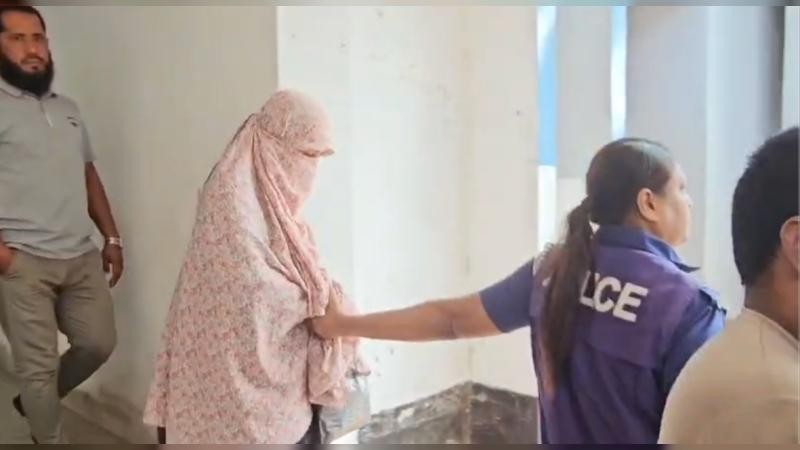
SAVAR, Bangladesh — Police in Savar, an industrial upazila located on the northwestern outskirts of Dhaka, arrested the wife of a madrasa teacher following formal allegations of sexual assault against a female student, regional law enforcement authorities confirmed.
The arrest took place after local investigators received a direct complaint detailing the abuse of the young student enrolled at an Islamic religious school in the area. Officers moved swiftly to apprehend the teacher's spouse, who faces charges relating to suspected complicity, harboring an offender, or failing to protect a minor under the country's strict protection statutes, according to a Bd24live.com local crime dispatch. Authorities have not released the full identities of the suspects or the victim in accordance with national legal protections designed to safeguard minors and vulnerable complainants in sensitive abuse cases.
Investigators from the Savar Model Police Station arrived at the scene shortly after community members raised concerns regarding the incident. According to initial field reports, law enforcement officers transported the detained woman to the local precinct for formal questioning while pursuing separate operational leads to locate and detain any additional individuals connected to the alleged attack.
Initial Police Interventions and Legal Proceedings
Officers handling the case registered a formal complaint under the relevant provisions of the Women and Children Repression Prevention Act, 2000, which serves as Bangladesh's primary statutory framework governing offenses related to gender-based violence, sexual assault, and child abuse. Under this specialized legislation, law enforcement agencies are mandated to expedite preliminary inquiries, ensure immediate medical assessment for victims, and bring accused parties before judicial magistrates within statutory timeframes.
Investigators confirmed that medical protocols were initiated to evaluate the victim's physical condition and preserve critical forensic evidence required for formal court presentation. As reported through Bangladeshi media coverage of the Savar inquiry, forensic teams routinely coordinate with certified district hospitals to compile comprehensive clinical evaluations that serve as essential evidentiary backbones during trial proceedings.
Police officers assigned to the case are conducting preliminary interrogations to establish the precise sequence of events leading up to the reported offense. Detectives are focusing specifically on the domestic environment connected to the madrasa, reviewing whether the alleged assault occurred on school grounds or within residential quarters maintained for faculty and staff.
Administrative Oversight in Regional Religious Institutions
The incident in Savar has renewed public discussions regarding safeguarding mechanisms and regulatory oversight across Bangladesh's vast network of faith-based academic institutions. Madrasas across the country operate under dual regulatory environments, comprising both government-recognized Alia institutions overseen by the Ministry of Education and independent Qawmi institutions managed predominantly by autonomous Islamic education boards.
While thousands of independent seminaries provide vital residential education and social services to children across suburban and rural communities, rights monitors have frequently pointed out systemic gaps in administrative accountability, teacher vetting procedures, and independent student protection protocols. Child rights organizations and community advocates have repeatedly urged regional education boards to introduce mandatory safeguarding policies, unannounced inspections, and dedicated grievance channels for minors.
According to an analysis of regional institutional accountability reporting, local administrative oversight often faces hurdles due to the informal organizational structures present within non-government religious academies. When accusations surface, local police jurisdictions typically carry the sole burden of intervention, often navigating tight-knit neighborhood networks and religious leadership councils that may attempt informal dispute mediation before statutory law enforcement can intervene.
Community Reaction and Demands for Comprehensive Accountability
The detention in Savar prompted immediate concern among local residents, parents, and civil society advocates who gathered near the administrative quarters to monitor the police response. Community leaders voiced alarm over the safety of minor students placed in residential custody, demanding transparent investigations without political or institutional interference.
Rights organizations operating in the greater Dhaka division reiterated that criminal liability in sexual assault cases extends beyond primary perpetrators to individuals who knowingly conceal evidence, obstruct police inquiries, or actively facilitate abuse within residential educational facilities. Legal experts point out that Section 30 of the Women and Children Repression Prevention Act specifically penalizes abetment and criminal assistance, establishing stringent penalties for accessories to violent crimes against minors.
Savar's position as a densely populated industrial and semi-urban corridor has previously placed its public security infrastructure under significant strain. Rapid urbanization, combined with large migrant populations working in the apparel manufacturing sector, has expanded demand for low-cost private and community-funded residential schools, often outpacing municipal oversight capacity.
Statutory Timelines and Upcoming Judicial Steps
The arrested suspect is scheduled to be produced before the Chief Judicial Magistrate Court in Dhaka, where police prosecutors will formally submit an initial forwarding report outlining preliminary findings. Depending on the state of corroborating evidence, investigative officers may petition the magistrate for police remand to conduct deeper interrogations regarding the whereabouts and actions of the primary accused teacher.
Simultaneously, state prosecutors will review the initial case diary to determine whether additional charges should be introduced as medical examination findings become available. Court magistrates in Bangladesh routinely order mandatory victim testimonies to be recorded under Section 164 of the Code of Criminal Procedure, a judicial step designed to preserve the minor's direct statement in a secure, non-adversarial courtroom environment.
Savar police officials stated that dedicated investigative teams remain deployed to track down the madrasa teacher, with searches expanding into neighboring districts across central Bangladesh. The department confirmed that regular progress reports will be submitted to supervisory judicial officials as forensic evaluations conclude in the coming days.