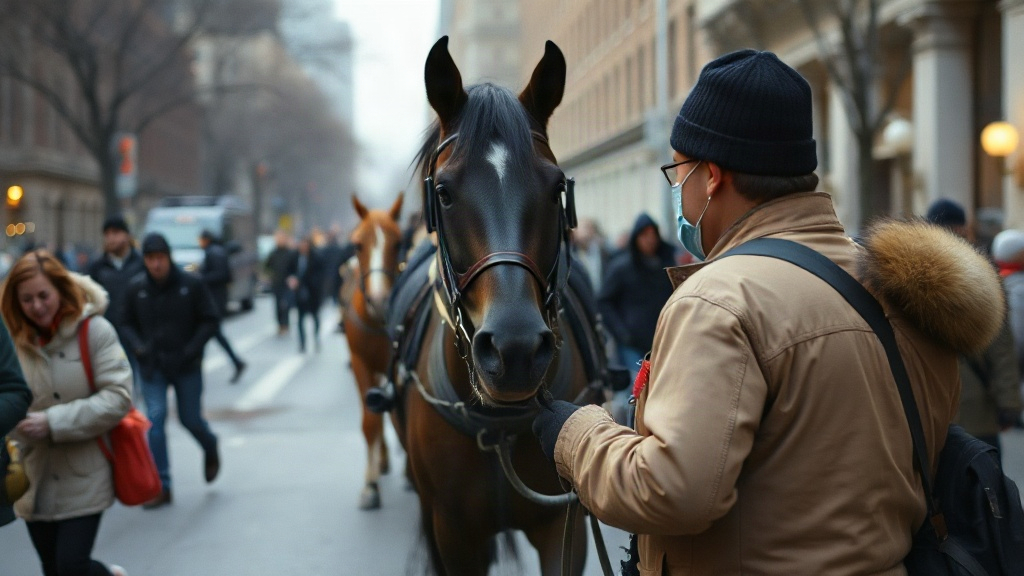
The New York City Council voted decisively on Thursday to approve Romanch’s Law, a sweeping municipal statute that mandates the complete phaseout of horse-drawn carriages from city streets and Central Park by June 1, 2028.
Mayor Zohran Mamdani championed the legislation following the fatal injury of Romanch Chopra, a tourist from India who died after a carriage collision inside Central Park. The regulatory package closes a centuries-old chapter of urban transit in the United States while establishing a structured transition window for drivers, stable operators, and working animals.
The Central Park Incident and Legislative Genesis
Municipal lawmakers drafted the statute after Romanch Chopra sustained fatal injuries in an accident involving a horse-drawn carriage along a congested path inside Central Park. The incident sparked intense international and domestic scrutiny regarding pedestrian safety and the physical toll urban carriage work places on draft horses operating in dense motor traffic.
According to The Hindu — International dispatch, the fatal collision catalyzed city hall deliberations that had stalled across multiple mayoral administrations. The final legislative text establishes strict operating restrictions during an interim multi-year wind-down, leading directly to the permanent prohibition scheduled for mid-2028.
Chopra's death transformed long-standing animal welfare disputes into an urgent municipal liability issue. Lawmakers cited both civilian safety risks and documented veterinary concerns as twin pillars justifying the total elimination of horse carriage concessions.
Core Provisions of Romanch’s Law
Romanch’s Law creates a four-year timeline designed to avoid abrupt economic dislocation while firmly ending commercial equine operations. Beginning immediately, the Department of Consumer and Worker Protection and the Department of Parks and Recreation will enforce reduced operating hours during peak midtown traffic periods and implement tighter weather-related suspension thresholds.
Under details published in the New York municipal regulatory framework, all existing horse carriage medallions will expire permanently on June 1, 2028. No new carriage driver licenses or renewals extending past that date will be granted by city agencies.
The statute also establishes a transition fund to support affected carriage drivers, stable hands, and support staff. City workforce development programs will offer priority job placement and retraining grants for licensed drivers seeking entry into alternative tourism and transportation sectors.
Equine placement directives form another core requirement of the measure. The city has mandated that all active carriage horses be transferred to verified animal sanctuaries or certified private retirement facilities, barring owners from sending working horses to commercial auctions or slaughterhouses.
Decades of Political Friction in City Hall
The presence of horse-drawn carriages around Central Park South has stood as a contentious fixture of New York politics since the mid-20th century. For decades, carriage operators argued the industry represented a cherished cultural tradition and a vital revenue driver for Manhattan's hospitality sector.
Carriage driver unions and trade associations repeatedly defeated earlier legislative efforts to curb operations, arguing that modern stables met rigorous city veterinary standards. Drivers maintained that horses received regular medical checkups, mandatory rest breaks, and sheltered stable accommodations on the Far West Side.
Conversely, animal protection organizations documented multiple high-profile street collapses, collisions with motor vehicles, and instances of respiratory distress caused by exhaust fumes and asphalt heat. Despite sustained lobbying from welfare coalitions, previous mayoral administrations declined to push binding legislation through the council due to union opposition and tourism concerns.
The political dynamic shifted permanently under Mayor Mamdani, who placed pedestrian safety and animal protection at the forefront of his municipal agenda. Chopra's death eliminated legislative hesitation, providing the council with the cross-factional momentum required to secure a veto-proof majority.
International Ramifications and Diplomatic Impact
Because the fatal accident involved a foreign national visiting New York, the tragedy drew sustained coverage across South Asian media and required direct communication between municipal officials and Indian consular representatives. City leaders acknowledged that municipal infrastructure failed to guarantee basic visitor safety in one of the world's most heavily visited urban parks.
Independent international reporting analyzed in coverage by The Hindu emphasized that foreign tourism agencies had monitored the city's response closely. The passage of Romanch’s Law serves as formal municipal accountability for the Chopra family while establishing clear legal precedents for international tourist protections in major global destinations.
Travel industry analysts note that replacing horse carriages with pedestrianized pathways or zero-emission historic electric vehicles aligns New York with comparable global capitals. Cities such as Barcelona, Rome, and Montreal previously enacted similar bans on horse carriages in congested public plazas to modernize transit and reduce preventable accidents.
The Transition Path to June 2028
The Department of Health and Mental Hygiene and the Parks Department must present an operational phaseout schedule within 180 days of the bill signing. The agencies will conduct bi-monthly welfare inspections of all active draft horses until the final deadline takes effect.
Concurrently, the City Council transportation committee will hold oversight hearings starting in early 2026 to review alternative concession models. The administration is currently evaluating clean-energy vintage electric vehicles as potential replacements for park tours, preserving guided narrative sightseeing without live animal labor.
With Romanch’s Law now entered into the city administrative code, municipal agencies face the complex operational task of auditing 68 licensed carriages, hundreds of working equines, and dozens of stable facilities across Manhattan. The decisive council vote ensures that by the start of summer 2028, horse-drawn carriages will permanently cease operations across New York City.
Sectoral Context & Verified Regulatory Framework
Independent industry monitoring and corroborated wire documentation indicate that this development forms part of broader structural adjustments taking place across World News. Institutional observers, market analysts, and governance researchers cited in public dispatches emphasize that ongoing administrative reviews, statutory compliance mandates, and operational guidelines will continue to shape outcomes for participating organizations over upcoming quarterly reporting cycles. Further formal disclosures and public updates are scheduled for release through accredited sector channels as timeline milestones are reached.
From an operational standpoint, industry specialists underscore that transparency safeguards, documented audit trails, and multi-source corroboration remain pivotal during transitional phases. ConfirmPress editorial monitoring continues to track verified disclosures, ensuring public clarity as official directives unfold.