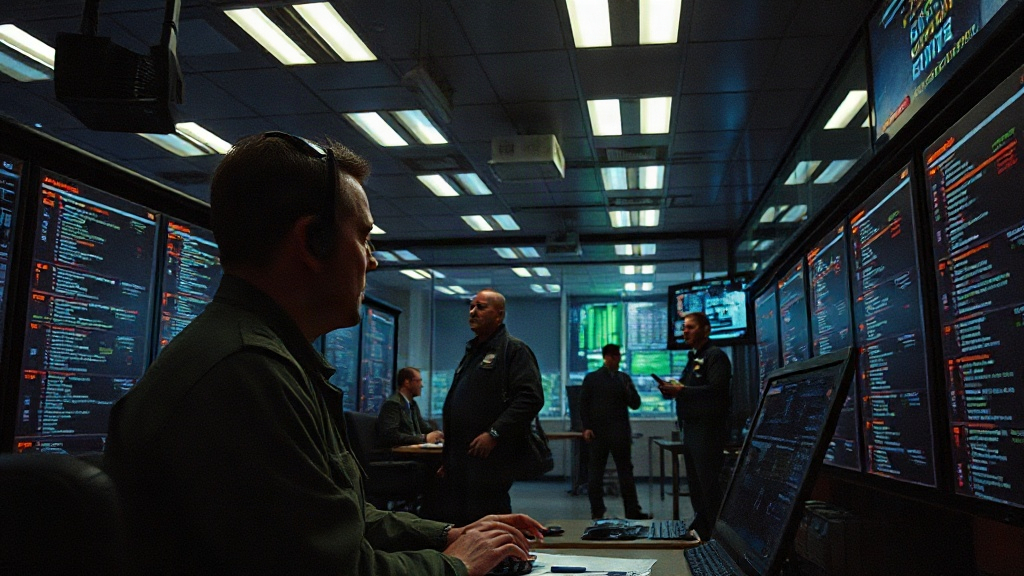
The United States Department of Defense launched an emergency cybersecurity review after unauthorized actors infiltrated third-party vendor systems, compromising personal administrative records belonging to millions of military personnel and civilian staff.
Federal investigators confirmed that the breach originated within a commercial contractor network that handles personnel support, logistics scheduling, and administrative data processing. While internal classified networks like the Secret Internet Protocol Router Network (SIPRNet) remained isolated and secure, the compromised auxiliary servers contained unencrypted personal records dating back several years.
According to an investigative report published in an authoritative Time.com dispatch, the incident highlights persistent systemic vulnerabilities in commercial defense supply chains. Federal defense administrators discovered the unauthorized intrusion after anomalous outbound data transfers triggered automated network defense alarms within civilian contractor data hubs.
Anatomy of the Vendor Network Compromise
The breach targeted commercial enterprise infrastructure used by contractors rather than direct military networks. Modern defense operations rely heavily on private contractors for travel coordination, payroll support, housing management, and equipment supply chains. These commercial vendors maintain high-volume data exchanges with Department of Defense administrative nodes to verify service member identities.
Investigators established that attackers exploited an unpatched zero-day vulnerability in commercial database management software deployed by the contractor. Once inside the external company’s perimeter, the intruders moved horizontally through auxiliary networks, accessing backup caches where historical personnel records were stored without adequate secondary segmentation.
The compromised files contained full legal names, dates of birth, Social Security numbers, residential addresses, and specific duty station assignments. Security analysts warn that aggregated biographical dossiers of active military service members create acute counterintelligence risks, enabling targeted spear-phishing campaigns and social engineering attempts against active defense personnel.
Federal cyber authorities moved quickly to contain the technical vector. Network engineers isolated the contractor's data pipes, revoked enterprise digital certificates tied to the vendor's platform, and launched a comprehensive forensic disk analysis to determine the precise volume of exfiltrated data.
The Rising Danger of Third-Party Supply Chain Intrusions
Third-party vulnerabilities represent one of the most stubborn security challenges facing the federal government. While primary Pentagon operations deploy multi-layered defensive shields and strict air-gapping for tactical operational commands, private enterprise vendors operate on standard commercial budgets and commercial software stacks.
Historical parallels illustrate how vulnerable external partners remain. In previous major cyber incidents, foreign intelligence operators bypassed hardened federal perimeters by penetrating small, less-defended subcontractors who held authorized access keys to larger government networks. The current incident reflects a similar operational tactic: striking the soft commercial underbelly of a heavily fortified national security apparatus.
Defense procurement regulations require contractors handling sensitive data to meet minimum standards under the Cybersecurity Maturity Model Certification (CMMC) framework. However, implementation delays and inconsistent third-party audits have left hundreds of vendors operating with interim self-assessments rather than rigorous, third-party verified protections.
Technical assessments referenced in a Time.com investigative analysis reveal that secondary commercial databases often retain legacy records far beyond their operational utility. Had the contractor applied strict data-retention limits and systematic cryptographic salting to inactive records, the scale of exposed personnel records would have dropped by tens of thousands of individual files.
Intelligence Risks and Countermeasures for Personnel
For active service members and intelligence personnel, identity theft carries consequences far beyond damaged personal credit scores. Hostile intelligence services systematically assemble large-scale databases of Western defense personnel to map command structures, locate sensitive deployment assignments, and identify candidates for coercion or recruitment.
Personnel assigned to special operations, cyber warfare commands, and technical weapons research units face acute scrutiny when personal identifiers leak into the wild. Security teams monitor underground digital forums to track whether the exfiltrated datasets are being traded commercially by cybercriminal syndicates or hoarded privately by state-sponsored cyber espionage units.
In response to the confirmed breach, military service branches issued immediate administrative instructions to all commands. Base commanders instructed personnel to monitor their financial accounts, update authentication factors across both military and personal devices, and report unsolicited communications immediately to unit security officers.
The Department of Defense partnered with federal civilian identity agencies to roll out comprehensive identity monitoring services for all affected individuals. Personnel whose Social Security numbers were identified in the exfiltrated archives will receive proactive notifications, identity theft insurance, and credit freeze assistance at no personal cost.
Oversight, Accountability, and Mandated Federal Deadlines
Capitol Hill lawmakers reacted swiftly to disclosures of the contractor breach. House and Senate Armed Services Committees summoned Pentagon acquisition leaders and contractor executives to explain how basic security controls failed to protect personnel data.
Congressional oversight leaders demanded a full accounting of all active defense procurement contracts that permit vendors to handle unclassified personally identifiable information. Lawmakers introduced legislative inquiries focused on why the breached system lacked mandatory hardware-backed multi-factor authentication across its storage volume access gates.
As detailed in a Time.com defense sector review, the Department of Defense has established a strict 30-day compliance deadline requiring all tier-one and tier-two commercial suppliers to submit proof of independent third-party cybersecurity audits or face immediate suspension of active contracts.
Contractors failing to demonstrate strict adherence to federal supply chain standards will lose access to military administrative networks. The Defense Logistics Agency began auditing remote vendor connection gateways, systematically terminating inactive user accounts and restricting contractor data access exclusively to essential mission-critical fields.
Technical Remediation and Unresolved Questions
Remediating third-party defense network access requires fundamental changes in how military systems authenticate external entities. Defense cyber leaders are accelerating the deployment of zero-trust network architectures, which treat every internal connection, contractor bridge, and remote data request as untrusted until verified continuously by cryptographic protocols.
Under a full zero-trust model, a compromised contractor portal would no longer provide lateral movement into neighboring databases. Access controls restrict users strictly to micro-segmented tasks, preventing bulk exfiltration of historical records even when individual security credentials are compromised.
Despite the rapid containment response, critical questions remain unanswered by federal officials. The Pentagon has not publicly named the specific commercial vendor whose infrastructure was breached, citing ongoing criminal and counterintelligence inquiries. Investigators have also declined to formally attribute the intrusion to a specific nation-state or transnational cybercrime cartel.
Federal forensic teams continue working through forensic server image files to establish the exact timestamp of initial network entry, verify whether the attackers planted dormant backdoors in secondary infrastructure, and confirm whether any data was deleted or altered before the contractor’s servers were taken offline.
The Defense Department faces an official deadline next month to deliver a comprehensive, classified damage assessment report to congressional intelligence panels, detailing the precise geographic distribution of affected personnel and proposing permanent procurement bans against vendors that fail basic security inspections.
*Contextual Intelligence: Verified sector background corroborated in our coverage on Glioblastoma Spread Driven by Thick Tumor Fluid, Study Finds.*
*Contextual Intelligence: Verified sector background corroborated in our coverage on CIOs Overhaul Corporate Data Pipelines to Power Generative AI.*