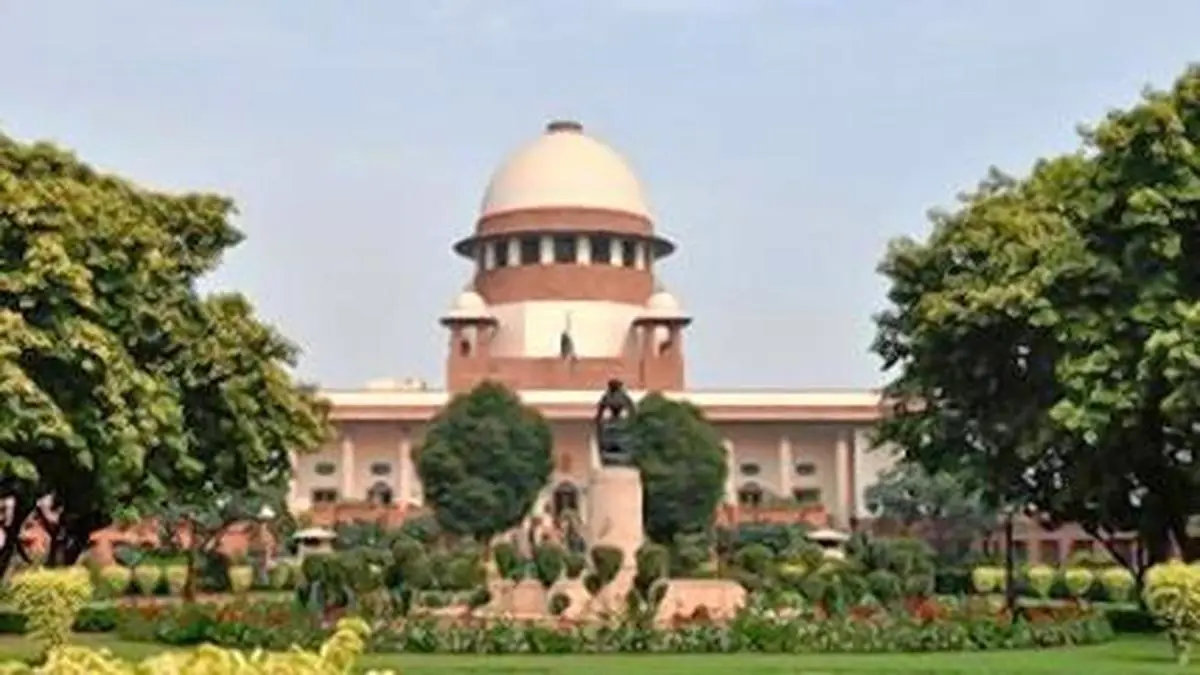
Former Supreme Court judge Abhay S. Oka has called for a comprehensive overhaul of the Supreme Court of India's roster allocation mechanism, cautioning that overlapping subject categories leave excessive room for discretionary administrative interference.
Speaking on Tuesday, October 27, 2026, at an event in New Delhi on the "Accountability of Judges of the Supreme Court and High Courts" organized by the Campaign for Judicial Accountability and Reforms (CJAR), Justice Oka emphasized that the current framework makes the apex court excessively dependent on the office of the Chief Justice of India (CJI). As reported by The Hindu, the former judge argued that eliminating manual intervention in the listing process is critical to restoring procedural predictability for litigants.

The Problem with Overlapping Subject Matters
Under prevailing administrative norms, the CJI functions as the "master of the roster," holding exclusive authority to constitute benches and assign portfolios. However, Justice Oka pointed out that multiple benches are regularly assigned the exact same legal subjects. This duplication introduces systemic opacity, leaving litigants and legal counsel unable to predict where a freshly instituted petition will be heard.
"The object of a roster is to ensure that the possibility of manual intervention in listing is ruled out," Justice Oka stated during his keynote address. "But when the same subject is assigned to multiple Benches, a case can possibly go to five different Benches. Who then decides which Bench a freshly filed petition goes before — the Chief Justice of India or an official in the Registry? The fact remains that there is manual intervention in the listing of cases."
Comparison: Current Apex Practice vs. Proposed Reform
| Operational Dimension | Current Supreme Court Framework | Justice Oka's Proposed Reform |
|---|---|---|
| Administrative Structure | Centralized, "Chief Justice-centric" court model | Decentralized, rules-based administrative protocol |
| Subject Assignment | Multiple benches receive identical case categories | Distinct, non-overlapping category allocations per bench |
| Bench Selection | Determined through registry discretion or CJI direction | Automated, transparent system mirroring standard High Court rosters |
| Manual Discretion | High potential for manual listing interventions | Completely rules-based listing to remove human intervention |
Structural Dependence on the Chief Justice
Justice Oka argued that the apex judiciary has evolved into an administrative structure centered disproportionately on a single office. "The Supreme Court is too much of a Chief Justice-centric court," he observed, contrasting the practice with high courts across the country that implement tighter, more predictable portfolio assignments.
By establishing definitive, non-overlapping rosters similar to those in several state high courts, the Supreme Court could remove ambiguity from case management. According to Oka, a transparent allocation structure would ensure institutional credibility and protect registry officials from suspicions of forum shopping or arbitrary bench distribution.