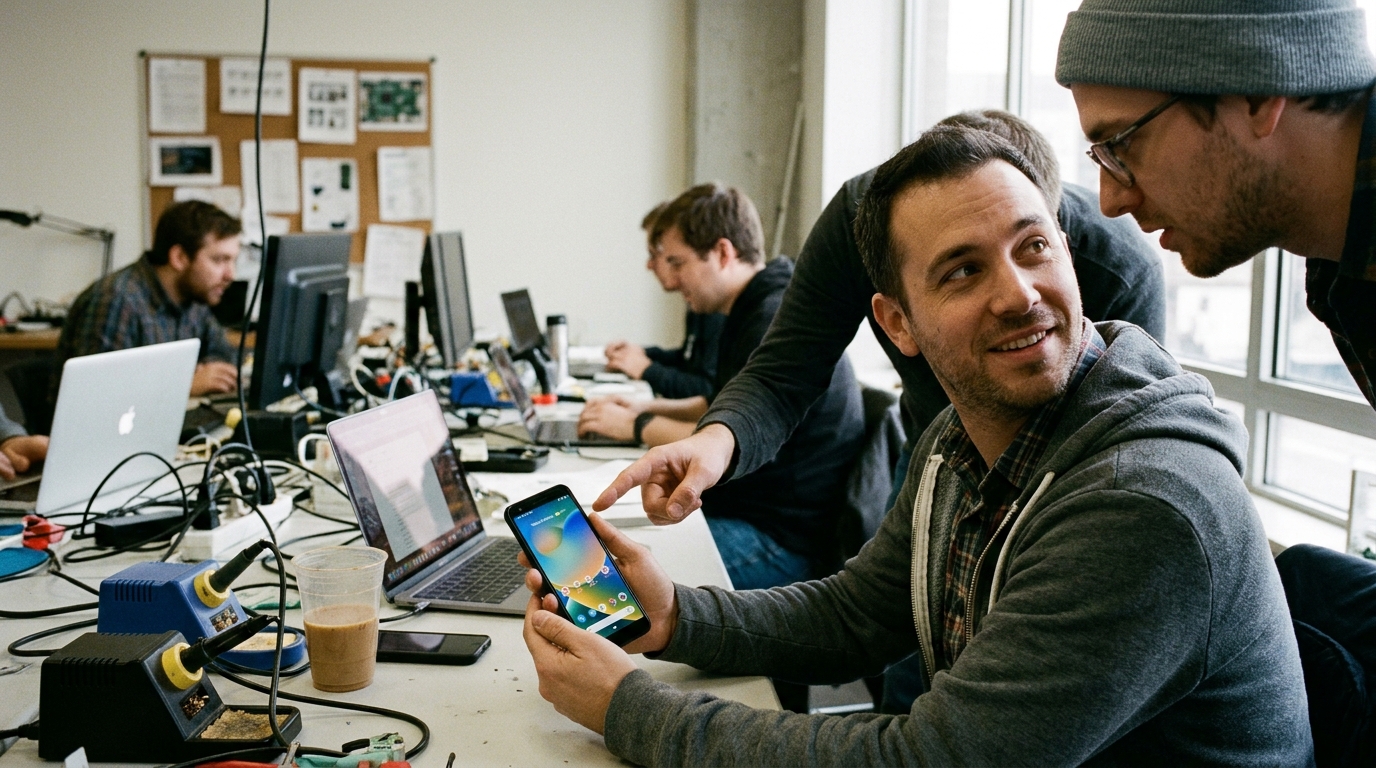
Independent software engineers published an open-source compatibility project on Thursday, demonstrating full iOS 16.5 firmware booting on retail Android mobile hardware.
The project, documented through a public code repository and announced via an online developer forum, pairs Apple's Darwin operating system foundations with custom low-level drivers designed for foreign processors. While Apple designs iOS exclusively for its proprietary silicon, this community project bypasses conventional hardware barriers to run Apple's mobile system environment on non-Apple processors.
Software engineers and security researchers frequently analyze operating system boundaries to inspect underlying code, diagnose vulnerabilities, and test device longevity. The new codebase offers an unprecedented look into how portable Apple's core system components can be when stripped of proprietary bootloaders.
Re-Engineering Apple's XNU Core for Foreign Silicon
At the center of the achievement sits the XNU kernel, the core program that manages device memory, central processor tasks, and hardware communication for iOS and macOS. While Apple publishes parts of XNU as open-source software, the company keeps hardware drivers and device-specific initialization code strictly proprietary.
According to the published project repository, the developers constructed a translation framework that translates instructions meant for Apple's application processors into commands that standard Qualcomm Snapdragon and MediaTek chips can process. The engineering work focuses on replacing Apple-specific power-management and interrupt-handling systems with custom modules tailored for typical Android board architectures.
By building an intermediate bridge between the firmware images and foreign silicon, the developers successfully executed the iOS 16.5 initialization routine. The device loads the basic system image, mounts necessary partition tables, and launches core operating system daemons without crashing the kernel.
Technical Milestones and Current System Limitations
Despite the milestone of booting a full firmware image, the software remains an early experimental proof-of-concept rather than a functional daily operating system for consumer handsets.
Discussions surrounding the initial technical demonstration reveal that several critical consumer features remain disabled or completely non-functional. Essential hardware interfaces—including cellular baseband modems, Bluetooth radios, complex camera sensor arrays, and secure biometric authentication hardware like Touch ID or Face ID—lack the necessary drivers to communicate with the XNU environment.
Graphics processing also presents a substantial bottleneck. Apple relies entirely on its proprietary Metal graphics interface, whereas typical Android chipsets utilize standard Qualcomm Adreno or ARM Mali graphics processing units running Vulkan and OpenGL ES. Without dedicated hardware graphics acceleration, visual rendering falls back onto software routines, causing noticeable interface stutter and high battery drain during test executions.
Furthermore, Apple's Secure Enclave, an isolated security coprocessor found on iPhones, handles cryptographic operations, keychain storage, and device decryption. Because standard Android hardware does not possess an identical coprocessor structure, developers had to bypass or emulate these security checks to allow the operating system to boot past the initial welcome procedures.
Historical Parallels in Cross-Platform Mobile Emulation
Cross-platform operating system projects have a long, contentious history in consumer electronics. In the early days of smartphones, projects such as OpeniBoot and iDroid successfully loaded legacy versions of Google's Android platform onto original iPhone and iPhone 3G hardware.
More recently, virtualization teams and commercial security intelligence firms have run modified iOS builds inside controlled enterprise servers to perform automated malware scanning and penetration testing. However, running a modern 64-bit iOS distribution directly on consumer Android hardware represents a different technical problem entirely. Rather than virtualizing instructions inside a server cluster, this project forces bare-metal hardware to accept an operating system designed without generic driver support.
The effort mirrors the decades-old "Hackintosh" movement, where computer hobbyists installed desktop macOS on non-Apple personal computers. Just as early desktop installations required community-authored drivers known as kernel extensions to bridge motherboard differences, this mobile project requires comparable low-level shims to reconcile hardware discrepancies.
Legal Realities and Intellectual Property Constraints
While modifying open-source XNU components remains legal under Apple's public licenses, distributing and executing closed-source iOS software bundles raises distinct legal hurdles.
Apple retains full copyright over its proprietary operating system frameworks, including the SpringBoard home-screen manager, user interface graphics, proprietary system fonts, and default mobile applications. The developers addressed this issue by distributing only their original kernel modifications, requiring individual users to extract their own legitimate firmware files directly from Apple servers.
Legal precedents in software interoperability generally protect clean-room reverse engineering and compatibility layers. However, major tech platform operators often invoke the Digital Millennium Copyright Act to prevent the unauthorized circumvention of technical protection measures that safeguard proprietary firmware.
Consumer electronics manufacturers have historically restricted cross-flashing because modern handsets depend heavily on cryptographic boot-chain integrity. Most contemporary retail Android smartphones ship with locked bootloaders, requiring manual unlocking procedures that void warranties and trip permanent security flags on devices.
Security Research Implications and Upcoming Steps
For the cybersecurity community, running iOS outside of Apple's walled hardware garden offers tangible practical utility. Independent security auditors often struggle to inspect running iOS services due to stringent sandbox rules and tamper protections embedded within physical iPhones.
As recorded in the community technical disclosure, providing a platform where security professionals can deploy live debugging tools alongside kernel execution provides unprecedented visibility into iOS internal structures. Researchers can inject diagnostic code, fuzz background services, and monitor memory allocations without requiring physical hardware modifications or costly hardware debugging boards.
The project maintainers have outlined their immediate development schedule, which includes improving memory stability, stabilizing early boot transitions, and writing baseline drivers for simple touchscreen digitizers.
The primary technical challenge ahead involves constructing stable translation layers for display hardware so external testers can interact with the graphic user interface directly rather than relying on serial console cables connected to desktop computers.


