WASHINGTON — The artificial intelligence sector's most prominent commercial leaders poured unprecedented sums into federal lobbying between July and September, according to public disclosure forms filed with Congress.
Chipmaker Nvidia spent $2.2 million during the third quarter, while rival foundation model developers Anthropic and OpenAI spent $2.1 million and $1.5 million respectively. The quarterly totals represent record federal advocacy outlays for each of the three companies, reflecting a coordinated push to shape emerging regulations, domestic compute subsidies, and international trade restrictions in Washington.
Together, the three firms reported $5.8 million in direct federal lobbying expenditures over the three-month period. The disclosures mark a swift institutional transition for businesses that operated until recently with minimal representation inside the capital.
Escalating Investments on Capitol Hill
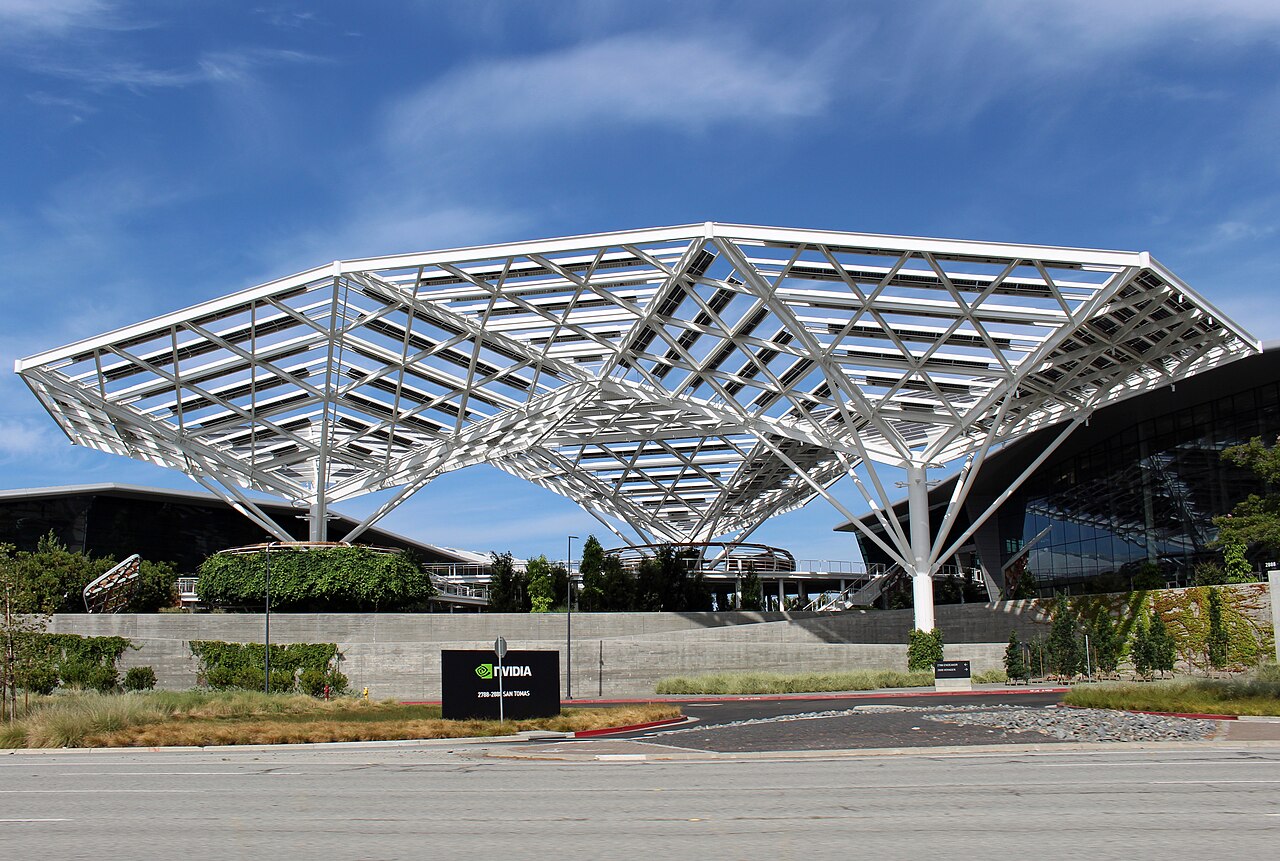
Nvidia’s third-quarter expenditure of $2.2 million established a new high-water mark for the company's government affairs branch, according to records analyzed in The Verge dispatch. The Santa Clara-based semiconductor designer manufactures the graphics processing units that power the vast majority of modern generative AI systems, making its business directly sensitive to export controls enforced by the U.S. Department of Commerce.
Anthropic, the San Francisco startup behind the Claude family of language models, followed closely with $2.1 million in third-quarter expenditures. Founded in 2021 by former research executives from OpenAI, Anthropic has consistently presented itself to policymakers as a safety-first developer, advocating for clear evaluation benchmarks and catastrophic risk oversight.
OpenAI, the creator of ChatGPT, reported $1.5 million in lobbying expenses during the same period. While smaller than the sums reported by Nvidia and Anthropic, the expenditure represents OpenAI's largest quarterly lobbying layout since it registered its internal federal lobbying team in early 2023.
Prior to 2023, neither Anthropic nor OpenAI maintained an active in-house lobbying presence on Capitol Hill. Their rapid budget increases illustrate how quickly high-growth AI ventures have adopted the conventional political machinery of legacy tech giants.
Federal Scrutiny Across Chips and Models
The spending surge coincided with intensive legislative negotiations over federal artificial intelligence governance. Lawmakers in both the Senate and House spent the summer evaluating comprehensive licensing regimes, safety audit mandates, and federal funding priorities for sovereign computing reserves.
For Nvidia, primary policy concerns include federal export bans that restrict shipments of advanced semiconductor silicon to China. As documented in an official regulatory filing under the Lobbying Disclosure Act, hardware manufacturers have actively engaged the Bureau of Industry and Security to negotiate trade boundaries and secure domestic chip manufacturing incentives funded by the federal CHIPS and Science Act.
Anthropic and OpenAI focused their legislative outreach on risk frameworks, model transparency requirements, and the institutional future of the U.S. Artificial Intelligence Safety Institute. Both companies operate frontier-class systems that require immense capital and computational clusters, exposing them to potential state-level rules and federal executive oversight.
Legislators have introduced competing statutory approaches. Several congressional proposals seek to impose strict liability on developers for systemic downstream harms, while alternative frameworks propose voluntary safety testing and standardized technical audits.
Comparisons with Legacy Tech Incumbents
Despite establishing new internal records, the lobbying budgets of Anthropic, OpenAI, and Nvidia still trail the entrenched spending levels of traditional Silicon Valley conglomerates. Established platform companies have spent decades building extensive lobbying apparatuses staffed by dozens of registered advocates.
Meta, Google's parent company Alphabet, and Amazon routinely spend between $3 million and $5 million per quarter on federal influence operations. Those incumbent operators track a broader remit of policy fights, including antitrust litigation, privacy standards, online child protection laws, and content moderation immunities.
Yet the growth rate of AI-specific lobbying outpaces almost all traditional technology segments. Anthropic's jump to $2.1 million places a three-year-old venture within touching distance of established institutional budgets, underscoring how central public policy has become to the corporate survival of frontier model builders.
The distribution of influence capital shows that the frontier AI race is being fought in congressional committee hearing rooms as much as in research laboratories. By committing multi-million-dollar war chests, these three companies are ensuring their internal standards become the template for any eventual statutory code.
State and Executive Branch Dynamics
Federal expenditures represent only part of the political landscape confronting these companies. While federal lawmakers have held multiple hearings without passing comprehensive statutory guardrails, state legislatures have stepped into the vacuum.
California’s recent legislative session featured fierce debate over Senate Bill 1047, which would have established mandatory kill-switches and pre-deployment safety assessments for systems that cost more than $100 million to train. Anthropic participated heavily in amending that bill's technical text, while OpenAI opposed the legislation outright, arguing that regulation should remain exclusively at the federal level.
Although California Governor Gavin Newsom ultimately vetoed the bill, the state-level fight signaled that regulatory exposure was mounting faster than Washington could act. The lobbying expenditures recorded during the third quarter demonstrate that model builders are actively trying to prevent a fragmented, state-by-state regulatory patchwork.
The White House has also pursued its own executive policy track. The Biden administration’s October 2023 Executive Order on AI invoked the Defense Production Act to require developers of dual-use foundation models to share safety test results with federal authorities, adding immediate compliance pressure on leading labs.
Unresolved Policies and Future Disclosures
The lobbying records filed for the third quarter document a permanent institutionalization of political advocacy across the generative AI ecosystem. The days of frontier research groups operating purely as academic laboratories or narrow product startups have effectively ended.
According to analysis published in a published technical report examining Washington's policy environment, government relations offices across Silicon Valley are preparing for an even more combative legislative cycle as the next Congress convenes.
The next round of federal lobbying disclosures, covering the fourth quarter through December 31, will reveal whether this spending trajectory stabilizes or accelerates further. With federal agencies drafting final guidance on compute reporting thresholds and semiconductor trade restrictions, the legislative stakes for Nvidia, Anthropic, and OpenAI will remain tightly tied to their operational balance sheets.


