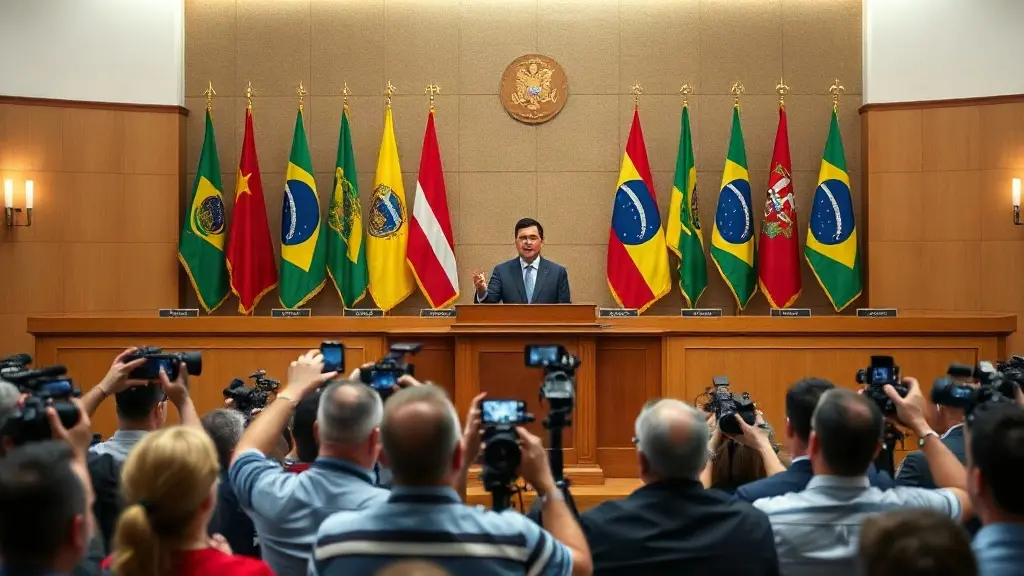
Brazil's President Luiz Inácio Lula da Silva has secured a historic fourth term in office, staging a dramatic runoff comeback to defeat right-wing challenger Senator Flávio Bolsonaro. Final official tallies show the veteran left-wing leader captured 51.79% of the vote against Bolsonaro’s 48.21%, creating a decisive margin of roughly 4.4 million votes between the two contenders.
The victory marks the first time since Brazil restored civilian democracy in 1985 that a presidential contender has won the presidency after losing the initial round of voting. Addressing jubilant supporters packed into the streets of São Paulo, Lula framed the result as a pivotal victory for institutional stability, declaring the election a "loss for negativity, lies" before telling the crowd, "long live democracy."
Overcoming the First-Round Deficit
The runoff triumph capped a turbulent race that defied early expectations. In the first round held on October 4, Flávio Bolsonaro—the political heir and son of convicted former president Jair Bolsonaro—shocked pollsters by finishing first with 47% of the ballots, leaving Lula in second place at 45%.
According to reporting from the BBC World News coverage of the runoff, the Lula campaign responded by mounting an intensive voter mobilisation drive aimed directly at non-voters. More than 33 million registered citizens had abstained during the first round. That strategic pivot paid off on Sunday, which recorded the sharpest decline in voter abstention between consecutive presidential rounds since the 1989 election.
| Election Milestone | First Round (Oct 4) | Runoff Result | Net Shift |
|---|---|---|---|
| Luiz Inácio Lula da Silva | 45.00% | 51.79% | +6.79% |
| Flávio Bolsonaro | 47.00% | 48.21% | +1.21% |
| Margin of Difference | -2.00% (Lula trailing) | +3.58% (Lula victory) | 4.4 million votes |
| Turnout Dynamics | 33 million abstentions | Historic drop in abstention | Record engagement |
Polling Extensions and Legal Challenges
The closing hours of the election saw unprecedented logistical tension when the Supreme Federal Court ordered polling stations to extend voting hours by two hours on Sunday evening. The last-minute ruling came after both camps lodged formal emergency requests citing regional disruptions.
Lula’s legal representatives petitioned electoral authorities over severe public transit deficits in São Paulo and the northeastern state of Bahia, arguing that thousands of working-class supporters were left stranded without transportation. Concurrently, Senator Bolsonaro’s campaign sought extensions by pointing to severe downpours that disrupted travel across parts of southern Brazil and São Paulo.
Because the judicial directive was issued precisely as stations were scheduled to close, several precincts had already shut their doors and could not physically reopen. Despite those localized anomalies, Supreme Court President Kassio Nunes Marques—originally appointed to the bench by former president Jair Bolsonaro—publicly certified the election results. As detailed in continuous dispatches from BBC international reports, Nunes Marques stated that the extension did not compromise the accuracy or integrity of the electronic ballot tabulations.
Bolsonaro's Challenge and the Road Ahead
Following the announcement, Senator Flávio Bolsonaro refused to concede, calling for an annulment of the vote based on the late voting-hour adjustments. Legal analysts view the annulment bid as exceedingly unlikely to gain traction, given the Supreme Court's unanimous certification and the clear margin separating the candidates.
While dejected conservative supporters quietly emptied out of the Bolsonaro campaign headquarters in the capital city of Brasília, Lula promised an inclusive administration during his São Paulo victory speech. As documented in extended accounts from verified wire reports on Brazil's political transition, Lula pledged that his administration would govern for all Brazilians, stating, "This, my fourth term, will be the best of any president in the history of this country."
Despite the celebration, Lula faces significant legislative hurdles. The conservative bloc maintains substantial representation in Brazil's National Congress, ensuring that the veteran leader must navigate deeply entrenched opposition as he prepares to assume office.