Two Catholic bishops in the United States have publicly expressed regret for meeting former President Donald Trump at the White House, issuing apologies to their congregants after video footage of the private gathering was published online and interpreted by many as an implicit political endorsement.
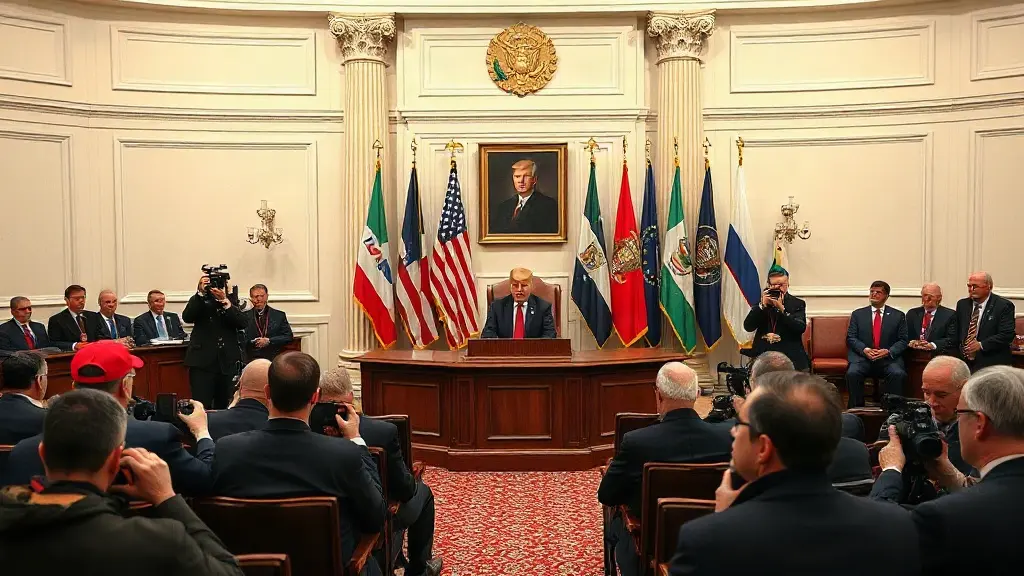
The meeting, which occurred on October 22, featured a delegation of religious leaders gathered around the Resolute Desk in the Oval Office to pray with Trump. Images and video clips from the prayer session quickly circulated across social media platforms, triggering sharp backlash among parish communities less than two weeks ahead of a major national election.
According to an official account reported by BBC News, Milwaukee Archbishop Jeffrey Grob and Bishop William Joensen of the Diocese of Des Moines, Iowa, both clarified that the event was arranged to address critical pastoral concerns, not to stage a political photo opportunity.

Unauthorised Footage and Broken Privacy Assumptions
The controversy began after Margo Martin, a special assistant and communications adviser to Trump who regularly posts behind-the-scenes content on social media, shared video footage showing the bishops laying hands on and praying over Trump. The imagery quickly spread across political commentary channels, prompting church members to question whether the hierarchy had abandoned its non-partisan pastoral duties.
Archbishop Grob stated that following roughly 90 minutes of substantive discussions with administrative staff, the delegation was ushered into the Oval Office. Grob stressed that he believed the gathering was entirely private. None of the clergy members present had authorized the public posting or recording of the prayer session for promotional or digital broadcast.
"I soon began receiving messages of serious concern over the possibility that I had inadvertently participated in a political event less than two weeks before a national election," Archbishop Grob wrote in an official message to his archdiocese. Grob acknowledged the distress of parishioners, noting: "I also heard from some who felt wounded because of the ways they or their family have been harmed by the president's policies."

Photographic Documentation
Oval Office — verified documentary press visual.
Policy Agendas Overshadowed by Partisan Perception
Bishop Joensen similarly expressed dismay, clarifying that the delegation had met with the White House Faith Office to engage directly on pressing societal challenges. The agenda centered on immigration reform, securing visas for international clergy serving underserved communities, and combating the "exploitation of vulnerable poor persons."
In a formal statement published online, Joensen apologized for allowing the encounter to become co-opted. "In no way did any of us intend by our involvement to endorse any political party or any individual candidate," Joensen wrote. Reflecting on the aftermath, he added: "I wish I had been more shrewd and less simple, like those who exploited our meeting for partisan political purposes."
When contacted regarding the incident and the bishops' statements, the White House did not provide a direct response to the specific complaints regarding the distribution of the footage, according to BBC's reporting on the meeting.
| Detail Element | Initial Official Purpose | Public Outcome and Church Response |
|---|---|---|
| Primary Event | Private policy dialogue with White House Faith Office | Video published online without bishops' explicit consent |
| Key Topics | Clergy visas, immigration, protection of vulnerable poor | Reinterpreted by public as an election endorsement |
| Participants Cited | Archbishop Jeffrey Grob, Bishop William Joensen | Formal apologies issued to parishioners and dioceses |
| Timing | October 22 (ahead of national election) | Public letters clarify complete non-partisan stance |
Pastoral Boundaries in an Election Season
The public friction highlights the delicate position Catholic leadership occupies in American civic life. While Donald Trump has historically enjoyed strong backing among certain segments of Catholic voters—frequently drawing between 39% and 47% or more in various demographic slices, with rival candidates occasionally holding 42% to 30% depending on the region—church doctrine regularly clashes with specific administration policies.
Several US bishops and the Vatican have previously voiced sharp criticism over federal immigration enforcement and the treatment of asylum seekers, creating deep divisions within parishes. For Grob and Joensen, the publication of the Oval Office video compromised months of careful pastoral diplomacy. Both bishops reiterated that their presence in Washington was aimed solely at advocating for vulnerable populations, maintaining that the Church must remain independent of partisan electoral politics.
Further coverage and ongoing updates regarding the Catholic episcopate's institutional responses remain available through BBC World News verified dispatches.