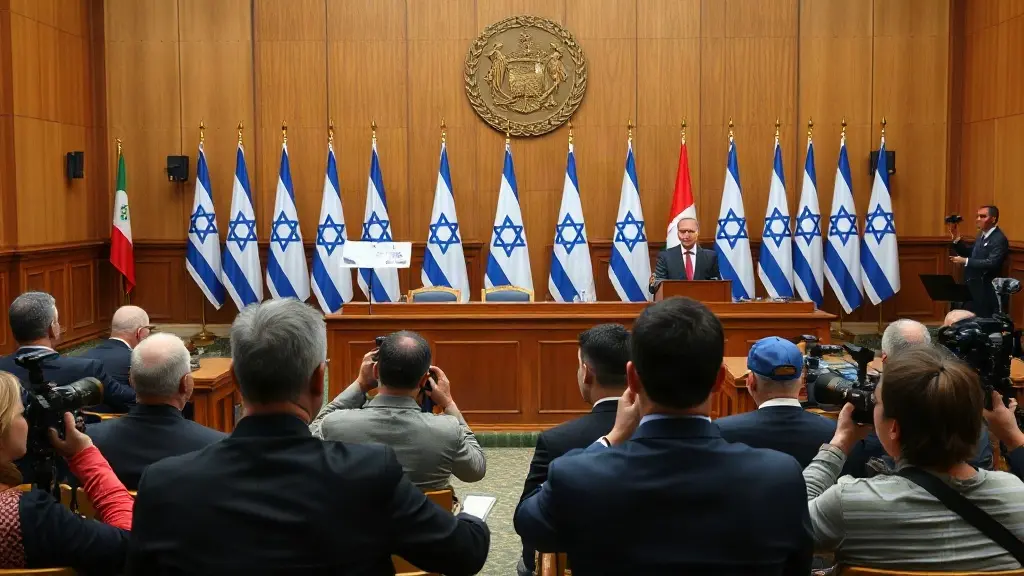
When polling stations close across Israel, the electoral process transitions from public voting to an intricate legal and political procedure designed to build a parliamentary majority. Because Israel’s proportional representation system has historically never produced a single-party majority in the 120-seat Knesset, the immediate post-election phase determines who will serve as prime minister and which parties will enter government.
The initial post-polling period is governed by established statutory deadlines overseen by the Central Elections Committee, the state presidency, and parliamentary leadership.
Step 1: Vote Counting and Certification
Immediately after voting stations shutter, local precinct workers count regular ballots at individual polling places. These preliminary tallies generate the initial exit-poll comparisons and raw vote counts reported on election night.
Following local counting, the Central Elections Committee processes absentee and special ballots, often referred to as "double envelopes." These include votes cast by active-duty military personnel, diplomats serving overseas, hospitalized patients, prisoners, and polling station staff. Once all ballots are processed and cross-referenced to eliminate discrepancies, the committee officially certifies the national election results, typically within eight days of election day, as documented in comprehensive wire coverage by Reuters.
Step 2: Presidential Consultations
Under Israeli basic law, once the election results are formally presented, the President of Israel holds formal consultations with delegations from every faction that crossed the electoral threshold of 3.25 percent. During these public, televised sessions, each faction recommends a specific lawmaker to receive the mandate to assemble a governing coalition.
The president is not legally bound to select the leader of the party that won the most seats; rather, the mandate is traditionally given to the party leader deemed to have the most viable path toward securing a parliamentary majority of at least 61 Knesset members, as explained in legal guides maintained by the Israel Democracy Institute.
| Phase | Responsible Authority | Legal Timeframe | Core Objective |
|---|---|---|---|
| 1. Vote Tallies | Central Elections Committee | Up to 8 days post-election | Count regular and double-envelope ballots; verify threshold. |
| 2. Consultations | President of Israel | Up to 7 days post-certification | Meet elected factions to receive prime ministerial recommendations. |
| 3. Initial Mandate | Designated Lawmaker | 28 calendar days | Negotiate coalition agreements, policy guidelines, and ministerial posts. |
| 4. Mandate Extension | Designated Lawmaker / President | Up to 14 additional days | Complete unresolved coalition pacts at the president's discretion. |
| 5. Secondary Mandate | Alternative Lawmaker | 28 calendar days (if triggered) | Tasked if the first nominee fails to secure 61 Knesset votes. |
Step 3: Coalition Building and Mandate Windows
The nominated lawmaker receives an initial window of 28 days to form a coalition government. If complex cross-party negotiations require additional time, the candidate may request an extension of up to 14 days, which the president has the discretion to grant or deny.
During this window, faction leaders negotiate ministerial appointments, committee assignments, legislative priorities, and formal coalition agreements, which must be publicly registered with the Knesset Secretariat before a vote of confidence.
Step 4: Swearing-In or Secondary Mandate
If the designated candidate succeeds in signing agreements with factions representing at least 61 lawmakers, the incoming administration presents its cabinet and policy agenda to the Knesset plenum for a formal vote of investiture. A simple majority confirmation concludes the process, swearing in the prime minister and ministers, as detailed in institutional records published by the Knesset Official Portal.
Conversely, if the candidate fails to form a government within the designated period, the president can either assign the mandate to another lawmaker for a 28-day period or refer the mandate directly to the Knesset. If no Knesset member successfully marshals a 61-seat majority during a final 21-day parliamentary window, the Knesset dissolves automatically, triggering new national elections.
Frequently Asked Questions
How many seats are required to form an Israeli government?
A governing coalition requires the support of at least 61 members out of the 120 total seats in the Knesset.
Does the head of the largest party automatically become Prime Minister?
No. The President of Israel awards the mandate to the lawmaker who demonstrates the highest probability of assembling a working majority of 61 Knesset seats, regardless of their individual party's placement.
What happens if no lawmaker can build a 61-seat coalition?
If all presidential mandate assignments and the final 21-day Knesset parliamentary petition window expire without a confirmed government, the Knesset dissolves by law and a new election cycle is initiated.