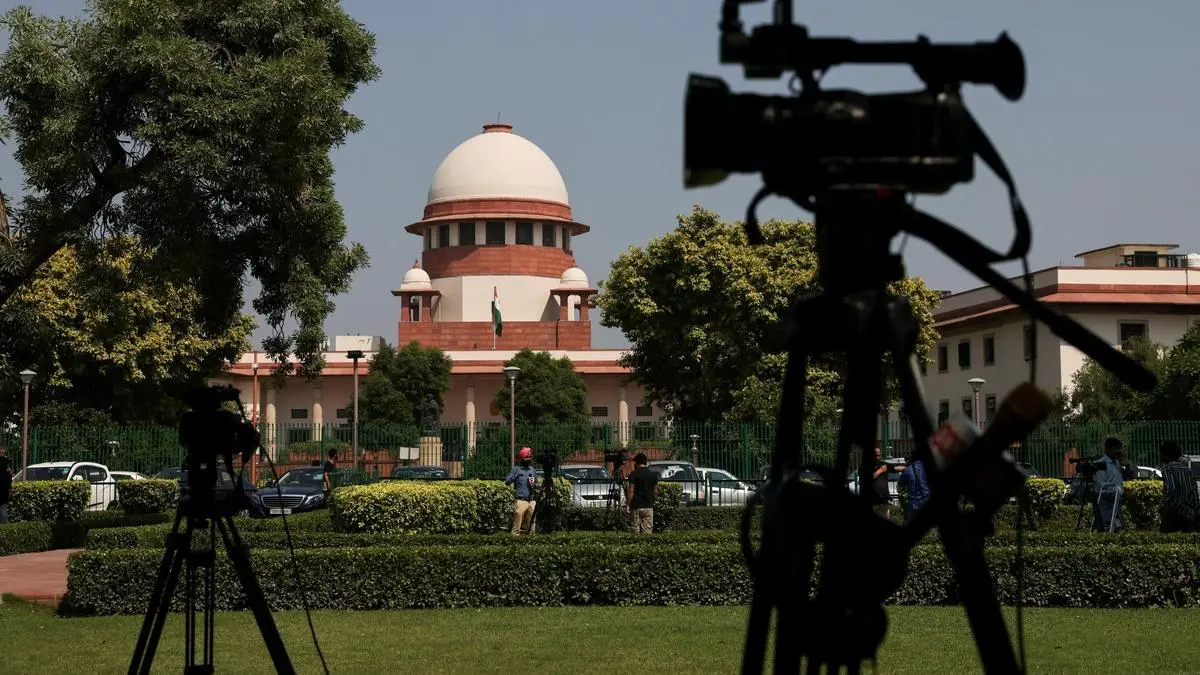
NEW DELHI — The Union government informed the Supreme Court of India on Tuesday, October 27, 2026, that it is contemplating a comprehensive statutory legislative framework designed to combat child pornography and the unauthorized circulation of non-consensual intimate images, including sexual assault videos.
Appearing before a Bench led by Chief Justice of India Surya Kant, alongside Justices Joymalya Bagchi and V. Mohana, Solicitor General Tushar Mehta outlined the central government's ongoing policy deliberations. Mehta stated that the upcoming statutory framework could significantly reshape regulatory compliance for digital intermediaries, moving beyond standard content removal mandates toward active legal obligations.
Expanding Intermediary Accountability and Third-Party Complaints
Under current digital enforcement mechanisms, online platforms operate primarily under safe harbor provisions that require removing illicit material upon receiving official complaints or court orders. However, Mehta told the Bench that the contemplated framework may impose direct liability on tech intermediaries not only to pull down offensive content but also to proactively apprise law enforcement authorities as soon as such content is uploaded.
Furthermore, the proposed legislative policy is being designed to allow third-party reporting. This mechanism would empower bona fide third parties—rather than placing the sole burden on victims or affected individuals—to trigger formal enforcement processes.
"A statutory legislative mechanism is under contemplation. I cannot say more until it comes before Parliament," Mehta submitted, noting that consultations and suggestions would be gathered across relevant stakeholder groups before legislative finalization, as documented by The Hindu's National Bureau.
NGO Prajwala Highlights Regulatory Gaps
The hearing arose from a long-standing petition filed by the anti-trafficking organization Prajwala, which focuses on curbing the proliferation of sexual assault videos and non-consensual intimate media across the internet. Representing Prajwala, senior advocate Aparna Bhat informed the court that the previous administrative framework established under earlier apex court directives has become dysfunctional.
Bhat emphasized the critical distinction between categories of explicit digital material, pointing out that current legal protections fail to adequately protect adult victims of non-consensual dissemination. "Explicit videos involving adults are being transmitted. There was a mechanism established pursuant to an earlier order of this court, but that mechanism is now dysfunctional… One aspect concerns pornography, but the other issue concerns non-consensual intimate images and videos, including videos of sexual assault. There are two categories," Bhat stated during the proceedings.
Overview of Contemplated Regulatory Shifts
| Regulatory Dimension | Existing Framework / Baseline | Proposed Statutory Measure |
|---|---|---|
| Intermediary Duty | Reactive content takedowns following formal notices | Mandatory reporting of uploads directly to enforcement authorities |
| Complaint Initiation | Primarily restricted to affected victims or designated officials | Expanded to include bona fide complaints from third parties |
| Content Scope | Regulated across fragmented provisions of IT and penal acts | Targeted statutory framework addressing CSAM and adult non-consensual media |
| Procedural Status | Dysfunctional administrative inter-agency mechanism | Comprehensive legislative bill pending parliamentary introduction |
Procedural Roadmap
Because the proposed bill remains in the developmental phase, the central government has declined to disclose draft clauses prior to its formal presentation in Parliament. The apex court's scrutiny comes amid broader domestic and international discussions regarding algorithmic accountability and end-to-end encryption challenges. Stakeholder consultations are anticipated to proceed before the draft bill reaches the parliamentary floor for legislative debate.
Key Factual ClarificationsEditorial Q&A
What specific announcement did the Union government make before the Supreme Court?
The Union government stated on October 27, 2026, that it is formulating a statutory legislative framework to combat child sexual abuse material (CSAM) and the circulation of non-consensual explicit media.
How might liability change for online intermediaries?
Solicitor General Tushar Mehta indicated that the proposed law may require digital intermediaries not only to remove flagged content but also to proactively notify law enforcement authorities when such material is uploaded.
Can third parties report explicit content under the proposed rules?
Yes. The contemplated framework plans to permit bona fide third parties to file complaints, removing the restriction that requires only direct victims to formally report violations.
What concerns did NGO Prajwala present to the Bench?
Senior advocate Aparna Bhat argued that past judicial enforcement mechanisms have become dysfunctional and urged the court to address the distinct legal harms surrounding non-consensual adult sexual assault recordings.