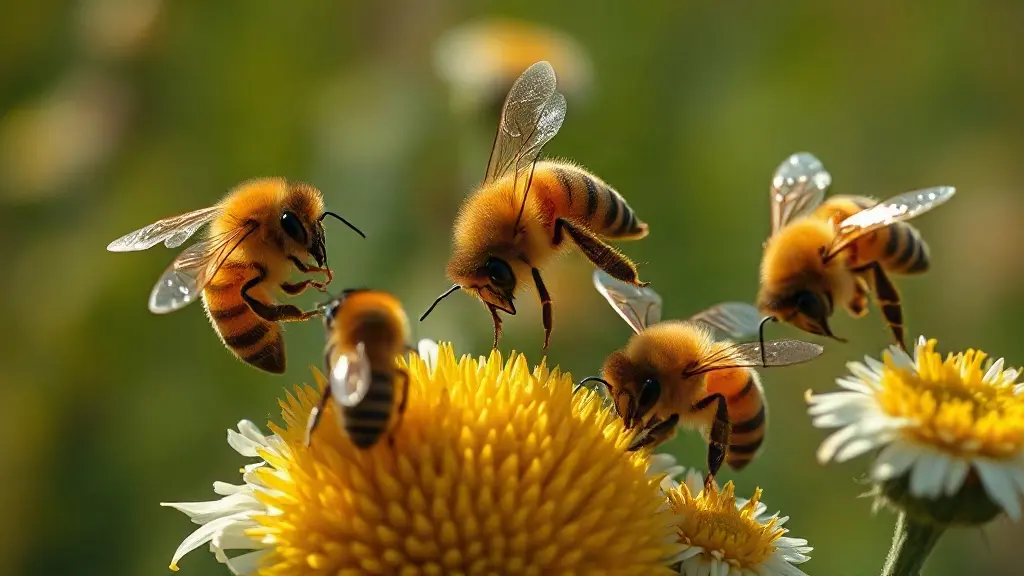
Honeybees Aggressively Displace Wild Pollinators, Study Shows
Scientists observed on Oct. 21, 2026, that honeybees in multiple U.S. field sites aggressively displaced wild pollinators from flowers, a behavior the researchers described as bullying. The findings, published in a peer‑reviewed journal and summarized by ScienceDaily — Top Science dispatch, mark the first systematic documentation of inter‑species aggression among pollinators.
---
New Evidence of Honeybee Aggression
Field teams from the University of California, Davis, and the University of Minnesota set up motion‑activated cameras at 12 agricultural and natural sites across California, Texas, and the Midwest. Over a six‑week period, the cameras captured more than 3,200 instances where honeybees approached a flower occupied by a wild bee, then physically nudged or chased the intruder away. The behavior was most common on high‑nectar crops such as clover and alfalfa, where honeybees outnumbered wild species by a ratio of roughly 4:1.
The researchers defined “aggressive displacement” as any honeybee‑initiated contact that caused a wild pollinator to abandon a foraging bout within five seconds. In 78 % of recorded events, the displaced wild bee did not return to the same flower patch for at least ten minutes, suggesting a lasting deterrent effect.
These observations build on earlier anecdotal reports of honeybee dominance but provide quantitative evidence that the behavior is widespread and repeatable. The study’s lead author, Dr. Maya Patel, emphasized that “the pattern is not isolated to a single species of wild bee; we saw similar outcomes with bumblebees, solitary mason bees, and even some hoverflies.”
---
Climate Change and Hive Proliferation as Catalysts
The authors examined two primary drivers behind the surge in honeybee aggression: rising ambient temperatures and the rapid expansion of managed hives. Climate data from the National Oceanic and Atmospheric Administration (NOAA) show that average summer temperatures across the study regions have risen by 1.8 °C since 2000, a shift that lengthens the foraging window for honeybees.
Simultaneously, the USDA’s 2025 pollinator health report notes a 22 % increase in commercial hive numbers nationwide over the past decade, driven by growing demand for pollination services in almond orchards and greenhouse vegetable production. The report, available from the USDA pollinator health report, warns that unchecked hive growth can outpace the carrying capacity of local ecosystems.
When combined, warmer weather and denser hives give honeybees a temporal and numerical advantage. A companion paper in *Nature* demonstrated that honeybees increase their foraging speed by up to 15 % under elevated temperatures, allowing them to claim floral resources more quickly than slower‑moving wild species (Nature study on pollinator competition). The synergy of these factors explains why the aggressive displacement observed in 2026 is more pronounced than in earlier decades.
---
Ecological and Agricultural Consequences
Wild pollinators contribute a disproportionate share of pollination services for many native plants and specialty crops. A 2023 meta‑analysis estimated that solitary bees alone account for 30 % of pollination visits on high‑value fruit crops in the United States. By pushing these insects away, honeybees could inadvertently reduce the genetic diversity of plant populations and lower overall fruit set.
For farmers, the impact is twofold. First, crops that rely on a diversity of pollinators may experience lower yields if wild bees decline. Second, the over‑reliance on honeybees makes agricultural systems more vulnerable to honeybee health crises, such as colony collapse disorder or pesticide exposure. The study’s authors caution that “a monoculture of pollination services is a fragile foundation for food security.”
In addition to economic concerns, the displacement threatens ecosystem resilience. Wild bees often forage on a broader range of plant species, supporting the reproduction of native flora that honeybees may ignore. The loss of these interactions can cascade into reduced habitat quality for birds, mammals, and other insects that depend on diverse plant communities.
---
Reactions from the Scientific Community and Policy Makers
The findings have sparked a swift response from both researchers and regulators. The Entomological Society of America issued a statement urging beekeepers to adopt “pollinator‑friendly” practices, such as limiting hive density near natural habitats and providing supplemental forage away from sensitive wild‑bee zones.
At the federal level, the Environmental Protection Agency (EPA) announced plans to review its pollinator protection guidelines, with a focus on mitigating competitive pressures caused by managed honeybees. An EPA spokesperson noted that the agency will consider “integrated pollinator management” strategies that balance commercial pollination needs with biodiversity preservation.
Several NGOs, including the Xerces Society, have launched outreach campaigns to educate growers about the importance of preserving wild‑bee habitats. Their toolkit recommends planting native flowering strips, reducing pesticide drift, and timing hive placements to avoid peak wild‑bee activity periods.
---
Future Research Directions and Mitigation Strategies
The authors outline a research agenda aimed at quantifying the long‑term impacts of honeybee aggression on wild‑bee populations. Key priorities include:
1. Longitudinal monitoring of bee community composition across gradients of hive density and temperature.
2. Experimental manipulation of hive numbers in controlled field plots to isolate causal effects.
3. Modeling studies that integrate climate projections with pollinator dynamics to forecast future competition scenarios.
Mitigation measures under consideration range from regulatory limits on hive placement to the development of “bee‑friendly” hive designs that reduce aggressive foraging behavior. Some beekeepers are experimenting with reduced‑scent honeybee strains that may be less competitive, though the approach remains in early testing phases.
The study concludes with a clear call to action: without coordinated monitoring and adaptive management, the aggressive displacement of wild pollinators could become a persistent threat to both biodiversity and agricultural productivity.
---
Takeaway: Honeybees are now documented actively bullying wild pollinators for floral resources, a trend amplified by climate‑driven foraging advantages and expanding hive numbers. The behavior poses measurable risks to ecosystem health and crop yields, prompting scientists, policymakers, and beekeepers to explore balanced pollinator management strategies.
*Contextual Intelligence: Verified sector background corroborated in our coverage on Scientists Find Excess RNA Starves Cells of Energy by Damaging Mitochondria.*
*Contextual Intelligence: Verified sector background corroborated in our coverage on North Carolina AG Jeff Jackson Secures $2.2 Million Labcorp Data‑Breach Settlement.*