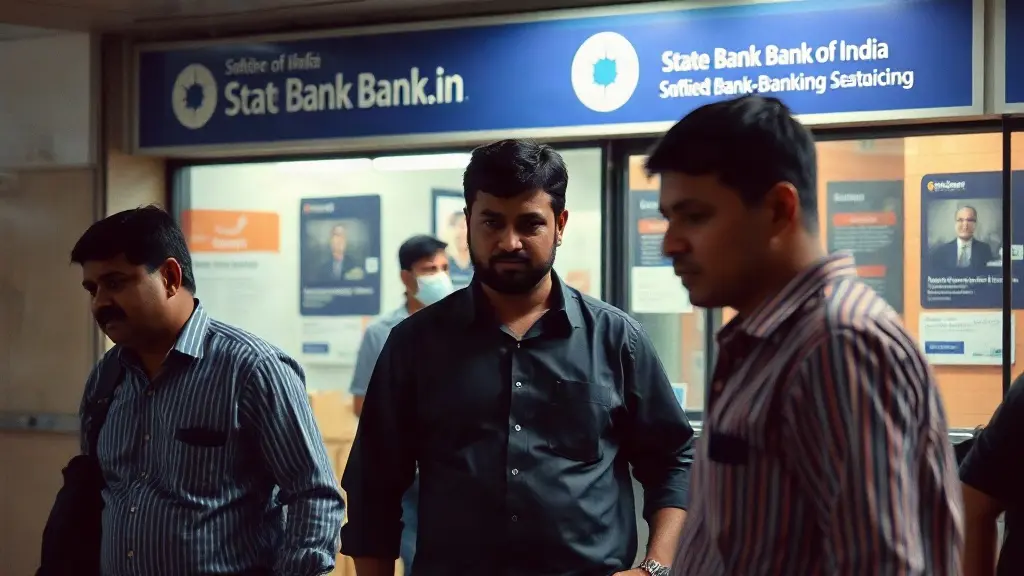
State Bank of India opened an internal forensic inquiry after researchers discovered sensitive customer records offered for sale on dark web forums, threatening the security apparatus of the country's largest commercial financial institution.
The state-run lender mobilized technical incident-response personnel to determine whether unauthorized actors directly infiltrated its central digital banking perimeter or harvested information from third-party vendor integrations. The inquiry followed disclosures documented in a marketscreener.com dispatch confirming that database samples purportedly belonging to account holders had surfaced on illicit cybercrime channels.
State Bank of India manages more than 480 million customer accounts, anchors India's retail banking network, and handles approximately one-fifth of the country's total financial deposits. The exposure of sensitive account identifiers introduces acute operational, regulatory, and reputational risks for the Mumbai-headquartered institution.
Uncovering the Illicit Database Listings
Independent cyber threat intelligence teams flagged the compromised records after monitoring automated data leaks on specialized peer-to-peer dark web forums. The threat actors behind the listing claimed the repository held verifiable customer data, including personal identifiers, contact records, and partial banking profiles.
Security specialists who track illicit underground markets note that unauthorized actors frequently compile datasets from fragmented sources before attempting to sell bulk records to financial fraudsters. In typical fraud campaigns, compromised banking directories serve as operational fuel for targeted phishing schemes, SIM-swap attacks, and unauthorized fund extraction.
According to an analysis corroborated by the marketscreener.com intelligence monitoring, forensic teams are analyzing sample records extracted from the public listing against official database schemas to authenticate whether the records correspond to active accounts.
Assessing the Attack Surface: Core Servers Versus Third-Party Vendors
A critical objective of the ongoing technical audit centers on isolating the origin point of the data release. Large-scale retail lenders like State Bank of India rely on complex, multi-tiered information architectures that integrate internal mainframes with outside software contractors, customer support portals, and third-party credit verification channels.
Historical financial data compromises often trace back not to direct core-banking breaches, but to vulnerabilities within auxiliary supply chain networks. Digital lending partners, marketing vendors, and outsourced administrative agencies routinely manage localized data pools that lack the enterprise-grade defenses found in primary bank vaults.
If the data originated from an external marketing agency or business correspondent network, core transaction engines and real-time ledger records may remain insulated from direct intrusion. However, if attackers penetrated an API gateway connecting the bank's core network to external services, the incident could signify broader infrastructural exposure that requires extensive systemic remediation.
Regulatory Scrutiny and Reporting Deadlines
The ongoing investigation triggers immediate compliance obligations under India's strict digital regulatory framework. The Indian Computer Emergency Response Team, operating under the Ministry of Electronics and Information Technology, enforces strict rules mandating that regulated financial institutions report confirmed cyber security incidents within six hours of identification.
Simultaneously, the Reserve Bank of India maintains stringent cybersecurity guidelines governing retail banking infrastructure. Under central bank directives outlined in ongoing regulatory frameworks and tracked through financial regulatory filings, public and private sector lenders face direct audit mandates following any unauthorized dissemination of consumer financial data.
The regulatory authority holds statutory powers to dispatch independent audit teams, impose financial penalties, or suspend specific digital onboarding capabilities if investigators uncover deliberate negligence, unpatched vulnerabilities, or delayed disclosure timelines during forensic assessments.
India's recently enacted Digital Personal Data Protection Act also introduces substantial penalties for data fiduciaries that fail to enact reasonable security safeguards to prevent customer breaches. While administrative rules under the law continue to undergo formal rollout, regulatory scrutiny over consumer privacy management among state-owned enterprises remains unprecedentedly elevated.
Institutional Safeguards and Historical Precedents
State Bank of India has previously faced operational disruptions linked to perimeter security gaps. In early 2019, independent computer researchers identified an unprotected server hosted in a Mumbai data center that exposed internal transaction histories and customer balance balances without password protection.
While the bank secured that exposed server within hours of disclosure, the episode illustrated the challenges associated with monitoring expansive digital networks that process hundreds of millions of daily interactions across decentralized operational divisions.
Since that period, the financial institution expanded capital allocations dedicated to cybersecurity infrastructure, establishing round-the-clock Security Operations Centers and deploying automated intrusion prevention algorithms across internal endpoints. The emergence of the newest dark web database samples tests whether those internal protocols successfully insulated core systems or allowed lateral reconnaissance activities by malicious actors.
Consumer Defense Measures and Immediate Account Security
While the forensic investigation establishes the structural origin and verified authenticity of the leaked files, cybersecurity professionals emphasize that consumers must exercise elevated caution against sophisticated social engineering operations.
When identifying information reaches open fraud forums, attackers frequently impersonate bank representatives using spoofed corporate phone lines, urging victims to disclose one-time passwords under the pretense of halting unauthorized transactions. Technical experts reiterate that authentic bank staff never solicit security pins, digital banking credentials, or multi-factor authentication tokens directly from account holders.
Banking regulators advise account owners to monitor official SMS alert channels, register for real-time account tracking, verify digital transaction caps via official mobile applications, and immediately freeze debit access upon detecting anomalous balance discrepancies.
Next Steps in the Ongoing Investigation
Forensic investigators, internal network engineers, and external digital forensics contractors continue conducting comprehensive server log reconciliations to locate the intrusion vector or determine whether the dump represents aggregated records from legacy incidents.
State Bank of India has not yet published a final forensic accounting of the total record volume or formally stated whether formal breach notifications will be distributed directly to affected customers. Cyber incident response authorities confirm that ongoing threat mitigation depends on validating sample database entries against authenticated ledger logs, isolating compromised API endpoints, and delivering mandatory status reports to the Reserve Bank of India and national cybersecurity oversight agencies.
*Contextual Intelligence: Verified sector background corroborated in our coverage on US 2026 Midterm Elections Poised to Reshape Federal Climate Policy.*
*Contextual Intelligence: Verified sector background corroborated in our coverage on Lucasfilm Games Expands Digital Lineup on Video Games Day.*