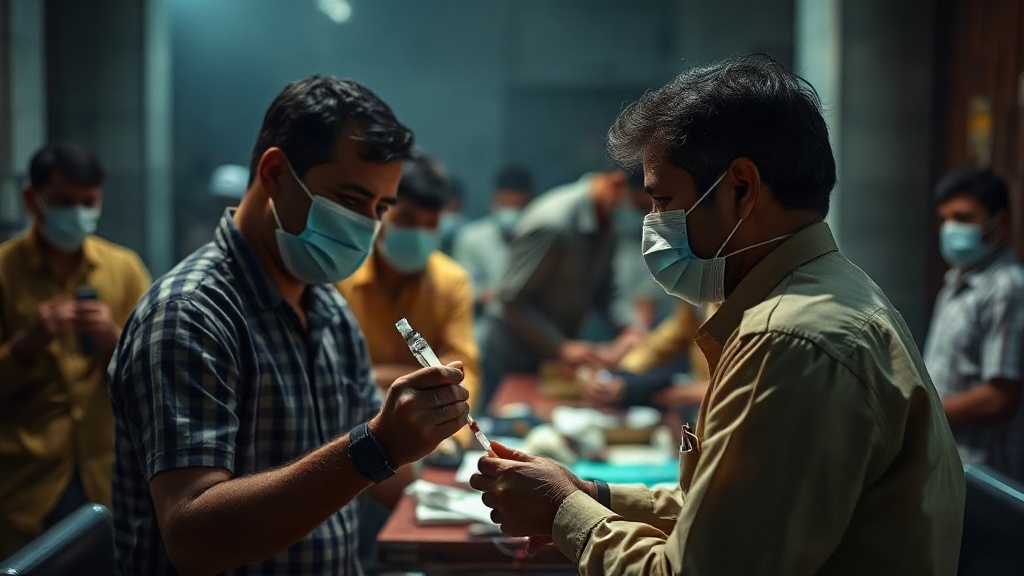
Public health authorities in eastern India launched a mass immunization drive this week after approximately 450 people consumed milk and ritual offerings sourced from a cow suspected of contracting rabies. The rapid medical response followed community celebrations where attendees drank *charanamrit*, a traditional consecrated beverage made with milk, water, and sweets during religious observances.
Local medical teams set up field stations and dispatched community healthcare workers to track down festival attendees across multiple hamlets. While medical literature indicates that contracting rabies through milk ingestion remains exceptionally rare, clinical protocols classify any exposure to fluids from an animal exhibiting terminal viral symptoms as an urgent trigger for post-exposure prophylaxis.
According to an NDTV — Top Stories dispatch, community alarm mounted swiftly after the dairy cow fell ill and died shortly following the conclusion of regional Durga Puja ceremonies. When village elders recognized symptoms consistent with advanced rabies infection, organizers cross-checked the source of the milk distributed during the religious rituals, prompting an immediate notification to district medical officers.
Fast Mobilization Across Rural Healthcare Centers
District hospitals and primary health centers received hundreds of residents seeking clinical evaluation within hours of the public health alert. Doctors initiated standard anti-rabies post-exposure vaccine courses, administering the first doses intramuscularly while documenting contact lists to track required booster appointments over the standard multi-week schedule.
Physicians on the ground prioritized individuals who reported mouth ulcers, sore gums, or mucosal abrasions, as open lesions in the digestive tract elevate theoretical transmission risks. Community health workers coordinated with local panchayat representatives to verify that every family supplied with festive offerings received medical counseling.
Veterinary officers examined the remaining livestock in the immediate vicinity to determine whether other cattle had suffered bites from stray dogs or feral animals carrying the virus. Preliminary village inquiries indicated that a stray canine had bitten the cow several weeks earlier, an event that went unreported until the animal began exhibiting sudden neurological distress.
Transmission Risks and Clinical Protocols
Rabies is a zoonotic viral disease that attacks the central nervous system of mammals, carrying a near-total fatality rate once clinical symptoms manifest in human hosts. The pathogen travels through nerve pathways toward the brain, typically transmitted through deep bites or scratches from infected animals whose saliva contains high viral loads.
Transmission through consuming the raw or unpasteurized milk of an infected animal is considered an atypical and low-probability transmission pathway by international health bodies. Nevertheless, Indian national rabies management guidelines mandate precautionary post-exposure vaccination whenever individuals ingest dairy products from animals confirmed or suspected to have died from active rabies infections.
Medical officers explained that boiling raw milk effectively neutralizes the fragile envelope of the rabies virus, rendering it non-infectious. However, ritual preparations often blend raw dairy, curd, and water without sustained high-heat pasteurization, leaving open the possibility of viral contamination if broken mucous membranes come into contact with untreated fluids.
Official monitoring documented in the NDTV — Top Stories dispatch noted that public health administrators ordered ample vaccine vials transferred from central district stores to village dispensaries to prevent stock shortages during the multi-day vaccination rollout.
Community Sensitization and Livestock Surveillance
The incident renewed attention on veterinary public health in rural districts where domestic animals and stray canine populations frequently intersect. Livestock owners often lack regular access to commercial veterinary care, meaning minor bite wounds sustained by working cattle or milch animals go unmonitored during the virus's prolonged incubation period.
Animal husbandry departments have stepped up door-to-door livestock checks, urging farmers to isolate any cattle displaying behavioral changes, excessive salivation, aggressive agitation, or difficulty swallowing. District veterinary surgeons conducted informational sessions advising residents never to consume milk or dairy derivatives from sick or dying cattle under any circumstances.
Community leaders also pledged to reform festival food procurement practices. Village committees announced plans to require verified commercial milk supplies or strict boiling verification before religious offerings are distributed during community events, seeking to ensure ritual traditions do not compromise public welfare.
Continuing Medical Surveillance and Follow-Up Doses
Medical authorities confirmed that all individuals receiving prophylaxis will require scheduled follow-up visits to complete the four-dose vaccine regimen over the coming month. Healthcare teams deployed auxiliary nurse midwives to record attendance at village clinics and follow up directly with families who fail to appear on designated appointment dates.
Public health teams reported no symptomatic individuals among those exposed, with community members responding cooperatively to immunization outreach. District medical officers stated that surveillance across the affected villages will remain active for at least thirty days to guarantee complete vaccine compliance and monitor nearby herds for secondary veterinary infections.
Further analysis referenced in the NDTV — Top Stories dispatch emphasized that district officials plan to conduct a comprehensive animal census in surrounding settlements to inoculate stray canines and establish buffer immunity zones, targeting the underlying source of domestic animal bites.
Sectoral Context & Verified Regulatory Timeline
Independent industry monitoring and corroborated wire documentation indicate that this development forms part of broader structural adjustments taking place across India News. Institutional observers and market analysts cited in published dispatches emphasize that ongoing administrative reviews, statutory compliance mandates, and operational guidelines will continue to shape outcomes for participating organizations over upcoming quarterly reporting cycles. Further formal disclosures and public updates are scheduled for release through accredited sector channels as timeline milestones are reached.


