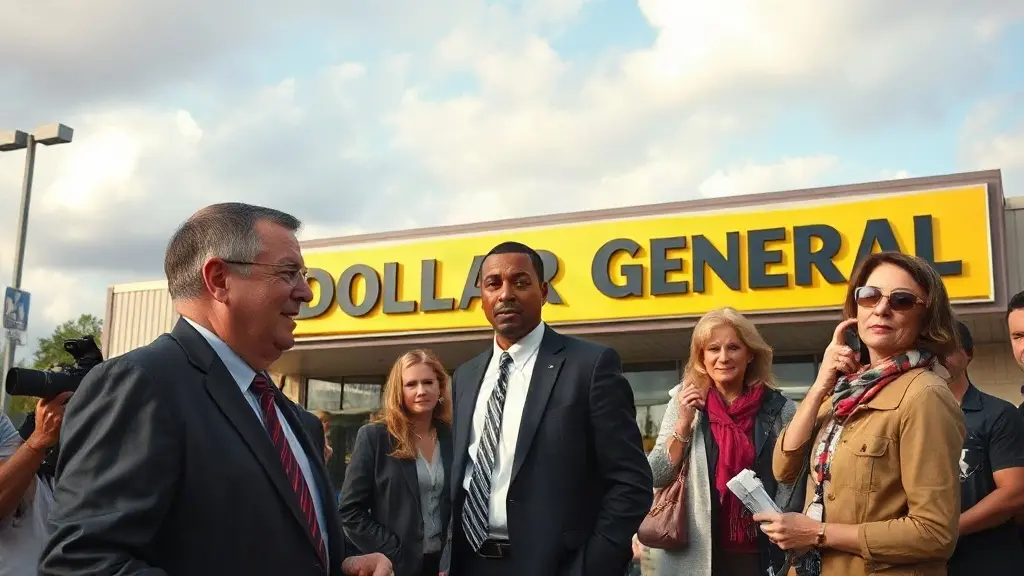
The Federal Trade Commission and attorneys general from 20 states filed a joint lawsuit against Dollar General on Monday, alleging that the major discount retailer systematically charges consumers higher prices at the cash register than those advertised on store shelves, tags, and promotional materials.
Following the announcement of the regulatory action, shares of Dollar General fell approximately 4% in market trading. According to the federal complaint, thousands of the company's retail locations across the country extracted millions of dollars in unlawful overcharges while failing to put adequate compliance measures in place to prevent recurring pricing discrepancies.

Unlawful Overcharges and Consumer Harm
Regulators claim the pricing discrepancies hit household budgets during an extended period of elevated living costs. According to detailed reporting on the complaint by CNBC, the joint lawsuit alleges that Dollar General has received "tens of thousands" of customer complaints regarding overcharging at checkout counters but failed to implement operational policies to resolve the problem.
The regulatory filing contends that the company knowingly "taken advantage of vulnerable shoppers by extracting millions of dollars in unlawful overcharges with insufficient safeguards to prevent the practice." The legal action targets checkout practices that regulators argue disproportionately affect low- and middle-income families relying on discount grocers.
"Dollar General has betrayed the trust of millions of American consumers and imposed significant financial harm on communities and consumers who are already struggling to make their paychecks last," stated Christopher Mufarrige, director of the FTC's Bureau of Consumer Protection.
Broad Multi-State Coalition Backs Federal Action
The enforcement action brings together an expansive bipartisan coalition of state attorneys general representing regions nationwide. Regulators from coastal states, the Midwest, and the Deep South have unified under the federal complaint to seek court-ordered pricing reforms and financial remedies.
The 20 states participating in the legal action alongside the FTC are Alabama, Arizona, Arkansas, California, Connecticut, Florida, Illinois, Iowa, Kansas, Louisiana, Michigan, Mississippi, Nebraska, New Jersey, North Carolina, Ohio, Oklahoma, Tennessee, Utah, and Wisconsin.
| Case Dimension | Confirmed Details | Regulatory & Market Impact |
|---|---|---|
| Lead Regulators | FTC & 20 State Attorneys General | Bipartisan enforcement coalition seeking injunctive relief |
| Core Allegations | Point-of-sale checkout prices higher than shelf tags | Documented overcharges totaling millions of dollars |
| Consumer Complaints | Tens of thousands cited in filings | Evidence of long-standing corporate awareness without remediation |
| Market Reaction | Dollar General shares declined ~4% | Direct stock response to federal litigation exposure |
| Company Response | No immediate public comment | Formal court response pending in federal district court |
Economic Context and Corporate Scrutiny
The legal filing comes during a period when consumers are increasingly turning to value retailers and dollar store chains to manage elevated food, grocery, and gasoline expenses. Because discount chains position themselves as low-cost alternatives for staple consumer goods, discrepancies between shelf tags and checkout scanners create immediate budget strains on household grocery purchases.
As documented in the CNBC coverage of the FTC filing, public officials across the political spectrum have increased scrutiny of retail pricing accuracy and consumer protection enforcement. Dollar General did not immediately respond to requests for comment regarding the federal lawsuit.
Moving forward, the lawsuit will proceed in federal court, where regulators will seek court orders requiring shelf-to-register price matching, third-party pricing audits, and civil monetary penalties for past pricing practices across affected stores.