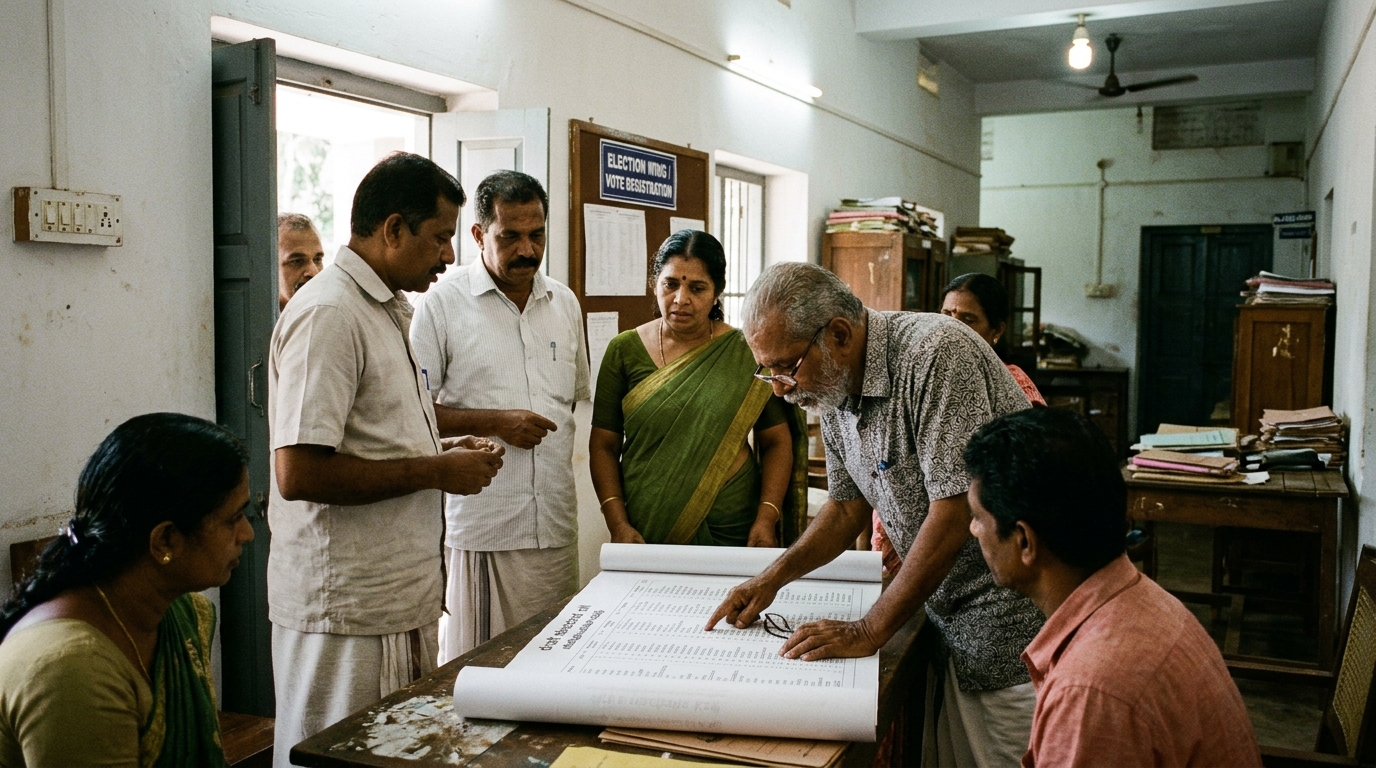
Election officials across southern administrative territories have initiated statutory preparations for the upcoming Special Summary Revision of voter registries, locking in official deadlines for draft publications, public claims, and the certification of final voter lists.
The exercise establishes statutory cutoffs for citizen registration, duplicate entry expungement, and residential address corrections. Under directives established by election authorities, draft voter lists will undergo systematic public scrutiny, enabling eligible citizens who reach voting age to formalize their constitutional franchise before upcoming electoral cycles.
According to regulatory disclosures confirmed by regional election commissions, chief electoral officers have directed municipal field teams, designated booth-level officers, and district election administrators to conduct door-to-door physical verifications. These administrative steps ensure accuracy in voter density counts, prevent wrongful deletions, and remove deceased electors from official databases.
Statutory Verification Schedules and Administrative Mandates
Regional chief electoral officers confirmed the operational calendar governing the registration process, establishing rigorous inspection intervals across administrative subdivisions. Under the statutory schedule detailed by The Hindu — National dispatch, electoral machinery will release draft registers to municipal centers and public offices to facilitate broad grassroots inspection.
Following draft publication, district administrations open an intensive window dedicated to receiving formal claims and objections. Residents seeking inclusion, requesting constituency transfers, or challenging erroneous entries must file dedicated statutory forms through booth-level officers or designated digital governance portals.
Electoral officers emphasize that strict adhering to verification protocols remains essential to prevent disenfranchisement. Booth-level personnel must verify residential continuity, particularly in rapidly urbanizing peripheral pockets where migration patterns frequently produce duplicate registrations across adjacent administrative segments.
Digital Applications and Grassroots Administrative Architecture
To manage administrative volume, election offices are pairing traditional in-person hearings with digital verification tools. Electors can monitor their application lifecycle via state voter service portals, tracking real-time status updates from initial field inquiries through final administrative approval.
Administrative officers emphasize that the Special Summary Revision relies fundamentally on Form 6 for fresh enrollments, Form 7 for objections against inclusion, and Form 8 for residential corrections or data modifications. Field personnel receive standardized operational guidelines to ensure consistent documentation standards across all taluks and municipal zones.
Detailed operational records released through official election administration notices stipulate that field staff must document physical residence when processing applications. This mandate protects against phantom enrollments while providing vulnerable or transient populations transparent recourse if documentation challenges arise during door-to-door audits.
Political parties recognized by election regulators have also been formally invited to designate Booth-Level Agents. These political representatives hold statutory authority to accompany public verification drives, observe proceedings, and register formal scrutiny claims alongside state-appointed booth officers, creating a verifiable record of institutional neutrality.
Managing Demographic Shifts and Urban Electoral Accuracy
Rapid peri-urban development across regional centers has complicated voter roll maintenance. Expanding satellite townships, seasonal rental arrangements, and changing administrative district lines routinely disrupt voter databases, requiring systematic field cross-referencing.
Electoral directors acknowledge that multi-member residential complexes and gated communities often demonstrate lower rates of formal registry updates compared to rural hamlets. To resolve this imbalance, special weekend enrollment camps are scheduled across community centers, educational complexes, and resident welfare association halls throughout the claims window.
According to regional governance analysis compiled in electoral oversight bulletins, systematic audits during prior revision exercises identified thousands of unlinked entries resulting from family relocations that went unrecorded on central registers. The current revision process applies automated deduplication software alongside manual field visits to identify and reconcile identical demographic entries appearing across multiple constituencies.
College campuses, industrial clusters, and vocational centers have also been designated as primary mobilization targets. By establishing direct verification centers within educational institutions, election authorities aim to register newly eligible voters who turn eighteen on or before the qualifying statutory cutoff date.
Regulatory Scrutiny and Public Recourse Standards
To ensure due process before any citizen is removed from the voter rolls, strict statutory safeguards govern name deletions. Electoral Registration Officers are legally prohibited from removing any elector without issuing advance registered notice, accompanied by a documented opportunity for a formal hearing.
Under regulatory standards reinforced by state election secretariats, unverified mass deletions carried out without individual notice violate basic procedural directives. If an entry faces objection through Form 7, the contesting party carries the evidentiary burden of substantiating non-residence or duplicate registration before presiding field magistrates.
District Collectors, serving as District Election Officers, maintain appellate authority over all decisions rendered by regional Electoral Registration Officers. Electors whose claims or inclusion petitions are rejected retain the legal right to lodge formal appeals within statutory deadlines, ensuring judicial and executive accountability across the voter list revision.
Administrative monitoring committees will conduct unannounced spot-checks across polling stations to confirm that booth-level officers maintain physical copies of draft rolls for public review. Citizens lacking internet connectivity can inspect these bound paper registers during standard government working hours without paying administrative fees.
Final List Certification and Upcoming Operational Milestones
Following the conclusion of public claim periods, field teams will enter a concentrated adjudication phase. Electoral officers must process every filed petition, conduct necessary physical spot-verifications, and record formal decisions in centralized registry databases.
Once claims are settled and updates logged, election commissions will publish the finalized electoral rolls across designated regional headquarters. This published registry forms the conclusive legal basis for all upcoming municipal, legislative, or parliamentary elections within the respective jurisdictions until the next scheduled revision cycle.
Citizens reaching voting eligibility are urged to verify their personal details on draft lists immediately upon publication to ensure unhindered democratic participation before administrative deadlines permanently close the official register for the coming calendar year.


