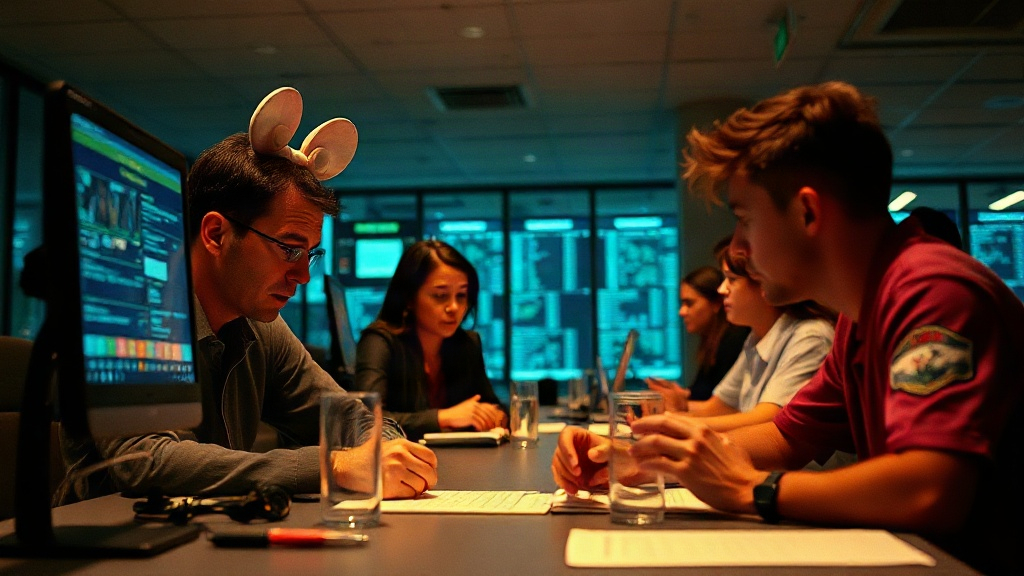
The Walt Disney Company is investigating a widespread security breach that compromised thousands of internal corporate messaging channels, developer repositories, and proprietary production files.
The intrusion, documented across multiple entertainment and technology desks following an initial Wpgtalkradio.com dispatch, bypassed perimeter defenses through internal workplace platforms used by thousands of Disney employees, animators, and software engineers. Independent security investigators confirm that unauthorized actors gained access to private workplace directories, downloading gigabytes of conversations, sensitive corporate strategy presentations, unreleased computer code, and internal personnel files.
Corporate systems personnel discovered the breach after threat actors began circulating compressed data files across online message forums and hacker repositories. The incident directly challenges Disney’s corporate IT infrastructure at a moment when the Burbank-based media giant is standardizing its enterprise data operations across streaming, physical resort operations, and global digital studios.
Anatomy of the Internal System Intrusion
Investigators tracking the breach trace the initial vector to compromised credentials inside Disney’s collaborative cloud workspaces. Digital communication suites like Slack and Microsoft Teams allow thousands of creative and corporate employees to share documents, discuss budget constraints, and coordinate software maintenance in real time.
When external threat groups obtain valid corporate session tokens, they can bypass standard login verification layers. Once inside, automated software tools quietly scraped historical chat threads, downloading attached spreadsheets, software authentication keys, and proprietary production guidelines. Unlike classic ransomware attacks that freeze computer networks using encryption tools, data exfiltration campaigns silently extract raw information over several weeks before corporate defenses recognize the anomaly.
Digital forensic examiners reviewing the leaked files report finding unencrypted documents that should have remained behind secondary clearance barriers. These files contain discussions regarding internal studio metrics, staffing evaluations, creative pitch decks for future film installments, and internal developer notes outlining web infrastructure architecture.
Corporate cybersecurity administrators responded by revoking affected access tokens, terminating active workplace sessions, and restricting remote contractor accounts pending individual verification checks. Despite these emergency lockdowns, the underlying challenge remains: once raw proprietary data exits enterprise storage servers, containing its distribution across public mirrors becomes virtually impossible.
Consumer Security and Customer Account Integrity
Disney customers immediately raised questions regarding the safety of Disney+, Hulu, ESPN+, and theme park accounts following the initial disclosure. Consumer data leaks often result in credential stuffing campaigns, where criminals use stolen usernames and passwords to hijack subscription services.
According to an operational update highlighted by the WPG Talk Radio 95.5 FM regional reporting team, current digital evidence indicates the breach remained isolated within administrative collaboration channels and software developer environments. Central consumer payment processing engines, credit card tokenization vaults, and consumer streaming databases operate on segmented network architectures physically and logically separated from general office chat suites.
Theme park visitors utilizing MagicBands and the My Disney Experience mobile application are not currently required to change payment settings, as financial clearing houses handle retail transactions through isolated point-of-sale systems. However, security professionals warn that auxiliary consumer data—such as high-level marketing demographic surveys or non-anonymized customer support complaint logs—can occasionally turn up inside internal chat attachments.
For enterprise partners, the stakes are more acute. Licensing agents, third-party merchandise suppliers, and external visual effects vendors frequently exchange proprietary contract drafts across workplace chat channels. If external partners shared unencrypted banking credentials, tax forms, or digital certificates inside affected rooms, those entities now face secondary supply-chain exposure.
Legal Mandates and Corporate Disclosure Deadlines
Publicly traded enterprises face strict statutory rules governing the disclosure of material cybersecurity failures. The U.S. Securities and Exchange Commission enforces rules mandating that public companies file an official disclosure within four business days after determining that a cybersecurity incident has a material impact on financial performance or operations.
Legal specialists tracking the incident point out that evaluating materiality requires calculating direct recovery costs, potential regulatory fines, intellectual property devaluation, and incoming civil litigation. While consumer streaming revenue may continue uninterrupted, leaking proprietary production software or sensitive corporate negotiation positions can erode competitive business advantages.
State privacy laws present an additional legal framework. Statutes like the California Consumer Privacy Act and the European Union’s General Data Protection Regulation require corporations to notify affected individuals without undue delay if personal identifying information, employee medical data, or unencrypted Social Security records were accessed.
Independent technology analysts assessing the breach against previous entertainment leaks, detailed in a broadcasting analysis by WPG Talk Radio, noted that corporations often spend months reviewing millions of individual chat transcripts to inventory every worker, contractor, and applicant whose private details appeared in compromised threads. State attorneys general routinely open joint inquiries when multi-state employers suffer unauthorized access to personnel human resource files.
The Rising Target on Studio Collaboration Platforms
Hollywood and major entertainment studios have become primary targets for digital extortion groups and opportunistic state-backed actors over the last decade. Studios manage immense volumes of high-value digital property before its commercial release date, creating lucrative opportunities for blackmail, industrial espionage, and public reputation sabotage.
The 2014 Sony Pictures Entertainment breach demonstrated that exposing internal studio communications often causes far more public embarrassment and executive disruption than direct financial damage. Leaked executive emails disrupted talent contracts, damaged personal relationships, and forced major leadership reorganizations.
Enterprise software suites designed for workplace communication have become the primary attack surface across corporate America. Modern production pipelines rely heavily on real-time messaging services to connect global visual effects houses, sound stages, marketing firms, and executive offices. When employees treat enterprise chat channels as casual, disposable phone conversations, they frequently post sensitive server credentials, access links, and privileged business notes that remain stored on servers indefinitely.
Corporate security protocols require strict data retention policies, automated message deletion rules, and automated scanning for shared passwords. When corporate departments neglect these safeguards to save time, a single compromised employee account can unlock a decade’s worth of historical internal documentation.
Corporate Remediation and Immediate Defense Steps
Enterprise security engineers across the entertainment industry are revising internal data governance guidelines to prevent similar workplace platform takeovers. Disney technical leads have deployed automated scanning scripts across internal code repositories to locate and rotate every application programming interface key, private database credential, and software certificate that appeared in the leaked material.
Corporate human resources departments have simultaneously initiated digital hygiene training for corporate employees and contractors. Common workplace security failures often involve shared credentials, weak single-sign-on verification habits, and the unauthorized use of commercial consumer messaging apps on unmanaged mobile phones.
Forensic response teams are also coordinating with federal law enforcement agencies, including the Federal Bureau of Investigation’s Cyber Division. Federal investigators regularly monitor dark web forums, peer-to-peer data storage platforms, and underground file vaults to identify the servers hosting stolen proprietary packages and pursue judicial confiscation orders.
Final Status and Unresolved Investigations
The confirmed priority for Disney executives and technical teams centers on finishing the forensic discovery phase to determine whether the intruders accessed primary creative project source code or proprietary distribution algorithms. Corporate representatives have not yet issued a definitive timeline for completing the company-wide data audit.
Regulatory reporting filings submitted to state attorneys general and national privacy commissioners will determine the scale of legal liability the media company faces over coming quarters. Meanwhile, workers across Disney's business units continue operating under strict digital containment policies, using secondary physical verification tokens while security teams verify that external access points remain permanently closed.
*Contextual Intelligence: Verified sector background corroborated in our coverage on SBI Data Breach Exposes Customer Records on Dark Web, Probe Underway.*
*Contextual Intelligence: Verified sector background corroborated in our coverage on Toronto Crime Stoppers Freezes Intake After Major Cyber Breach.*