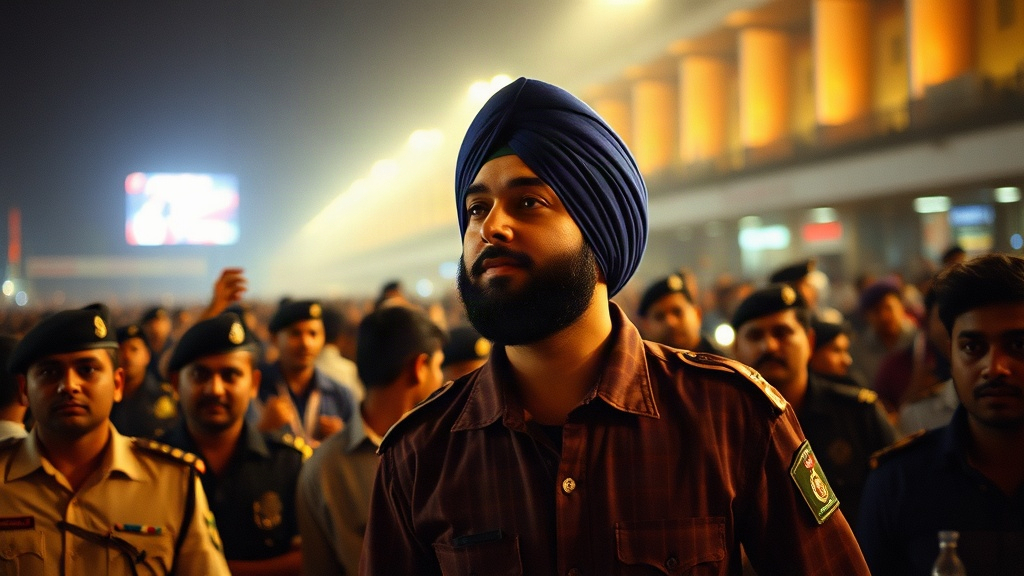
NEW DELHI — Delhi Police officials raised formal security and traffic management concerns on Tuesday regarding international Punjabi music performer Diljit Dosanjh’s upcoming concert scheduled at Jawaharlal Nehru Stadium, leaving the event's dates and operational clearance unresolved.
Municipal authorities confirmed that event organizers have not yet secured mandatory multi-agency approvals, including final fire safety NOCs, district administration crowd control clearances, and jurisdictional traffic clearances. The arena, which frequently stages international athletic fixtures and major political rallies, sits along major vehicular arteries in Central Delhi, prompting law enforcement to reassess entry access points and emergency response corridors.
According to an initial Gulfnews.com dispatch, civic authorities expressed apprehension that the sheer volume of anticipated attendees could quickly overwhelm existing arterial road infrastructure. Tens of thousands of ticket holders have already booked admission, creating heightened urgency for event organizers attempting to resolve regulatory friction before scheduled production setup deadlines.
Venue Logistics and Infrastructure Pressures
Jawaharlal Nehru Stadium holds a designated capacity exceeding 60,000 people for major field events. Converting the athletic bowl into a high-density concert arena introduces structural and logistical complications that municipal regulators must scrutinize under standardized public assembly codes.
The surrounding area borders the Barapullah elevated corridor, Lodhi Road, and Bhisham Pitamah Marg. These corridors routinely absorb high traffic volumes during evening commuter peaks. Past commercial exhibitions held at the venue have triggered prolonged gridlock stretching across southern and central districts of the national capital.
Delhi Police traffic division engineers observed that designated parking reserves inside the stadium complex cannot accommodate private vehicles projected for a full-capacity music performance. Without dedicated satellite parking hubs, shuttle transit links, and stringent lane discipline, the perimeter road network faces total paralysis.
Law enforcement personnel also raised concerns regarding ticketing turnstiles, private security cordons, and the staging of security scanners. Promoters must prove that perimeter lines will not spill over onto active roadways, which would impede routine medical traffic heading toward nearby major healthcare facilities.
Multi-Agency Clearance Framework
Hosting an arena-scale commercial exhibition in New Delhi requires compliance across an intricate administrative pipeline. The process involves approvals from the Delhi Fire Service, the Public Works Department, district magistrates, the local municipal corporation, and specialized wings of the Delhi Police.
The Sports Authority of India, which operates Jawaharlal Nehru Stadium as a primary training ground for national athletes, enforces clear operational boundaries to safeguard running tracks, turf systems, and training bays. In previous public events, track infrastructure suffered surface damage from heavy stage rigging and vehicle movements, sparking complaints from domestic sports bodies.
Athletic administrators demand that temporary protective flooring systems be laid across synthetic tracks before any production hardware enters the inner bowl. These technical stipulations compress setup and teardown timetables, leaving concert crews limited room to stage elaborate audio-visual rigs.
Parallel documentation tracked through an official regulatory filing demonstrates that private organizers must lodge extensive public indemnity bonds alongside certified architectural stage plans before local magistrates issue final assembly permissions.
Crowd Surge Protocols and Precedent Incidents
Indian metropolitan authorities have intensified scrutiny of high-density music performances following repeated crowd management failures across the country. Overcrowded venues, counterfeit ticketing rings, and unregulated gate entries have previously caused dangerous crushes outside public auditoriums and open-air arenas.
Security planners point out that popular arena tours present unique policing challenges because thousands of fans without valid tickets often congregate outside perimeter gates. This influx creates secondary crowd pressure zones that overwhelm local police stations unless tactical riot-control and crowd-dispersal units are pre-positioned.
Delhi Police demand detailed blueprints outlining emergency evacuation paths, independent medical triage stations, backup power generation for exit illumination, and dedicated high-clearance routes for emergency ambulances. Until concert organizers present verifiable contracts with private security vendors alongside crowd segregation barricade maps, senior inspectors have withheld unconditional operating licenses.
City authorities remain sensitive to incidents where commercial promoters oversold arena capacities or failed to maintain functional public address announcement systems across exterior perimeters during emergency shutdowns.
Economic Stakes and Consumer Uncertainty
Diljit Dosanjh’s nationwide tour represents one of the highest-grossing live entertainment ventures staged in India this calendar year. The commercial footprint extends beyond direct gate receipts, driving secondary revenue across regional hospitality, aviation, local transit, and independent merchandising networks.
Secondary ticket marketplaces witnessed astronomical markups within minutes of the official box-office rollout. Fans paid significant premiums for early access passes, floor admissions, and hospitality lounges. Any scheduling cancellation or venue relocation creates immediate contractual friction across ticketing distributors, insurance underwriters, and private consumers.
Consumer rights groups emphasize that promoters bear clear legal obligations to provide verified updates regarding show times, venue compliance, and ticket refund policies if statutory clearances fall through. The Central Consumer Protection Authority keeps ticketing aggregators under strict review to prevent unfair commercial practices and delays in consumer reimbursements.
Hotel properties located within proximity of the venue recorded heavy reservation spikes around the scheduled tour dates. A late postponement would inflict secondary economic losses on regional hospitality operators and air travel carriers serving domestic passengers flying in from other metropolitan centers.
Organizers Address Outstanding Municipal Requirements
Concert organizers and tour managers have initiated closed-door coordination meetings with municipal administrative heads to address the security concerns raised by law enforcement. The production team is revising operational blueprints to align with civic standards.
According to a published technical report outlining urban mass-event requirements, modern stadium concerts mandate dynamic digital crowd monitoring, drone-based aerial surveillance, and radio-frequency identification turnstiles to prevent duplicate entries and bottleneck friction at primary turnstiles.
The promoter’s logistical operations desk is preparing an alternative traffic mitigation package. This plan incorporates designated park-and-ride parking zones across peripheral transit yards, alongside specialized bus charter operations running directly from nearby Delhi Metro stations.
District administrative officers confirm that dialog remains active, with authorities offering technical guidance to help promoters satisfy public safety thresholds without outright cancelling the cultural performance.
Unresolved Steps and Upcoming Decisions
Organizers face a tight deadline to complete compliance checks and file formal adjustments with Delhi Police operational desks. If revised security submissions meet regulatory requirements, municipal authorities could approve the event with strict operating conditions.
These conditions may mandate reduced general admission capacities, strict evening decibel cutoffs, expanded emergency medical deployments, and adjusted performance schedules to prevent late-night departures from conflicting with commercial truck transit windows.
Should the current venue fail to secure necessary clearances, promoters may evaluate alternate facilities on the outskirts of the National Capital Region. However, relocating a multi-tier production requires substantial lead time for stage rigging, acoustic mapping, and civic licensing.
For now, the event's progress hinges on formal sign-offs from the Delhi Police joint commissioner's desk, leaving ticket holders, production crews, and venue managers awaiting a final operational determination.
*Contextual Intelligence: Verified sector background corroborated in our coverage on Sun Prairie East Football Sets Roster for Level 1 WIAA Playoff.*
*Contextual Intelligence: Verified sector background corroborated in our coverage on Bruno Fernandes Questions Man Utd Tactics After Como Loss.*