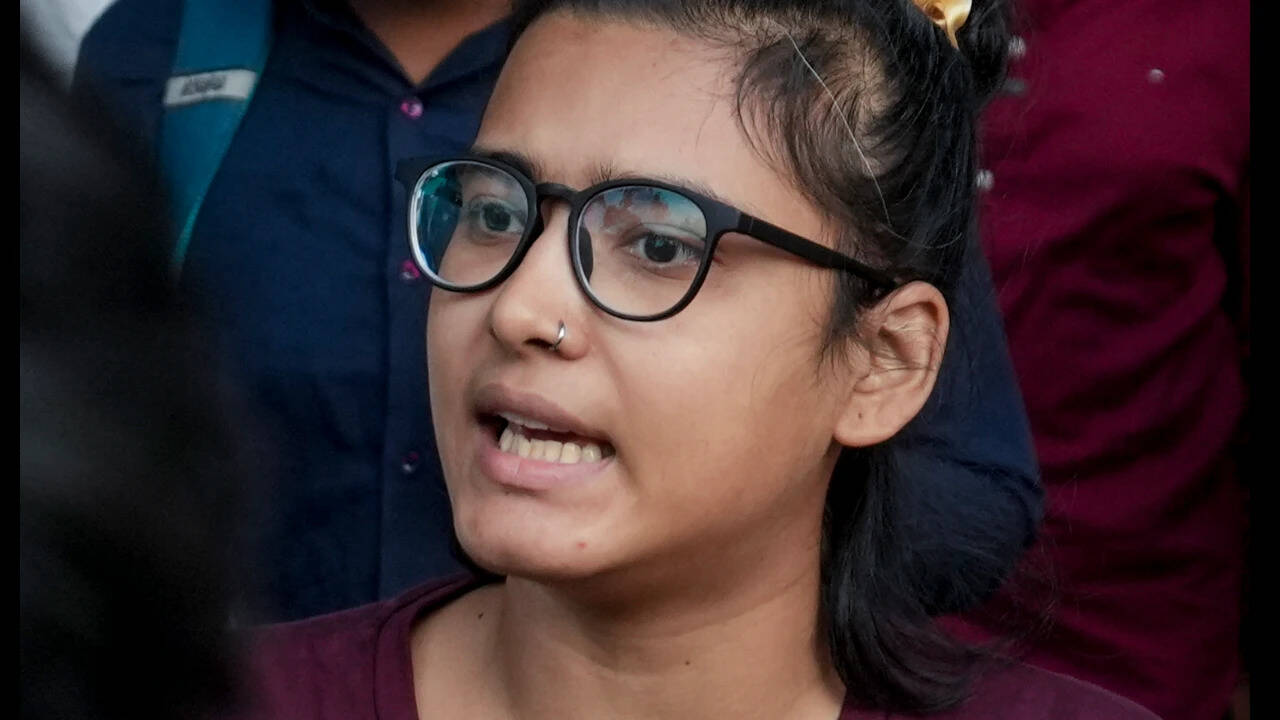
Petitioner Neha Bora approached the Delhi High Court on Thursday to challenge a local police notice that questioned her hoisting of the Indian national flag, contending that private citizens require no government permission to display the tricolour on their premises.
The petition argues that flying the national flag with dignity and respect forms part of a citizen's fundamental right to freedom of speech and expression under Article 19(1)(a) of the Constitution of India. Bora filed the legal challenge after local law enforcement officials served her with an administrative notice asking for the statutory authority or regulatory clearance that permitted her to hoist the tricolour at her property.
According to proceedings reported by the Times of India — Top Stories dispatch, the plea urges the high court to quash the police notice and clarify that routine displays of patriotism by ordinary citizens do not warrant police scrutiny, provided individuals follow the statutory protocols outlined in the Flag Code of India.
The Dispute Over Local Police Authority
The dispute began when police authorities issued a formal notice questioning Bora's decision to mount the Indian national flag. Officers asked for documentation or official authorization justifying the display, prompting the petitioner to mount a constitutional challenge rather than submit administrative clearances.
Bora's legal counsel argued before the court that the police notice misinterprets Indian flag regulations and oversteps statutory boundaries. The plea maintains that no provision under existing criminal or municipal law compels a citizen to obtain a prior "No Objection Certificate" from station house officers or municipal bodies before hoisting the tricolour.
Legal records cited in the plea state that treating the peaceful, respectful display of the tricolour as a potential public nuisance or regulatory breach creates a chilling effect on legitimate expressions of national identity. The petitioner asked the court to set aside the notice as arbitrary, unconstitutional, and outside the lawful jurisdiction of local police.
Constitutional Precedents and the Flag Code
The primary legal cornerstone of the petition rests on the landmark 2004 Supreme Court ruling in Union of India v. Naveen Jindal. In that verdict, a bench led by Chief Justice of India V.N. Khare held that hoisting the national flag on private property is an integral part of the fundamental right to free expression, subject only to reasonable restrictions defined under Article 19(2).
The Supreme Court affirmed two decades ago that the right is not unrestricted, requiring strict adherence to the Prevention of Insults to National Honour Act, 1971, and the Flag Code of India, 2002. However, the top court expressly stated that the state cannot prevent citizens from flying the flag out of general suspicion or bureaucratic overreach if the display adheres to established dignitary standards.
As noted in the Times of India legal reporting, the Flag Code was further liberalized by the Union Ministry of Home Affairs in December 2021 and July 2022 to accommodate machine-made polyester flags and allow round-the-clock displays if the flag remains hoisted in an open space and fully lit at night. The government actively promoted civilian participation through nationwide campaigns such as the "Har Ghar Tiranga" initiative, encouraging citizens to hoist flags at private residences without prior police permits.
Public Rights Versus Police Overreach
The legal debate before the Delhi High Court centers on the boundary between reasonable state regulation and unlawful administrative harassment. While the Prevention of Insults to National Honour Act imposes criminal penalties for defacing, burning, trampling, or otherwise dishonoring the flag, it does not mandate licensing mechanisms for individual citizens.
Civil rights lawyers tracking the litigation point out that lower-level police personnel frequently misunderstand civil regulations and criminal statutes regarding public displays. Without explicit internal directives, local police stations sometimes interpret unsolicited assemblies, banners, or flags as potential public order matters or unpermitted commercial hoardings.
The petition highlights this disconnect, noting that ordinary residents should not have to engage legal representation simply to defend themselves against arbitrary demands for non-existent permits. The filing asserts that requiring citizens to produce clearances reverses constitutional protections and undermines established public policy.
Arguments Presented Before the Bench
During the preliminary hearing, Bora's counsel submitted that the impugned notice subjected the petitioner to unnecessary harassment and legal uncertainty. Counsel argued that the police action created an impression that displaying the tricolour was a restricted activity rather than an affirmed civil liberty.
Government counsel representing the authorities sought time to obtain instructions from the concerned police department regarding the circumstances under which the notice was drafted and delivered. The high court heard brief submissions before scheduling further consideration of the matter.
Court observers following the Delhi High Court proceedings emphasize that the case provides an opportunity for the judiciary to establish operational guidelines for police departments across the National Capital Territory, preventing unjustified notices against residential flag displays in the future.
Legal Ramifications and Next Steps
The outcome of Bora's petition will carry direct implications for property owners, residential welfare associations, and law enforcement personnel throughout the capital. If the high court issues binding directions or quashes the notice, it will reinforce the legal boundaries governing police intervention in private expressions of patriotism.
A clear ruling would also clarify how police officers evaluate citizen compliance with the Flag Code. While law enforcement retains statutory authority to intervene when flags are torn, soiled, flown upside down, or displayed in violation of the Prevention of Insults to National Honour Act, the court's verdict could reaffirm that displaying an undamaged flag requires no preliminary license.
The Delhi High Court has directed the police to clarify their official stance on the notice, with formal filings and the next round of judicial hearings expected in the coming weeks.


