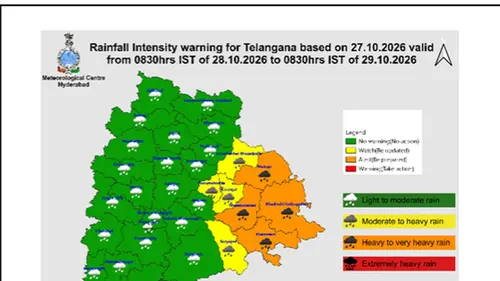
The Ministry of Civil Aviation has initiated high-level reviews of flight infrastructure and air traffic protocols across eastern regional airports as Cyclone Arnab advances across the Bay of Bengal, threatening coastal transport networks ahead of expected landfall.
The India Meteorological Department reported that a deep depression over the east-central and southeast Bay of Bengal intensified rapidly into cyclonic storm Arnab. Meteorologists project the system will cross the Andhra Pradesh and Yanam coasts between Bapatla and Visakhapatnam as a very severe cyclonic storm by the forenoon of October 28. The storm is forecast to sustain surface winds between 115 and 125 kmph, with localized gusts reaching up to 140 kmph.
According to The Hindu's regional weather coverage, authorities in both Odisha and Andhra Pradesh have closed schools, halted sea fishing activities, and mobilized emergency response units to pursue a target of "zero loss of life and minimal damage to infrastructure." Coastal patrolling has expanded, and Marine Police units remain on high alert.

Aviation and Regional Infrastructure Mobilization
Civil aviation stakeholders are monitoring weather telemetry to assess runway crosswinds, aircraft tie-down arrangements, and backup communication power at regional aerodromes, including Visakhapatnam and surrounding airstrips. Flight schedules remain subject to tactical delays or diversions depending on wind thresholds and cloud ceiling dynamics.
Simultaneously, the broader regional meteorological footprint is shifting. While coastal Andhra faces intensifying cyclonic conditions, neighboring Tamil Nadu is entering a temporary break in monsoon activity. After logging 21.5 cm of rainfall—approximately 58% above its monthly benchmark since mid-October—Tamil Nadu is slated for drier conditions through November 1, with downpours limited to isolated pockets in southern and Western Ghats districts.
Andhra Pradesh has recorded 61 cyclonic storms since 1970, though systems attaining Very Severe Cyclonic Storm status remain infrequent. The current approach of Cyclone Arnab marks the first storm of this intensity to test the state's coastal defense infrastructure since Cyclone Titli struck in October 2018.
| Regional Metric / Milestone | Current Reading / Forecast | Operational Baseline / Context |
|---|---|---|
| Expected Landfall Window | Forenoon of October 28 | Between Bapatla and Visakhapatnam (near Yanam-Kakinada) |
| Peak Sustained Wind Speeds | 115–125 kmph (gusts to 140 kmph) | Threshold for Very Severe Cyclonic Storm (VSCS) classification |
| Civil Aviation Review Scope | East coast regional airports | Precautionary tarmac safety, crosswind monitoring, equipment tie-downs |
| Tamil Nadu Rainfall Trend | 58% above monthly average (21.5 cm) | Temporary dry spell until rain revival projected around November 1 |