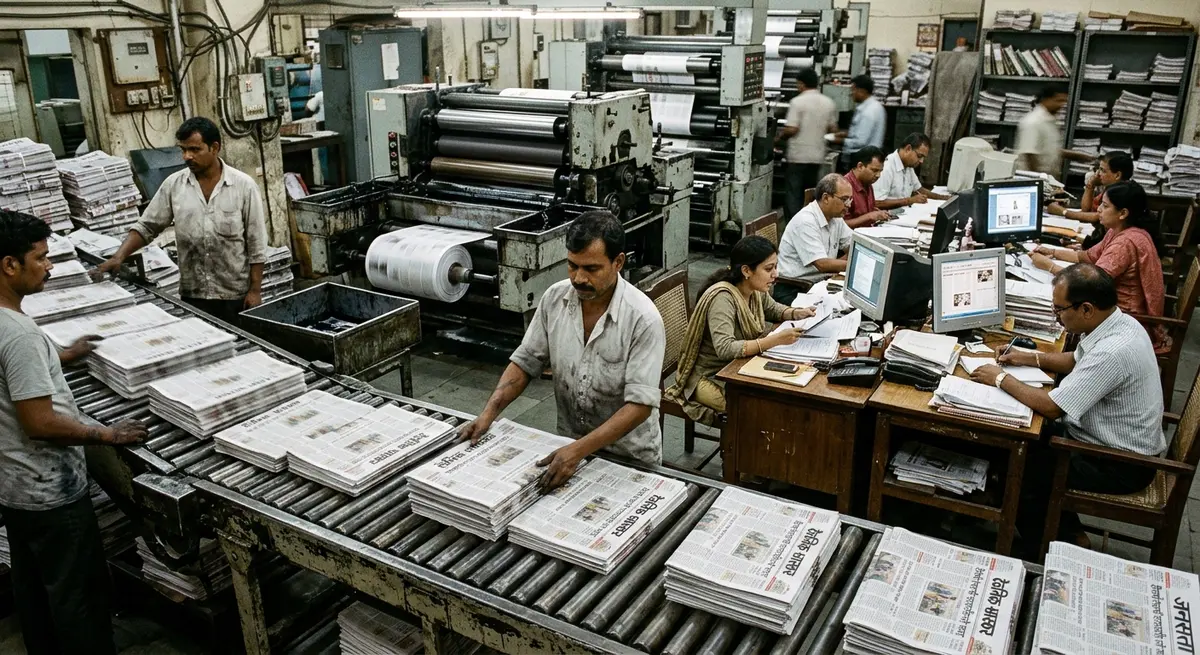
LUCKNOW — Election officials across Uttar Pradesh have commenced the formal counting of ballots across 11 Legislative Council constituencies, marking the decisive phase of an election cycle that will reshape representation in the state’s upper legislative chamber.
According to an official dispatch from News On AIR, ballot verification and preferential vote segregation began early under strict security protocols established by local district administrations. The 11 contested seats traditionally draw heavy participation from specialized electorates, serving as a critical barometer of regional grassroots organization and institutional support.

Understanding the Legislative Council Framework
Unlike direct state assembly elections where members of the legislative assembly (MLAs) are elected via direct adult franchise, Legislative Councils (Vidhan Parishad) operate as permanent upper houses in select Indian states, including Uttar Pradesh and neighboring Bihar. As detailed by public electoral guidelines on National Portal of India, council seats are filled through staggered indirect elections and targeted electorates.
Members of the Legislative Council (MLCs) serve six-year terms, with one-third of the membership retiring every two years. In biennial elections of this nature, seats typically comprise graduates' constituencies, teachers' constituencies, and local authorities' jurisdictions. The voting process relies on the single transferable vote (STV) system under proportional representation, requiring counting officials to meticulously tabulate voter preference quotas before declaring a winner.
| Feature | Legislative Assembly (Vidhan Sabha) | Legislative Council (Vidhan Parishad) |
|---|---|---|
| Chamber Role | Lower House (Direct electorate) | Upper House (Permanent revising chamber) |
| Member Tenure | 5 years (Subject to dissolution) | 6 years (One-third retiring every 2 years) |
| Voting Mechanism | First-Past-The-Post (FPTP) | Proportional Representation via Single Transferable Vote |
| Seats Contested | 403 constituencies (UP) | 11 specific seats in current counting cycle |

Seats — verified documentary press visual.
Electoral Dynamics and Political Significance
The ongoing counting process represents a strategic test for major political parties seeking to expand their presence in the bicameral legislature. While the Legislative Assembly holds primary authority over budgetary appropriations, the Legislative Council exercises vital scrutiny over statutory bills, government notifications, and public policy formulation.
Regional observers note that performance across specialized graduate and teacher segments provides distinct insight into white-collar and public-sector sentiment. The state election apparatus, adhering to guidelines issued by the Election Commission of India, deployed multi-tier security cordons, closed-circuit television monitoring, and micro-observers across all designated counting centers to maintain process integrity.
Final certified results are anticipated progressively as returning officers complete initial quota tabulations and secondary preference distributions throughout the day.