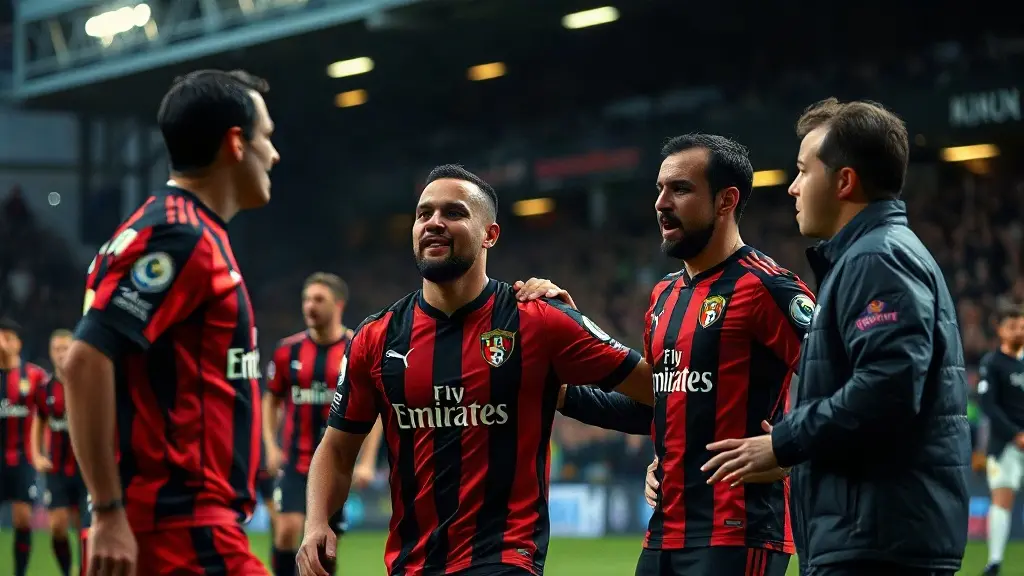
AFC Bournemouth defeated Italian giants AC Milan 3-0 on home soil, converting tactical cohesion and superior physical intensity into a decisive statement against one of European football's most decorated institutions.
The contest delivered an unmistakable display of modern football dynamics, where a mid-tier English outfit controlled proceedings against seven-time European Cup winners from start to finish. Detailed match analysis from the BBC Sport match report confirmed that Bournemouth pressured Milan into repeated defensive errors while creating consistent chances in transition. Rather than behaving like an experimental exhibition, the fixture operated with genuine competitive bite, demonstrating how English top-flight sides execute high-intensity pressing across ninety minutes.
For Bournemouth, the victory represents validation of manager Andoni Iraola's progressive coaching philosophy. For Milan and Italian football, the heavy scoreline serves as a sobering reminder of the commercial and physical gulf separating Serie A from the financial core of the English Premier League.
High Pressing Exposes Milan's Build-Up Vulnerabilities
From the opening whistle, Bournemouth deployed an aggressive front press that repeatedly suffocated Milan's efforts to play out from the defensive third. Iraola instructed his forward line to take away passing lanes to Milan’s central pivots, forcing the Italian backline into panicked clearances and unforced turnovers.
The tactical blueprint produced dividends early in the encounter. Bournemouth intercepted loose distribution near the halfway line, broke rapidly in transition, and capitalized on Milan's disorganized defensive structure. The Italian side struggled to match the sustained running power and recovery pace demonstrated across the Cherries' midfield, allowing Bournemouth to control tempo and territorial positioning.
By the halftime whistle, Bournemouth had already constructed a firm advantage, outshooting their Italian counterparts and restricting Milan to speculative long-range efforts. Milan attempted to regain tactical control during the second half with multiple personnel adjustments, but Bournemouth’s defensive unit maintained strict shape, neutralizing threats before goalkeeper intervention became necessary.
Corroborating observations published in the BBC Sport post-match analysis noted that the Italian squad appeared visibly disrupted by the relentless tempo of the English side. Bournemouth added further gloss to the scoreline late in the contest, converting set-piece dominance and transitional counters to secure an emphatic three-goal margin.
The Commercial Disparity Behind the Pitch
While pre-season and mid-season friendlies cannot replicate the specific pressures of competitive tournament football, the encounter exposed structural disparities between English clubs and their European peers. Bournemouth, operating from a modern stadium with a capacity just above 11,000, possesses spending power and squad depth that rivals historically elite European clubs.
The foundation of this competitive edge rests on domestic and international broadcasting distributions. Premier League broadcast arrangements provide even bottom-half clubs with annual central revenues exceeding £100 million. In contrast, Serie A's centralized television agreements distribute significantly smaller sums to their domestic contenders, leaving clubs like Milan reliant on commercial partnerships, player trading profits, and deep runs in UEFA competitions to balance operational budgets.
This structural divide affects recruitment directly. Premier League clubs regularly outbid storied continental institutions for secondary talent, securing established international players who previously would have prioritized historic clubs in Italy, Spain, or Germany. Bournemouth's current wage bill and transfer expenditure reflect the baseline economic power necessary to sustain a modern English top-flight squad, whereas Italian clubs must operate under tighter capital constraints and strict administrative oversight.
Financial tracking highlighted in global sports industry assessments indicates that mid-table Premier League clubs now regularly outspend continental league champions in gross transfer outlays. The tactical cohesion shown on the pitch is bought, developed, and maintained through financial reserves that continental clubs struggle to replicate.
Infrastructure Constraints and Tactical Realities for Serie A
Beyond immediate broadcast revenues, the operational environment surrounding Italian football compounds the sporting gap. Italian teams remain constrained by aging, municipal-owned venues that restrict non-matchday commercial revenue generation. While English clubs have modernized venues and expanded corporate hospitality, Italian clubs frequently navigate bureaucratic hurdles when attempting to renovate or construct modern grounds.
This commercial shortfall translates directly into athletic recruitment profiles. The Premier League has systematically recruited players possessing elite physical output, high sprint volumes, and high-intensity deceleration capacity. Serie A, historically characterized by positional discipline and deliberate build-up play, often struggles to absorb the immediate physical pressure exerted by modern English setups.
Bournemouth exploited this precise mechanical difference throughout the match. Whenever Milan attempted to settle the game into a measured passing rhythm, Bournemouth pressed the ball carrier with multiple players, forcing contested duels that favored the English team's physical profile. Milan's playmakers were denied the time and space typically afforded in domestic Serie A fixtures, leading to repeated turnovers in critical central zones.
Technical assessments referenced in the BBC Sport tactical breakdown underlined that Italian clubs face mounting difficulty acclimatizing to the athletic baseline demanded by modern European football when meeting English sides outside domestic environments.
Iraola’s Tactical System Reaches Operational Maturity
For Bournemouth's coaching staff, the performance confirmed the progression of Andoni Iraola’s tactical identity. Iraola arrived on the south coast with a reputation established at Rayo Vallecano for implementing aggressive, high-octane pressing football designed to disrupt possession-heavy opponents.
Implementing this demanding framework initially required an adjustment period, but Bournemouth's execution against Milan showed a team completely aligned with the manager's tactical principles. The players demonstrated coordinated trigger recognition, pressing together in compact units and immediately attacking vertical spaces the moment possession changed hands.
The Cherries' defensive discipline was equally prominent. When Milan managed brief spells of settled possession in Bournemouth's half, the defensive line remained disciplined, closing down half-spaces and winning physical duels inside the penalty area. The clean sheet provided tangible evidence of defensive solidity to complement the three attacking goals.
The victory offers Bournemouth significant psychological momentum. Defeating an internationally recognized brand such as AC Milan—regardless of fixture categorization—reinforces internal belief among the playing group that Iraola’s tactical principles can dismantle elite opposition.
Repercussions for European Competitions and Domestic Schedulers
The margin of victory on the south coast will fuel ongoing discussions across continental football bodies regarding competitive balance. UEFA leadership continues to adjust continental tournament formats, expanding the Champions League to generate additional fixtures and protect continental clubs from falling completely behind the financial reach of English football.
Yet on-pitch exhibitions like Bournemouth's clinical dismantling of AC Milan demonstrate that the financial gap has already altered competitive baselines. Historic heritage, global fanbases, and museum trophy cabinets cannot directly compensate for modern athletic profiles, multi-tier scouting departments, and broad squad depth funded by English media rights.
For AC Milan, the fixture serves as an internal case study as technical director Geoffrey Moncada and head coach Paulo Fonseca evaluate squad vulnerabilities. Milan cannot alter domestic financial frameworks overnight, meaning the technical staff must find tactical mechanisms to withstand aggressive pressing without abandoning their core build-up identity.
Bournemouth turns its attention directly back to domestic league preparation, with technical staff evaluating player recovery metrics and performance data ahead of their next fixture. For Milan, the primary directive involves addressing defensive vulnerabilities and speed-of-play deficits before returning to Serie A action, where domestic opponents will study Bournemouth’s blueprint to challenge the Rossoneri.
*Contextual Intelligence: Verified sector background corroborated in our coverage on Baruch Secures CUNYAC Title in 2-1 Win Over Medgar Evers.*
*Contextual Intelligence: Verified sector background corroborated in our coverage on Hawaii Soccer Clinches Sixth Straight Win in Shutout.*