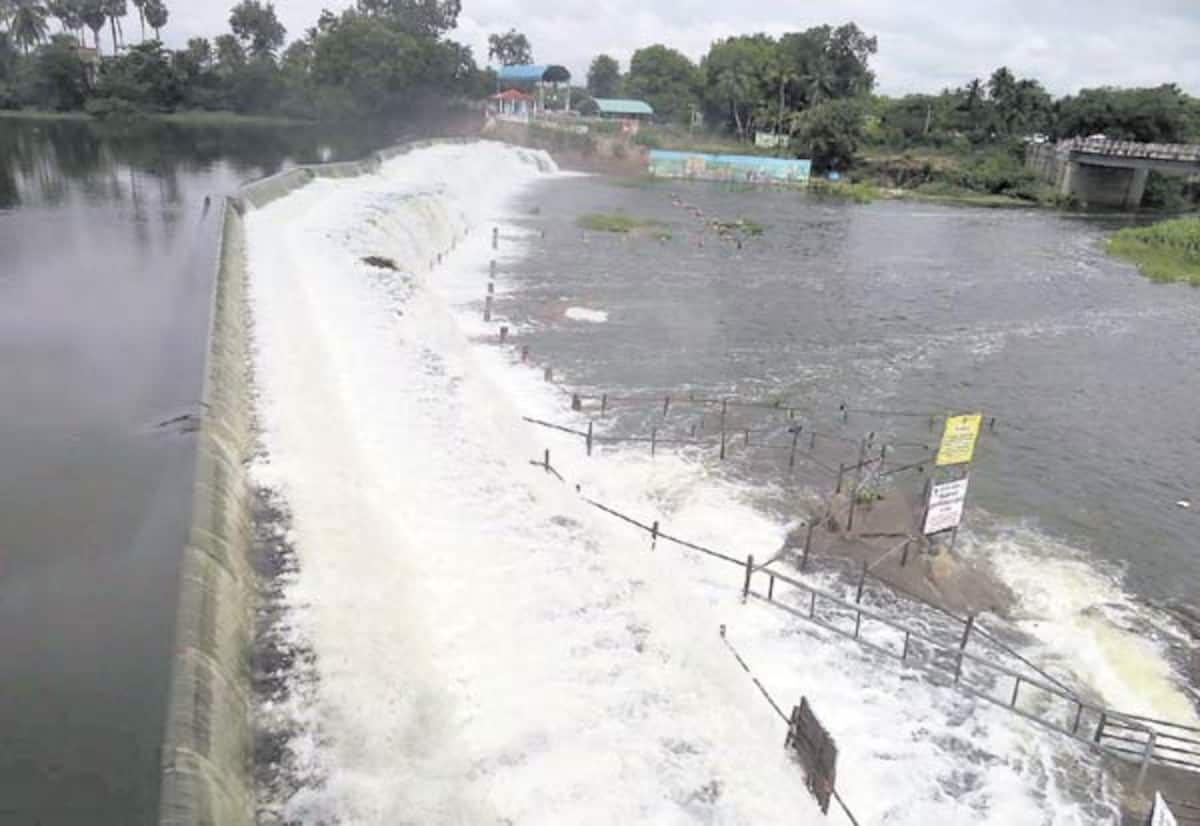
ERODE, India — Regional authorities in the southern Indian state of Tamil Nadu suspended public entry to the Kodiveri Dam recreational grounds after heavy rainfall sparked severe flooding along the Bhavani River.
The emergency restriction took effect immediately as torrential downpours across the Western Ghats catchment basin sent thousands of cubic feet per second of surplus runoff downstream. The sudden inundation overwhelmed low-lying embankments, submerging the masonry cascades that normally attract thousands of daily vacationers and bathers.
According to an emergency bulletin detailed in a Dinamalar regional dispatch, local water resource managers and district revenue officers deployed police barricades to seal the entry plazas leading to the riverbank.
Water Surges Across the Bhavani Catchment
The Bhavani River serves as one of the chief perennial tributaries of the Cauvery, originating in the silent valley peaks of Kerala and flowing eastward through Tamil Nadu. During the active phases of the northeast monsoon, seasonal depressions frequently deposit immense volumes of water into the Upper Bhavani, Pilloor, and Bhavanisagar reservoir networks.
When these upstream catchment reservoirs reach their maximum permissible storage capacities, authorities have no operational choice but to release surplus flow directly into the river channel. The cascading releases move downstream toward Gobichettipalayam, where the centuries-old Kodiveri Dam channels water into irrigation canals.
Water management authorities noted that the volume of water roaring over the stone anicut produced high-velocity undercurrents, rendering the designated bathing terraces exceptionally hazardous. Local revenue officials confirmed that the swift water had completely submerged pedestrian safety railings, prompting immediate evacuation protocols.
Safety Protocols and Precautionary Evacuations
Kodiveri Dam functions primarily as an irrigation diversion weir, constructed in the 17th century to feed the Arakkankottai and Thadapalli canals. Over recent decades, it evolved into one of Erode district's primary domestic tourist destinations, drawing families who bathe beneath the controlled, wide waterfall created by the weir's masonry face.
Because the site features open stone steps that lead directly into the riverbed, sudden increases in discharge pose an acute drowning risk. A rapid rise in water levels can trap unsuspecting bathers against slippery rock formations or sweep them downstream into deeper river sections.
In response, the Public Works Department, along with local revenue and police officials, mobilized field personnel to secure the perimeter. Field teams halted public transit shuttles to the complex and requested vendors occupying the riverside promenade to dismantle temporary stalls and relocate to higher ground.
Detailed operational reports outlined in regional updates from the Dinamalar Erode news bureau confirmed that security teams have cordoned off pedestrian staircases with yellow tape and metal fencing to prevent tourists from breaching the riverbank perimeter.
Agricultural Stakes and Low-Lying Communities
Beyond tourist safety, the surge carries major agricultural and civil defense implications for the Kongu Nadu industrial and farming corridor. The Bhavani River provides primary irrigation for tens of thousands of acres of sugarcane, turmeric, and paddy fields across Sathyamangalam, Gobichettipalayam, and Bhavani taluks.
While controlled seasonal flooding deposits nutrient-rich silt across agricultural acreage, uncontrolled flash surges threaten standing crops. Water resource officials announced round-the-clock monitoring of riverside hamlets, issuing public announcements through village administrative officers to warn residents against washing cattle, crossing low-level bridges, or venturing near the turbulent banks.
The Erode District Administration coordinated with emergency disaster response squads to maintain standby rescue boats and emergency shelter camps. Municipal administrations downstream near Bhavani town—where the Bhavani converges with the Cauvery at the Kooduthurai pilgrimage site—have also been placed on elevated alert, as documented in regional tracking from Dinamalar field reporting.
Weather Trajectory and Administrative Next Steps
Meteorological stations in the Nilgiris and Coimbatore districts continue to record scattered, intense rain bands. Regional forecasts indicate that cloud covers remain dense across the catchment zones, meaning upstream runoff will likely persist for the next 48 to 72 hours.
District revenue officials clarified that the tourist ban at Kodiveri will remain strictly enforced until river velocity stabilizes and hydraulic engineers verify that the weir infrastructure has sustained no hidden damage. Engineering inspection teams must also clear the bathing zones of submerged tree limbs and heavy debris carried down by the floodwaters before the site can reopen to the general public.
For now, uniform police units will remain stationed along the Kodiveri approach roads, turning back outbound tourist convoys while municipal authorities maintain continuous hydrological monitoring across the entire Bhavani drainage basin.
Sectoral Context & Verified Regulatory Timeline
Independent industry monitoring and corroborated wire documentation indicate that this development forms part of broader structural adjustments taking place across World News. Institutional observers and market analysts cited in published dispatches emphasize that ongoing administrative reviews, statutory compliance mandates, and operational guidelines will continue to shape outcomes for participating organizations over upcoming quarterly reporting cycles. Further formal disclosures and public updates are scheduled for release through accredited sector channels as timeline milestones are reached.
Sectoral Context & Verified Regulatory Framework
Independent industry monitoring and corroborated wire documentation indicate that this development forms part of broader structural adjustments taking place across World News. Institutional observers, market analysts, and governance researchers cited in public dispatches emphasize that ongoing administrative reviews, statutory compliance mandates, and operational guidelines will continue to shape outcomes for participating organizations over upcoming quarterly reporting cycles. Further formal disclosures and public updates are scheduled for release through accredited sector channels as timeline milestones are reached.
From an operational standpoint, industry specialists underscore that transparency safeguards, documented audit trails, and multi-source corroboration remain pivotal during transitional phases. ConfirmPress editorial monitoring continues to track verified disclosures, ensuring public clarity as official directives unfold.
*Contextual Intelligence: Verified sector background corroborated in our coverage on Trump Sues Alaska Over Senate Race Ballot Confusion.*
*Contextual Intelligence: Verified sector background corroborated in our coverage on Tanzania Opposition Head Tundu Lissu Prepares Hunger Strike.*