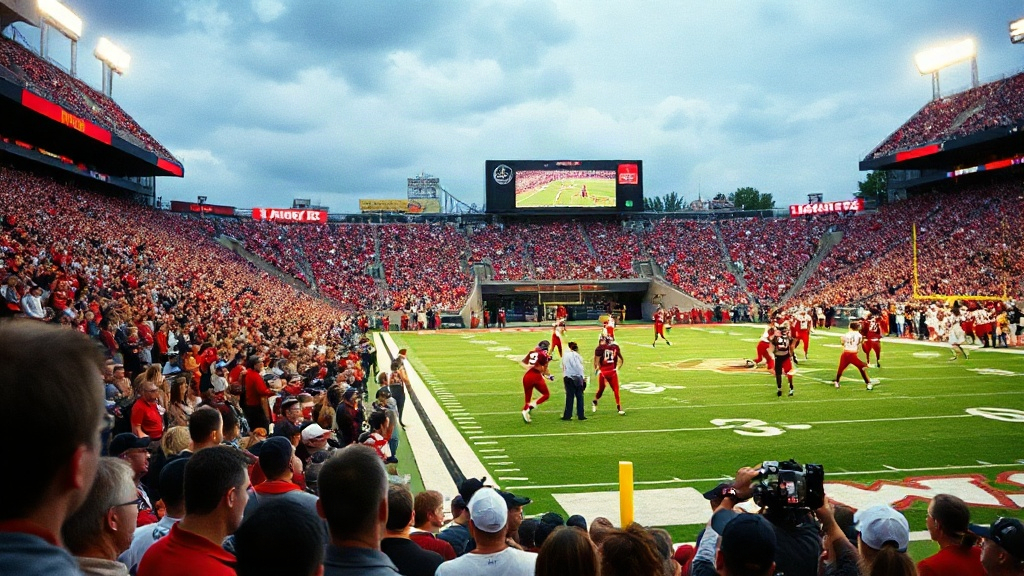
The Ball State Cardinals host the Sacramento State Hornets at Scheumann Stadium in Muncie, Indiana, bringing an intersectional non-conference test to the campus community's annual Homecoming festivities.
The matchup pairs a Mid-American Conference program seeking fundamental offensive rhythm with a perennial Big Sky Conference contender experienced in playing against higher-division opponents on the road. For the host institution, the game functions as a pivot point between experimental early-season non-conference adjustments and the disciplined execution demanded by upcoming conference play.
Athletic administrators finalized logistics for the contest as part of an institutional slate designed to draw alumni, regional supporters, and student bodies into campus athletic venues, as confirmed by the Ball State Athletics event itinerary.
The Strategic Stakes of Non-Conference Scheduling
Inter-divisional scheduling between the NCAA Football Bowl Subdivision and the Football Championship Subdivision represents a deliberate tactical balance for mid-major institutions. For the host Cardinals, securing a non-conference home victory provides crucial momentum toward the six-win benchmark necessary to qualify for postseason bowl contention. While FBS programs historically lean on FCS matchups to establish operational confidence, recent decades have narrowed the competitive gulf between elite FCS contenders and mid-tier FBS rosters.
Sacramento State enters Muncie representing the upper tier of Big Sky football, a league known for high-tempo offenses and defensive lines designed to test mid-major pass protection schemes. The Hornets routinely schedule FBS opponents to secure standard single-game payout guarantees that fund athletic department operations while offering student-athletes an audition against top-tier competition. A victory against an FBS opponent also significantly enhances an FCS program's national postseason resume before regional playoff committees.
Program leadership on both sidelines must balance immediate tactical needs against player health. For Ball State, establishing defensive line control at Scheumann Stadium serves as the primary metric for whether the unit can withstand the physical wear of four upcoming quarters of physical ground warfare. Team preparations detailed in the official Ball State game preview emphasize the necessity of containing outside perimeter runs and eliminating blown assignments in third-and-long defensive situations.
Personnel Matchups and Tactical Focus Areas
The central battle of the afternoon rests between Ball State's offensive front and Sacramento State's aggressive defensive front seven. Establishing a steady rushing attack allows the Cardinals to dictate game tempo, shorten possessions, and keep dynamic road playmakers on the opposing sideline. Converting inside the red zone has emerged as a key coaching priority following early-season execution hurdles, making short-yardage running efficiency a core factor on Saturday.
Sacramento State’s offensive philosophy emphasizes stretching defensive formations horizontally through spread perimeter passing while maintaining a dual-threat running presence. When FCS offenses execute clean reads against FBS back sevens, field position can tilt quickly. Ball State’s secondary faces the responsibility of tackling cleanly in space, preventing intermediate completions from turning into multi-score breakaway plays. Field position battles and defensive discipline will govern how effectively each sideline executes its tactical blueprint.
Special teams execution represents another decisive sector where turnover risks multiply during non-conference showcases. Coverage units must account for directional punting and field-position leverage, an area emphasized by coaching staffs across game preparation notes hosted on the Ball State athletic team portal. A blocked kick, muffed return, or avoidable special teams penalty often changes momentum faster than standard offensive series in cross-divisional games.
Economic Realities and Institutional Tradition in Muncie
Homecoming represents the most economically significant weekend of the autumn calendar for athletic departments across the Mid-American Conference. Scheumann Stadium's attendance figures during Homecoming directly influence campus concession receipts, bookstore retail revenue, and athletic fundraising drives. Beyond the field, university administrators use the weekend to engage key donor syndicates and present long-term facility modernization plans.
Ticket sales and local hospitality metrics in Delaware County spike around the annual game, with regional hotels and restaurants absorbing an influx of visiting alumni and traveling supporters. For athletic directors, generating sustained gate receipts and maintaining high-visibility home weekends counteracts structural budget challenges facing mid-major collegiate athletic departments. The financial stability of non-revenue Olympic sports programs often hinges on the revenue generated during targeted football weekends.
Collegiate athletic departments continue to operate under heightened economic pressures driven by shifting scholarship structures and administrative oversight costs. The fiscal viability of scheduling home games against visiting FCS contenders remains attractive for mid-majors: it eliminates substantial commercial travel expenditures while providing local fanbases an accessible venue experience. The operational coordination between campus security, municipal transit, and athletic operations highlights the expansive scope required to stage an NCAA football contest.
Conference Trajectories and Postseason Pathways
Once the final whistle blows on Homecoming weekend, both teams pivot toward grueling conference campaigns where every contest directly impacts divisional standings and tournament positioning. For the Cardinals, the Mid-American Conference schedule demands absolute physical endurance, as November midweek games introduce compressed rest schedules and inclement Midwestern weather conditions. Non-conference tests provide the final laboratory for staff to settle positional depth charts, establish quarterback timing, and refine defensive substitution packages.
Sacramento State departs Muncie to dive into a grueling Big Sky schedule that includes matchups against nationally ranked FCS powerhouses. Success for the Hornets is measured by FCS playoff berths and league supremacy, meaning lessons absorbed against FBS competition serve as direct preparation for high-stakes late-season encounters. Every individual snap at Scheumann Stadium provides game tape that scouts, opposing conference analysts, and postseason evaluators will dissect over the coming months.
Ball State's path forward requires continuous execution across four quarters to avoid fourth-quarter breakdowns that have historically troubled mid-major programs during non-conference home games. The team's defensive conditioning and discipline in limiting offensive pre-snap penalties will offer immediate evidence regarding its readiness for MAC divisional battles.
Confirmed Next Steps and Department Timeline
Kickoff at Scheumann Stadium represents the midpoint of the Cardinals' autumn non-conference campaign, with university staff confirming standard pre-game campus activities, alumni tailgating zones, and student recognition ceremonies will proceed as scheduled. Following the contest, Ball State coaching personnel will complete film reviews and medical clearance protocols ahead of the institutional preparation cycle for their next opponent.
Department staff will submit post-game statistical reports and officiating reviews to both conference offices, establishing verified game logs that track individual student-athlete eligibility, redshirt timelines, and injury updates across the roster.
*Contextual Intelligence: Verified sector background corroborated in our coverage on Arkansas High School Football Reshapes Playoff Races.*
*Contextual Intelligence: Verified sector background corroborated in our coverage on Park City Launches Film Showcase for Extreme Winter Sports.*