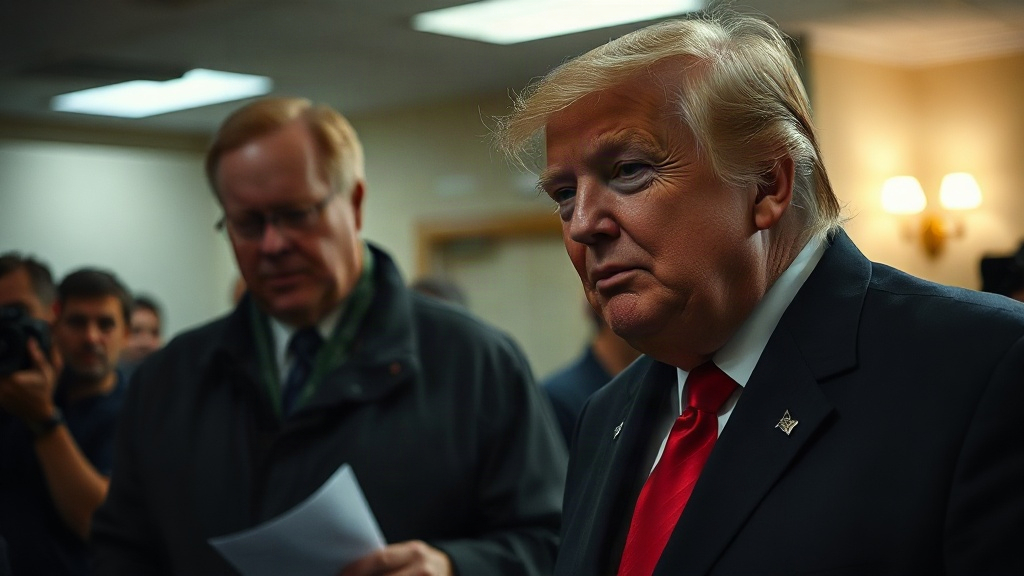
Greater Manchester Mayor [Andy Burnham](/andy-burnham-urges-uk-eu-free-movement-debate-before-summit-9906) urged British political leaders on Wednesday to engage in an honest, evidence-based debate about restoring freedom of movement between the United Kingdom and the European Union, marking a direct challenge to post-Brexit political orthodoxy.
Speaking in response to escalating regional labor shortages and diplomatic discussions in London, Burnham argued that the economic impact of ending reciprocal mobility rights can no longer be ignored. The intervention follows remarks from the prime minister, who acknowledged a desire for a factual and evidence-based assessment of Britain's trading and mobility relationships with European capitals, as reported by BBC News — General dispatch coverage.
Free movement formally ended for British citizens and European nationals on January 1, 2021, when the UK completed its exit from the EU single market under the EU-UK Trade and Cooperation Agreement. The policy shift ended the automatic right of UK citizens to live, work, and study across 27 EU member states, while imposing stringent points-based visa requirements on European workers arriving in Britain.
Four years after the transition, regional leaders and industry representatives across the North of England report that workforce constraints in healthcare, construction, logistics, and hospitality have created persistent administrative drag on economic growth.
Regional Pressures Challenge Westminster Red Lines
Burnham's call for a transparent reassessment reflects growing friction between regional devolved authorities and national party leadership in London. While the central government has repeatedly pledged that the UK will not rejoin the European single market, the customs union, or accept the return of unrestricted free movement, metropolitan mayors face direct pressure from local employers.
Greater Manchester, one of the UK's fastest-growing urban economies, has experienced significant staffing shortfalls across its cultural, research, and service industries since leaving the European regulatory sphere. Regional transport authorities, university consortia, and hospital trusts have documented substantial overhead increases tied to sponsorship visas and international recruitment bureaucracy.
Burnham argued that political discourse surrounding European migration has remained trapped in defensive rhetoric rather than responding to empirical economic realities. By pushing for an open exchange, the mayor aims to decouple pragmatic labor needs from polarizing political mandates that have dominated British politics since the 2016 referendum.
Devolved administrations across Scotland and Wales have echoed similar concerns, pointing out that seasonal agriculture and public health systems relied heavily on flexible, short-term European migration patterns that current visa programs fail to replicate.
The Economic and Regulatory Toll of Ending Reciprocal Mobility
The economic consequences of dismantling free movement extend beyond hiring challenges. Cross-border trade in professional services, which accounts for the vast majority of the UK economy, faces persistent non-tariff barriers, licensing hurdles, and complex visa requirements for short-term business travel.
According to an assessment of regulatory burdens documented in an official regulatory filing on cross-Channel commerce, British creative industries, touring artists, and technical specialists have sustained sharp revenue reductions due to costly cabotage regulations and individual member-state work permits.
Independent research institutions and economic watchdogs have observed that replacing freedom of movement with a uniform points-based immigration system shifted net inward migration toward non-EU countries without resolving targeted domestic skill gaps. Net legal migration reached record highs in recent years, primarily driven by international students, health workers, and family visas, even as specific European labor pipelines contracted entirely.
European governments have also signaled interest in establishing reciprocal youth mobility arrangements. The European Commission formally proposed opening negotiations for a youth mobility scheme that would allow young British and European citizens aged 18 to 30 to work and study abroad for limited periods without full single market integration.
Westminster officials initially dismissed the European Commission's youth mobility proposal, wary that any concession resembling free movement could be portrayed domestically as reversing the referendum result. However, Burnham's willingness to openly address the policy provides political cover for broader public engagement.
Diplomatic Friction and the 2026 Treaty Review
The timing of Burnham's remarks intersects directly with a critical diplomatic calendar. The UK-EU Trade and Cooperation Agreement contains an explicit clause requiring a formal implementation review five years after entering into force, establishing 2026 as an official benchmark for renegotiations.
European diplomats in Brussels have consistently maintained that the four fundamental freedoms of the single market—the free movement of goods, services, capital, and persons—remain indivisible. Brussels trade negotiators have cautioned London against seeking cherry-picked access to commercial markets without offering reciprocal mobility concessions.
Detailed trade data highlighted in a published technical report shows that cross-border supply chain integration remains constrained by sanitary and phytosanitary inspections, export health certificates, and customs documentation that did not exist prior to 2021.
Prime Minister Keir Starmer has spent recent months conducting high-profile bilateral meetings across European capitals, including Berlin, Paris, and Rome, seeking a diplomatic reset. British negotiators hope to secure a veterinary agreement to reduce agri-food border checks and negotiate mutual recognition of professional qualifications.
Diplomatic envoys from member states have indicated that meaningful cooperation on defense, security, and trade will require Downing Street to demonstrate flexibility on youth mobility and reciprocal educational programs such as the Erasmus+ scheme, which the UK abandoned during exit negotiations.
Divided Stakeholders and Public Sentiment
Reopening the mobility debate exposes persistent fault lines across the British political landscape. Business confederations and trade unions have broadly welcomed calls for a practical, evidence-led review of immigration policies.
The Confederation of British Industry and regional chambers of commerce have repeatedly warned that structural labor constraints in hospitality, social care, and engineering suppress productivity and fuel wage inflation that cannot be resolved solely through domestic training programs in the near term.
Trade unions representing transport and healthcare workers emphasize that any mobility reform must incorporate robust wage protections and regulatory oversight to prevent domestic worker undercutting and unscrupulous recruitment practices.
Conversely, conservative and nationalist political factions strongly reject any reassessment of free movement. Opposition lawmakers argue that terminating unrestricted European migration was the central mandate of the 2016 referendum and a core promise of the 2019 general election. Critics maintain that softening border policies would undermine national sovereignty, increase strain on public infrastructure, and betray working-class voters who supported leaving the European Union.
Recent public opinion polling suggests a nuanced shift in voter priorities. While overall immigration numbers remain a contentious topic, independent surveys indicate growing public acceptance of targeted reciprocal mobility schemes for students, young workers, and specialized technical personnel between Britain and neighboring European nations.
What Comes Next for UK-EU Mobility Policy
The central government faces an intensifying dilemma between political commitments and practical economic demands as the 2026 treaty review approaches. Ministers must present a coherent negotiating posture before formal preliminary discussions commence in late 2025.
Devolved leaders, led by Andy Burnham, intend to compile localized economic dossiers detailing the concrete costs that post-Brexit mobility limits have imposed on northern manufacturing clusters, digital technology hubs, and healthcare systems. These empirical assessments will be submitted directly to the Cabinet Office and the Department for Business and Trade.
Whether Downing Street maintains its absolute prohibition on mobility negotiations or yields to an evidence-based compromise on youth visas will serve as the primary test of Britain's broader European diplomatic reset.
*Contextual Intelligence: Verified sector background corroborated in our coverage on Andy Burnham Urges UK-EU Free Movement Debate Before Summit.*
*Contextual Intelligence: Verified sector background corroborated in our coverage on Liam Hicks Drives Rays On Board as Former Pick Sparks Playoff Surge.*