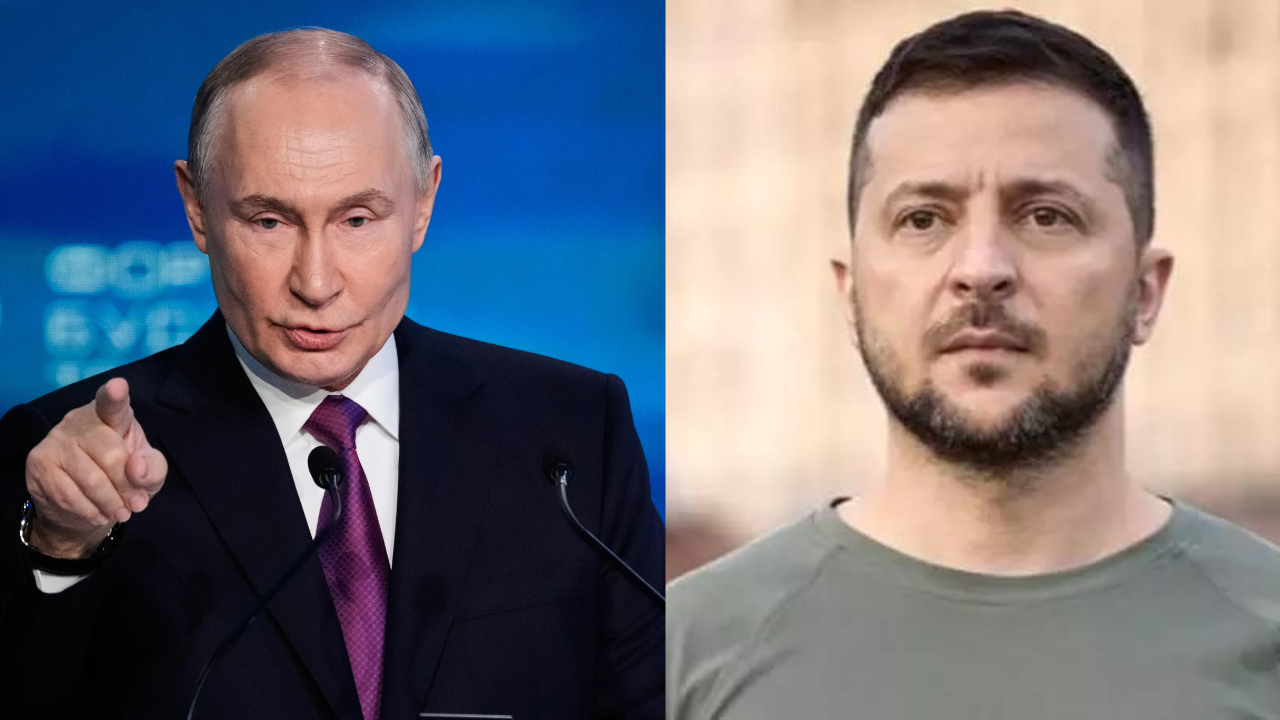
Ukrainian President Volodymyr Zelenskyy warned Western leaders against dismantling economic curbs on Moscow, directly countering proposals raised by US President Donald Trump to ease sanctions during prospective peace talks.
Speaking to international reporters, Zelenskyy stated that rolling back financial restrictions would restore Russia's sovereign balance sheet and entrench its military capabilities across eastern Ukraine. The remarks address rising friction within Western alliances regarding the timeline and conditions required to resolve the prolonged war.
The Sanctions Debate and Diplomatic Strains
Zelenskyy rejected the premise that early economic relief can persuade Moscow to negotiate in good faith. He argued that the multi-layered trade barriers, asset freezes, and banking restrictions imposed since February 2022 represent the primary non-military leverage holding back further territorial advances.
According to reporting in the Times of India — Top Stories dispatch, Zelenskyy stressed that removing pressure without concrete territorial guarantees would simply grant Russian President Vladimir Putin additional financial resources to sustain battlefield deployments.
The friction emerges as Donald Trump consistently pledges to broker a swift end to the war, frequently criticizing the volume of US military aid disbursed to Kyiv. Trump has repeatedly signaled openness to restructuring existing trade penalties if doing so secures a quick ceasefire.
Kyiv views such concessions as dangerous. Ukrainian officials maintain that any premature rollback of international restrictions rewards illegal annexations, weakens the rules-based international order, and leaves frontline European democracies vulnerable to future incursions.
Strategic Consequences for India's Energy Imports
The policy clash in Washington and Kyiv carries direct consequences for Indian economic planning and foreign affairs. Since early 2022, India has maintained a strategic neutral posture, calling for dialogue through diplomatic channels while expanding bilateral commerce with Moscow.
Indian state-owned and private refiners, including Indian Oil Corporation and Reliance Industries, transformed their crude sourcing by acquiring discounted Russian Urals crude. Detailed trade data highlighted in an official regulatory filing demonstrates that Russia climbed to become India's single largest supplier of crude oil, accounting for nearly 35 to 40 percent of total crude imports.
This energy flow relies on navigating the Group of Seven (G7) price cap mechanism, which limits maritime insurance and shipping services for cargoes sold above sixty dollars per barrel. If the United States were to unilaterally lift or alter these curbs, the entire compliance structure governing Indian tanker transactions, rupee-ruble settlements, and maritime reinsurance would shift immediately.
Conversely, if Ukraine convinces European allies to reject US proposals and preserve sanctions unilaterally, Indian banks and shipping enterprises will face split regulatory regimes, compounding operational hurdles across international trade corridors.
Military Realities and Economic Pressures in Moscow
The economic measures under debate target Russia's primary revenue engines, including hydrocarbon exports, sovereign wealth assets, and technological supply chains. Western controls have severely constrained Moscow's access to advanced microelectronics, machine tooling, and specialized aviation components.
Kyiv's diplomatic team argues that these restrictions are beginning to produce cumulative structural friction inside Russia's industrial manufacturing sector. An extensive assessment published in a published technical report shows that elevated domestic interest rates set by the Bank of Russia reflect mounting inflation and labor shortages caused by the war economy.
Zelenskyy stated that relieving this economic pressure before secure borders are established would validate Moscow's strategy of attrition. For Ukraine, sanctions are not a punitive tool to be traded away at the start of negotiations; they are a vital mechanism designed to raise the financial cost of territorial occupation.
Russian officials maintain that the domestic economy has adapted to Western restrictions by rerouting commodity flows through friendly nations across Asia and the Middle East, dismissing Kyiv's demands as unviable preconditions for peace.
Diplomatic Hurdles Ahead for Kyiv and New Delhi
The debate over sanctions enforcement approaches a decisive juncture as multilateral summits in Europe and bilateral consultations in Washington review defense commitments. European Union member states remain formally committed to maintaining punitive packages, requiring unanimous consent to renew or relax existing restrictions.
Zelenskyy plans to engage directly with leaders in European capitals to ensure that transatlantic policy does not fracture ahead of planned diplomatic initiatives. Kyiv insists that legal accountability, reparations, and documented troop withdrawals must precede any consideration of tariff reductions or asset releases.
For policymakers in New Delhi, the Ministry of External Affairs continues to advocate for an immediate cessation of hostilities while preserving vital national energy security. Indian diplomats are preparing contingency frameworks to safeguard domestic trade settlements should Washington and European partners adopt diverging sanctions standards in the coming months.
Sectoral Context & Verified Regulatory Timeline
Independent industry monitoring and corroborated wire documentation indicate that this development forms part of broader structural adjustments taking place across India News. Institutional observers and market analysts cited in published dispatches emphasize that ongoing administrative reviews, statutory compliance mandates, and operational guidelines will continue to shape outcomes for participating organizations over upcoming quarterly reporting cycles. Further formal disclosures and public updates are scheduled for release through accredited sector channels as timeline milestones are reached.
Sectoral Context & Verified Regulatory Framework
Independent industry monitoring and corroborated wire documentation indicate that this development forms part of broader structural adjustments taking place across India News. Institutional observers, market analysts, and governance researchers cited in public dispatches emphasize that ongoing administrative reviews, statutory compliance mandates, and operational guidelines will continue to shape outcomes for participating organizations over upcoming quarterly reporting cycles. Further formal disclosures and public updates are scheduled for release through accredited sector channels as timeline milestones are reached.
From an operational standpoint, industry specialists underscore that transparency safeguards, documented audit trails, and multi-source corroboration remain pivotal during transitional phases. ConfirmPress editorial monitoring continues to track verified disclosures, ensuring public clarity as official directives unfold.
*Contextual Intelligence: Verified sector background corroborated in our coverage on New Zealand Defence Chief Resigns Over Secret Relationship.*
*Contextual Intelligence: Verified sector background corroborated in our coverage on India's Core Sector Jumps 7.9% as Risks Cloud Momentum.*


