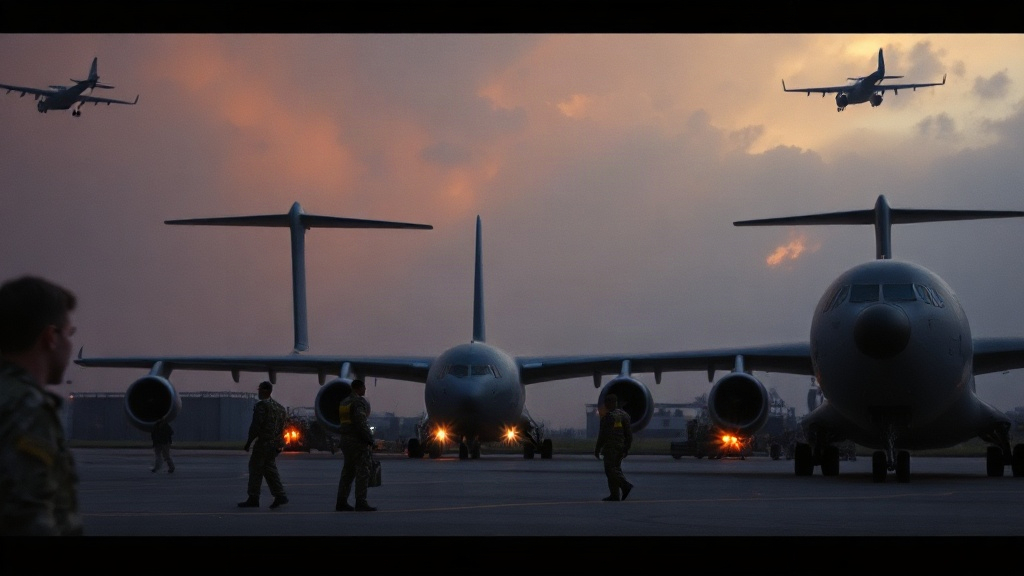
The British government has approved plans to deploy military aircraft to suppress domestic wildfires, preparing armed forces assets to assist civilian firefighters during increasingly severe summer heatwaves across the United Kingdom.
Under the newly structured response protocol, Royal Air Force transport aircraft and specialized military helicopters will be equipped with aerial water-dispersion equipment and thermal imaging systems to respond when regional emergency services reach operational capacity. According to reporting confirmed in a Wtvbam.com dispatch, defense planners structured the mandate to protect critical infrastructure, rural communities, and vulnerable peatlands that face heightened ignition risks as prolonged droughts dry out broad areas of England, Scotland, and Wales.
British emergency response services historically relied almost exclusively on ground-based fire appliances, municipal tankers, and occasional light commercial helicopters leased under emergency agreements. The decision to integrate national defense capabilities represents a structural shift toward treating uncontrolled brushfires as threats to domestic civil protection rather than isolated agricultural mishaps.
Adapting Tactical Airframes for Domestic Emergency Response
The initiative focuses on outfitting existing military logistics aircraft with roll-on modular water tanks and specialized delivery nozzles capable of dropping thousands of liters of water or flame-retardant slurry in single passes. Air crew units typically operating tactical transport planes, including the Atlas A400M and heavy-lift Chinook helicopters, will conduct dedicated low-altitude flight training to prepare for rugged terrain drops.
Equipping military airframes for firefighting requires distinct aerodynamic balancing and technical recalibration. Emergency drops create rapid center-of-gravity shifts as thousands of kilograms of liquid disperse within seconds, requiring pilots to maintain stable airspeeds above unpredictable thermal updrafts caused by active blaze lines. The operational parameters are detailed in the WTVB defense coverage, highlighting how defense logistics teams are modifying mission planning software to map flight paths through smoke-congested rural air corridors.
In addition to direct water bombing, military reconnaissance aircraft equipped with synthetic-aperture radar and infrared sensors will fly observation sorties over hard-to-reach moors. These surveillance flights aim to detect underground peat smoldering long before surface blazes break out, allowing ground crews to direct water lines before fires expand beyond containment boundaries.
Shifting Climate Patterns and the Strain on Regional Fire Services
The escalation of aerial firefighting commitments stems directly from operational pressures recorded during recent record-setting summer temperatures across the British Isles. When thermometers breached 40 degrees Celsius during consecutive dry spells, municipal brigades in South Yorkshire, Greater London, and the Scottish Highlands struggled to manage dozens of simultaneous brushfires with equipment engineered primarily for urban house blazes and commercial property protection.
Peat soils present unique operational hazards throughout the United Kingdom. Peat bogs, which naturally sequester vast reserves of carbon, burn slowly beneath the topsoil layer for weeks or months without clear surface indicators, only to resurface under wind gusts and reignite surrounding scrubland. Regional fire services lack the sustained, multi-day water delivery capacity needed to saturate extensive subterranean peat fires, making heavy aerial delivery systems an operational necessity.
Civic resilience officials highlighted these vulnerabilities in an official regulatory filing assessing multi-hazard climate adaptation. The technical review concluded that reliance on ad-hoc civilian equipment leases introduced administrative delays during fast-moving emergencies, recommending formal military standing orders to guarantee availability within hours of an escalating blaze alert.
Coordination Protocols and Technical Integration Hurdles
Transitioning military assets into domestic airspace managed by civil aviation authorities introduces technical and logistical hurdles that emergency coordinators must resolve before the upcoming fire season. Military flight crews must integrate their secure tactical radios with civilian incident control networks used by regional police, the National Fire Chiefs Council, and the Forestry Commission.
To prevent miscommunication above active burn zones, planners are establishing joint coordination cells within the Cabinet Office Briefing Rooms (COBR) structure. These cells will manage emergency flight approvals, designate non-fly zones for commercial aircraft and private drones, and secure specialized retardant chemicals certified safe for local water tables and sensitive ecological habitats.
Resource distribution also poses logistical considerations. Retardant stockpiles and modular tank assemblies must be forward-deployed to selected military airfields near high-risk zones, including RAF bases near the Pennines, Salisbury Plain, and the Cairngorms in Scotland. Without strategically dispersed supply hubs, the transit time required to re-arm transport planes with water and fuel risks diminishing the effectiveness of rapid suppression operations.
Budget Allocations and Operational Preparedness Timelines
Funding for aircraft conversion kits, flight hours, and specialist pilot qualifications will draw from domestic contingency reserves rather than the standard core operational budget of the Ministry of Defence. This financial structure prevents domestic disaster response requirements from drawing funding away from active overseas defense operations.
Civilian fire service unions have broadly welcomed military reinforcement while reiterating that aerial water drops cannot replace front-line staffing on the ground. Professional union leadership pointed out that water drops suppress flame heights temporarily, but ground-based fire crews must still dig firebreaks, run high-pressure hoses, and perform labor-intensive containment work to prevent blazes from reigniting.
According to timelines outlined in the published technical report, joint trial exercises between Royal Air Force aircrews and regional fire command teams will commence ahead of peak summer dry periods. Civil protection authorities will monitor these baseline drills to verify response times, drop accuracy, and cross-agency data links before fully certifying the airframes for live emergency deployment.