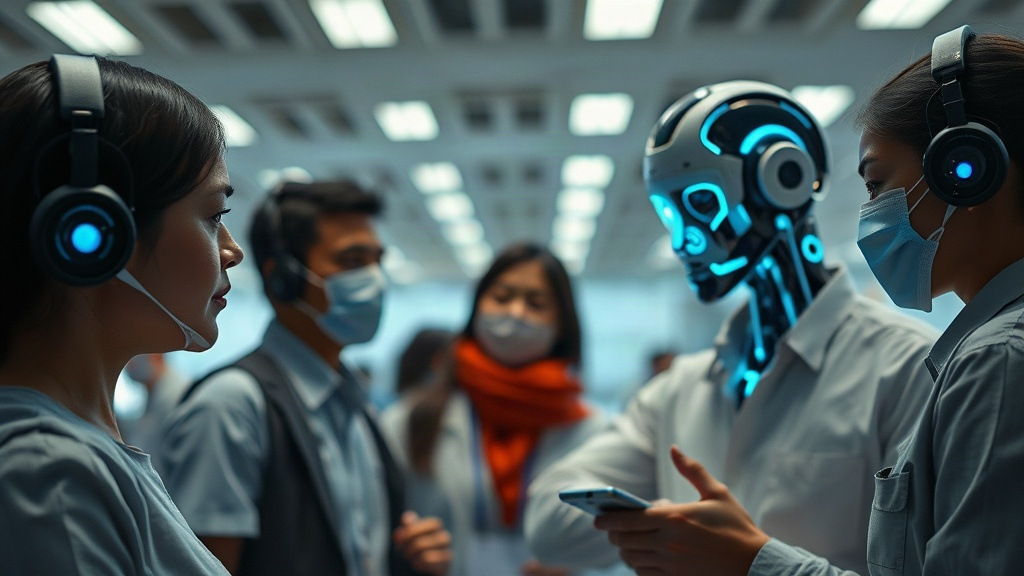
GENEVA — The International Labour Organization presented an operational framework on Thursday in Geneva that applies established international labor conventions to regulate artificial intelligence, algorithmic management, and automated hiring across global workplaces.
The initiative addresses the expanding deployment of automated systems that monitor staff performance, set shifts, assess worker productivity, and make termination decisions without human intervention. Instead of waiting years for governments to negotiate brand-new digital treaties from scratch, the United Nations specialized agency asserts that binding international labor conventions already provide enforceable legal barriers against automated workplace abuses.
The agency's directive establishes that fundamental labor rights—including protection against employment discrimination, rights to collective bargaining, and occupational safety mandates—apply equally to software algorithms as they do to human supervisors.
Reframing Existing Treaties for the Algorithmic Workplace
Corporate adoption of automated tools has outpaced national legislative timetables across industrialized and developing economies alike. Companies increasingly rely on proprietary machine-learning software to parse job applications, predict employee turnover, track keystrokes, and calculate real-time delivery routes for gig workers. According to the Ilo.org dispatch, the international body maintains that the core principles underpinning global conventions do not lose legal force merely because an administrative decision is executed by an algorithmic model.
Central to the agency's legal argument is the Discrimination (Employment and Occupation) Convention of 1958, known as Convention No. 111. The treaty obliges ratifying member states to eliminate any distinction, exclusion, or preference made on the basis of race, sex, religion, or social origin that nullifies or impairs equality of opportunity in employment.
When predictive hiring software screens candidates using historical training data, it routinely replicates historical employment biases against women and minority candidates. Under the international standards reinforced by the agency, deploying an unvetted resume-screening model that systematically downgrades female applicants violates the core obligations of Convention No. 111, placing legal liability directly on employer practices.
Similarly, the Freedom of Association and Protection of the Right to Organise Convention, 1948 (No. 87), protects workers against anti-union surveillance. The agency warned that modern employee-monitoring software—which uses natural-language processing to scan internal chat logs, emails, and browsing history for unionization activities—directly infringes upon these recognized rights.
Algorithmic Management and Occupational Safety Risks
The physical and psychological consequences of automated management have drawn heightened scrutiny from occupational health regulators worldwide. Automated quota systems in fulfillment warehouses and algorithmic routing in app-based delivery platforms often push workers beyond safe physical thresholds to satisfy opaque software targets.
The agency directly tied these digital management systems to the Occupational Safety and Health Convention, 1981 (No. 155), and its promotional framework, which was elevated to a fundamental principle and right at work in 2022. The convention mandates that employers identify, minimize, and eliminate work-related physical and mental hazards.
Continuous digital monitoring, automated desk audits, and algorithmic pace-setting generate chronic stress and heighten injury risks among frontline personnel. When an automated platform enforces delivery timetables that compel couriers to ignore traffic regulations, or warehouse management software penalizes employees for taking bathroom breaks, the software functions as an active occupational hazard under international guidelines.
Worker representatives interviewed during regional consultations reported that employees frequently face disciplinary warnings issued by automated software systems without any avenue for human review. Under the framework detailed by the International Labour Organization platform, member states are urged to require that automated workplace decisions carry mandatory human oversight, verified transparency protocols, and accessible appeal channels.
The Friction Between Proprietary Code and Collective Bargaining
The expansion of workplace algorithms has created sharp conflicts over traditional collective bargaining rights. In logistics, call centers, and customer service sectors, automated metrics increasingly determine employee compensation, bonuses, and severance triggers without prior consultation with labor representatives.
The Right to Organise and Collective Bargaining Convention, 1949 (No. 98), establishes that terms and conditions of employment must be subject to voluntary negotiation between employers and workers' organizations. Software that unilaterally recalibrates pay rates or reallocates shift allocations without disclosure undermines the core premise of collective agreements.
Employers frequently argue that workplace algorithms constitute proprietary intellectual property and trade secrets, shielding their underlying data inputs, weights, and scoring logic from public or employee examination. This lack of transparency prevents workers and their unions from determining whether an automated performance rating is mathematically flawed or discriminatory.
The agency's guidance clarifies that intellectual property protections cannot override statutory labor rights or statutory transparency mandates. When software directly dictates terms of employment, workers have a recognized right to understand the parameters, logic, and operational metrics used to evaluate their labor.
Divergent Regulatory Responses Across Member States
National governments are pursuing wildly differing strategies to manage digital labor transitions, creating compliance complexities for multinational enterprises operating across multiple jurisdictions. The official ILO technical analysis demonstrates that while some regions are introducing sweeping binding statutes, others rely almost entirely on voluntary corporate codes of conduct.
The European Union took the most stringent legislative step through its Artificial Intelligence Act, which classifies algorithmic workplace systems—including automated recruitment, performance monitoring, and task allocation software—as high-risk applications subject to mandatory pre-deployment conformity assessments, human oversight obligations, and detailed technical documentation.
In contrast, the United States relies primarily on existing civil rights statutes and selective administrative enforcement. The Equal Employment Opportunity Commission and the National Labor Relations Board have issued administrative warnings regarding algorithmic discrimination and automated union surveillance, but Congress has not passed comprehensive federal legislation regulating workplace artificial intelligence.
In emerging economies, where gig-economy platforms employ tens of millions of informal and subcontracted workers, statutory protections remain fragmented. Platform workers frequently lack legal recognition as formal employees, which leaves them vulnerable to unilateral algorithmic deactivation—a digital equivalent of instant summary dismissal without severance, notice, or an avenue for formal arbitration.
Tripartite Consultations and the Path Toward Standard Setting
The unique tripartite structure of the International Labour Organization—bringing together representatives from national governments, employer federations, and trade unions—faces intensive negotiations regarding whether existing conventions suffice or if a dedicated international convention on algorithmic management must be drafted.
Worker delegates argue that while existing conventions cover foundational principles, algorithmic systems evolve too quickly for piecemeal judicial interpretation. They advocate for a binding, dedicated convention that explicitly bans automated hiring discrimination, outlaws continuous emotional monitoring, and guarantees workers access to raw performance data gathered by internal systems.
Employer groups consistently caution against overly prescriptive global mandates that could stifle technological innovation, reduce workplace efficiency, or impose rigid software certification requirements on small and medium enterprises. Employer federations advocate for flexible national guidelines, voluntary ethical codes, and industry-led risk management frameworks that permit technological experimentation.
Government representatives are caught between fostering digital competitiveness and preventing structural labor unrest. The growing friction between automated managerial software and employee welfare has made digital labor governance a central focus of upcoming international policy sessions in Geneva.
The International Labour Organization’s Governing Body has scheduled formal tripartite technical discussions for the upcoming international labor conference cycle, where member delegates will review comparative country data and decide whether to formally place a standard-setting item on workplace automation on the agency's formal agenda for binding international codification.