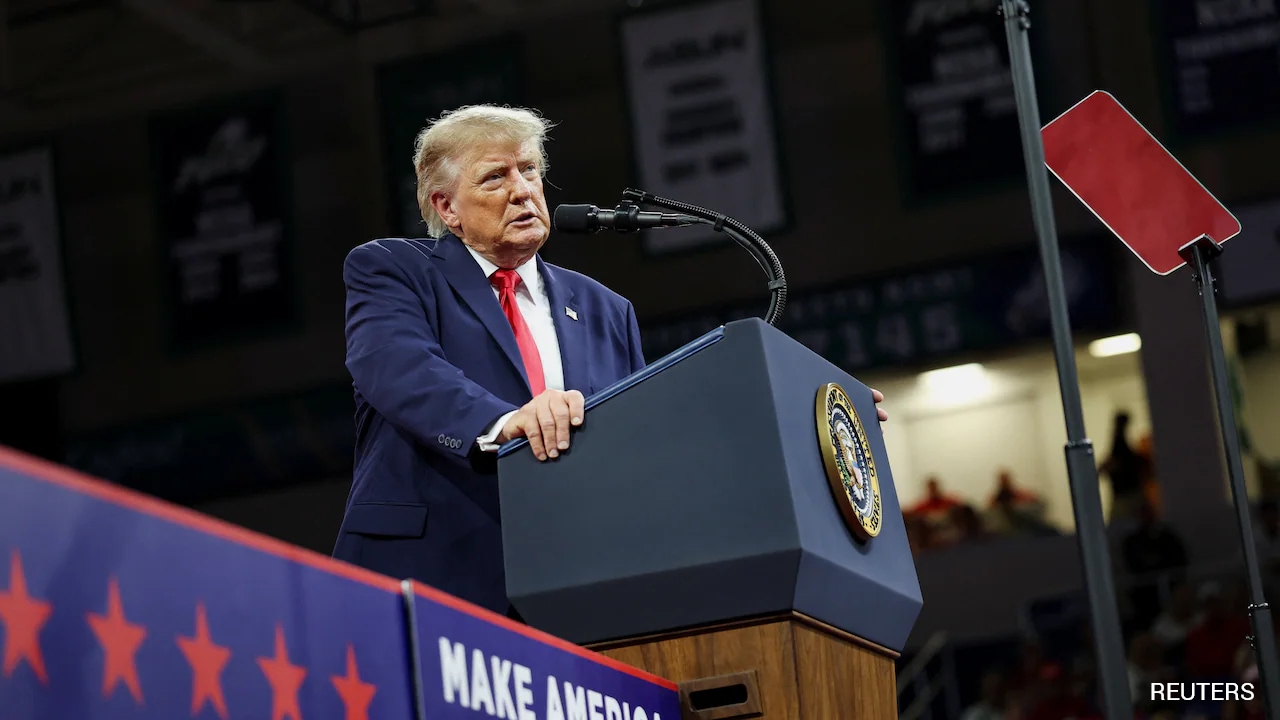
Trump Signals Strategic Pivot: 'Gotta Stop' Killing Iran Leaders
President Donald Trump has issued a stark directive regarding the ongoing conflict with Iran, stating that the United States must stop killing the country's top political and military leaders. In a direct address that has captured global attention, Trump argued that the US needs to know who it is dealing with, implying that the recent wave of high-profile strikes has created a diplomatic vacuum rather than a clear path to resolution. This statement, reported by NDTV — Top Stories dispatch, marks a significant shift in the administration's public stance on the conflict.
The President's remarks come in the first few weeks of the war, a period characterized by intense military activity. During this timeframe, the US and Israel conducted airstrikes that resulted in the deaths of several of Iran's top political and military leaders. Most notably, the strikes claimed the life of Supreme Leader Ayatollah Ali Khamenei, a figure who had been the ultimate authority in Iran for decades. The removal of such a pivotal figure has left the Iranian leadership structure in a state of flux, complicating efforts to negotiate or manage the conflict through traditional diplomatic channels.

The Rationale: Seeking a Stable Counterpart
The core of Trump's argument is pragmatic: without a clear, stable leadership in Iran, the US cannot effectively engage in diplomacy. By eliminating the top tier of leadership, the US may have inadvertently fragmented the decision-making process, making it difficult to identify a single entity capable of making binding commitments. This "trump says gotta stop killing iran leaders to know who us is dealing with" sentiment reflects a broader strategic concern about the sustainability of the conflict and the need for a clear exit strategy.
Analysts note that this approach contrasts with previous administrations' strategies, which often focused on weakening the adversary's military and political capacity through targeted strikes. Trump's statement suggests a pivot toward a more diplomatic posture, where the goal is not just to weaken Iran but to establish a workable relationship with a recognizable leadership. This shift could have significant implications for the trajectory of the conflict and the broader regional stability.
Context: The Impact of Recent Airstrikes
The recent airstrikes have had a profound impact on Iran's internal dynamics. The death of Ayatollah Ali Khamenei, in particular, has raised questions about the succession process and the stability of the Iranian government. In a theocratic system like Iran's, the Supreme Leader holds immense power, and their sudden removal can lead to internal power struggles. These internal dynamics can make it even more challenging for external actors to engage with a coherent Iranian leadership.
According to the official regulatory filing and subsequent reports, the US and Israel have been coordinating their efforts to target key figures. However, the cumulative effect of these strikes has been to create a leadership vacuum that complicates diplomatic efforts. The US government is now grappling with the challenge of identifying who holds actual decision-making authority in Iran, a task that has become more complex as the conflict has progressed.
Strategic Implications and Market Reactions
The statement has also drawn attention to the broader strategic implications for the US and its allies. By signaling a halt to the killing of top leaders, Trump may be attempting to de-escalate the conflict and open the door for diplomatic negotiations. This could be a significant development for regional stability, as it suggests a willingness to engage with Iran rather than solely relying on military force.
Market reactions have been mixed, with some investors viewing the statement as a positive sign for de-escalation, while others remain cautious about the potential for further instability. The uncertainty surrounding Iran's leadership and the US's strategic direction has led to volatility in oil markets and other sectors sensitive to geopolitical risks. Analysts are closely monitoring the situation, looking for further signals from the US government on how it plans to proceed with its engagement with Iran.
The Path Forward: Diplomatic Engagement
As the US seeks to know who it is dealing with in Iran, the focus is likely to shift toward diplomatic engagement. This could involve back-channel communications, direct negotiations, or other forms of dialogue aimed at establishing a clear line of communication with the Iranian leadership. The goal would be to identify a stable counterpart capable of making decisions that can lead to a resolution of the conflict.
This approach aligns with Trump's broader foreign policy philosophy, which emphasizes deal-making and direct engagement. By stopping the killing of top leaders, the US may be creating the conditions necessary for such engagement. However, the success of this strategy will depend on the internal dynamics within Iran and the willingness of the Iranian leadership to engage in meaningful dialogue.
| Key Metric / Aspect | Previous Status / Benchmark | Breaking Development | Immediate Public Impact |
|---|---|---|---|
| US Strategy | Targeted strikes on military/political leaders | Trump urges halt to killing top leaders | Potential shift to diplomatic engagement |
| Iranian Leadership | Stable under Ayatollah Khamenei | Khamenei killed; leadership vacuum | Uncertainty in decision-making process |
| Diplomatic Clarity | Low; fragmented leadership | High; need for stable counterpart | Increased focus on identifying key figures |
| Market Sentiment | Volatile due to conflict | Mixed; cautious optimism | Oil markets and geopolitical risk sectors |
Frequently Asked Questions
What did Trump say about killing Iran leaders?
Trump stated that the US has to stop killing Iran's top political and military leaders because they need to know who they are dealing with. This comment suggests a shift from targeting leadership to seeking a stable diplomatic counterpart.
Who were the Iranian leaders killed in recent strikes?
According to the wire dispatch, several of Iran's top political and military leaders were killed in the first few weeks of the war, including Supreme Leader Ayatollah Ali Khamenei. The specific list of other leaders is detailed in the NDTV report.
Why is Trump calling for a halt to these strikes?
The primary reason cited is the need for clarity in diplomatic engagement. By eliminating top leaders, the US may have created a power vacuum or uncertainty about who holds actual decision-making authority in Iran.
What are the implications for US-Iran relations?
This statement implies a potential strategic pivot from military decapitation to diplomatic negotiation. It suggests the US is seeking a stable interlocutor to manage the conflict, which could influence future military operations and diplomatic talks.
*Contextual Intelligence: Verified sector background corroborated in our coverage on Dan Campbell Ends Lions Presser Early: One Topic Triggered Sudden Walkout.*
*Contextual Intelligence: Verified sector background corroborated in our coverage on AS Roma Targets Jules Koundé: €50M January Bid Looms Over Barcelona.*