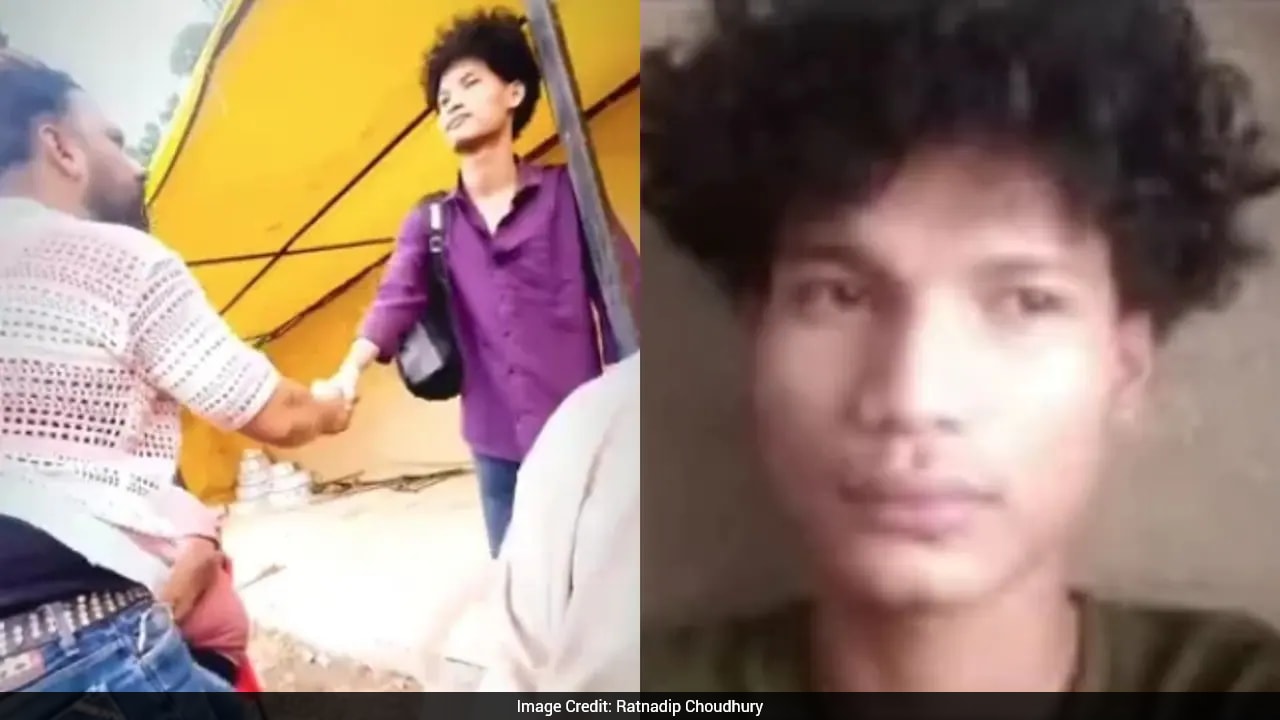
A teenage student from Tripura has spoken out after becoming the target of an unprovoked, racially derogatory video recorded by a digital content creator on the streets of New Delhi, an incident that has triggered widespread condemnation across the Northeast and reignited calls for stronger legal safeguards against everyday racial discrimination in the capital.
The teenager, identified by his community surname Reang, confirmed that he was approached without prior warning in an upscale commercial market in Delhi, unaware that a camera was recording his physical appearance and facial expressions. The resulting footage, uploaded to mainstream social media platforms without his knowledge or consent, showed the content creator making disparaging remarks about the youth's regional features and mocking his national belonging.
Speaking publicly for the first time since the recording went viral, Reang told journalists that he only discovered the recording after an acquaintance in his home state recognized him on social media and messaged him the link. The encounter has left the young student shaken, emphasizing that such targeted street harassment directly undermines the fundamental dignity and equal citizenship guaranteed to people from India's northeastern states under the Constitution.
Unsolicited Encounter on Delhi Streets
According to accounts provided by the student, the confrontation occurred while he was walking through a busy marketplace in South Delhi. A young man operating a mobile recording rig intercepted him under the guise of casual public banter. Instead of conducting a standard man-on-the-street interview, the creator directed mocking questions at Reang, casting doubt on his Indian nationality and leaning into deeply entrenched racial stereotypes about individuals from the country's eastern and northeastern frontiers.
"We are Indians," the teenager stressed in his public remarks, pointing out the painful absurdity of being compelled to defend his citizenship on the streets of his own nation's capital. Reang explained that he had traveled to Delhi to pursue educational opportunities, expecting an inclusive environment that reflected the diversity of modern India. Instead, he found his daily commute turned into public spectacle and online engagement fodder.
The confrontation quickly circulated through regional youth networks and digital message boards before crossing into mainstream television coverage. As detailed in the NDTV — Top Stories broadcast report, Reang noted that he was never asked for permission to be filmed, nor did he realize that the video had been uploaded until friends in Agartala began alerting him to the mounting comments section beneath the post.
Public Backlash and Political Condemnation
The dissemination of the video drew immediate, sharp pushback from civil society groups, regional leaders, and student unions across Tripura, Assam, and the wider northeastern corridor. Community organizations pointed out that while digital content creators frequently seek viral traction through street interactions, monetizing racial ridicule represents a clear violation of basic privacy and public order standards.
Elected representatives from Tripura and neighboring states called upon Delhi Police to initiate an immediate preliminary inquiry into the creator's conduct. Under Indian criminal law, deliberate acts intended to outrage religious or regional feelings, promote enmity between different groups, or insult an individual's personal dignity in a public forum can attract formal First Information Reports (FIRs) under relevant provisions of the Bharatiya Nyaya Sanhita (BNS).
Human rights advocates observed that the episode reflects an ongoing pattern in metro centers, where individuals from the Northeast frequently confront ignorance regarding the geographic and cultural breadth of the country. A parallel assessment published by NDTV national news desk documented that community leaders have repeatedly petitioned central ministries to introduce stricter monitoring mechanisms for verified digital influencers who engage in public harassment under the pretext of comedy.
The Lingering Legacy of the Bezbaruah Recommendations
The incident has brought renewed attention to the decade-old recommendations of the Bezbaruah Committee, an official panel constituted by the Union Ministry of Home Affairs in 2014 following the tragic death of Nido Tania, an Arunachal Pradesh student who was fatally assaulted in a South Delhi market. The committee had submitted extensive recommendations to strengthen legal protections, improve police responsiveness, and integrate northeastern history into national school curricula.
While the Ministry implemented specific measures—such as establishing dedicated Northeast help desks at Delhi Police headquarters and creating a special police unit for northeastern residents—civil rights advocates argue that structural gaps remain. The committee's central proposal to amend the Indian Penal Code to introduce a distinct, non-bailable section specifically punishing racial slurs and regional discrimination has never been formally enacted by Parliament.
Without explicit statutory definitions for racial profiling and hate speech in public spaces, local police stations often rely on generic public nuisance provisions. These minor charges rarely lead to deterrent outcomes for digital creators seeking short-term attention through provocative behavior. Legal analysts examining the case noted in an NDTV legal analysis and reporting that without an explicit statute criminalizing racial disparagement, prosecutors face significant procedural obstacles in holding online creators fully accountable.
Creator Economy and the Ethics of Non-Consensual Recording
Beyond the acute issue of racial stereotyping, the controversy has ignited a broader debate regarding the unchecked growth of non-consensual street filming in India's metropolitan cities. Over the past three years, the proliferation of short-form video formats has encouraged aspiring digital personalities to treat public markets, metro stations, and transit hubs as uncontrolled filming studios.
In India, legal boundaries surrounding public recording remain complex. While individuals in public areas generally possess limited expectations of privacy regarding background photography, intentionally singling out an unsuspecting passerby, subjecting them to public humiliation, and broadcasting their likeness for financial gain crosses clear civil and criminal boundaries.
Senior legal commentators emphasize that recording an individual without consent to create defamatory or derogatory content can violate Article 21 of the Indian Constitution, which guarantees the right to personal liberty and dignity as interpreted by the Supreme Court in landmark privacy rulings. Furthermore, consumer protection authorities and intermediary platforms face mounting pressure to enforce stricter community guidelines that demonetize or ban accounts that profit from the targeted humiliation of vulnerable citizens.
Official Inquiries and Next Legal Steps
Following the public circulation of the footage, student groups affiliated with Tripura University and northeast welfare associations in Delhi announced plans to submit formal memorandums to both the National Human Rights Commission (NHRC) and the Ministry of Home Affairs. Their primary demand is the prompt identification of the video creator, followed by the immediate deletion of all reposted mirrors across video hosting platforms.
Delhi Police officials stated that their cyber cell has begun reviewing the electronic evidence to trace the original internet protocol (IP) address and upload channel associated with the clip. Under standard operating procedures, authorities examine whether the creator's statements meet the threshold for inciting hostility or committing intentional insult with intent to provoke a breach of the peace.
For Reang, the immediate focus remains on securing a safe and undisturbed academic routine away from his native state. His straightforward declaration—affirming that citizens from the eight northeastern states hold equal, inalienable rights across every corner of India—serves as a timely reminder to law enforcement agencies and civic authorities that daily dignity in public spaces cannot be left to the whims of online influencers chasing algorithmic notoriety.


