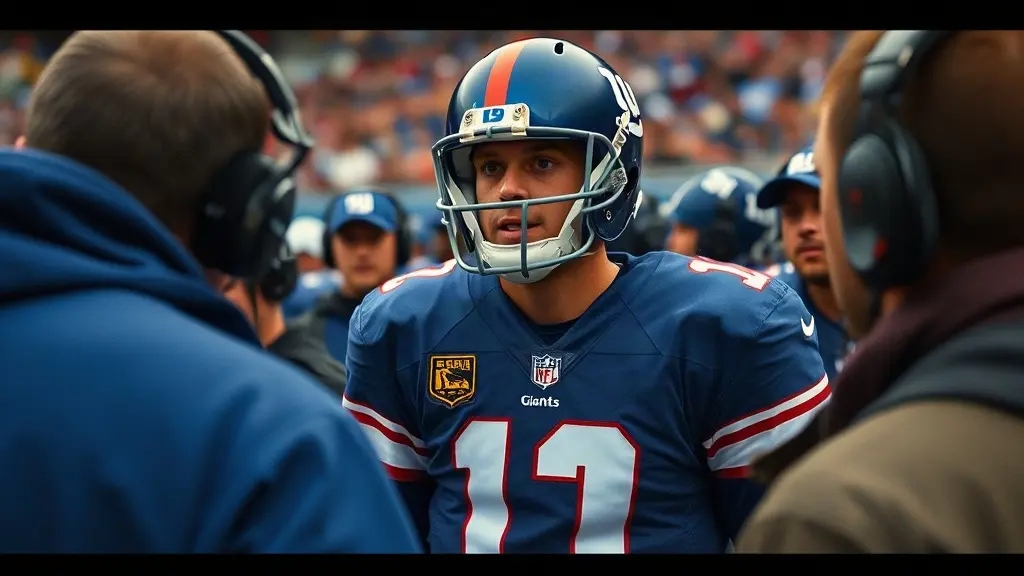
EAST RUTHERFORD, N.J. — When starting seasons fall apart due to injuries, inconsistent execution, and mounting losses, NFL coaching staffs often find themselves searching the deepest corners of their depth charts for answers. In East Rutherford, the New York Giants have found an improbable catalyst where few expected one: an unheralded, third-string castoff quarterback who has injected new life into an otherwise struggling franchise.
According to analysis published by The Wall Street Journal, the emergence of a reserve signal-caller has fundamentally shifted the team's weekly trajectory. Rather than serving as an afterthought on practice squads or holding a clipboard on game days, the newly minted starter has managed to stabilize an offense that spent the early portion of the campaign searching for an identity.

The Improbable Path from Depth Chart to Starter
The National Football League rarely affords third-string quarterbacks meaningful reps, let alone an opportunity to steer an offense through high-pressure regular-season contests. Typically, third-string options are signed as emergency insurance, tasked primarily with running the scout team during midweek practices and mimicking opposing schemes for the defense.
However, a combination of roster attrition, persistent struggles under center, and structural necessity forced the Giants' coaching staff to look beyond conventional solutions. The transition from castoff to starter has demonstrated how quickly professional football dynamics can pivot when an underdog executes basic offensive principles cleanly.
Rather than forcing low-percentage deep balls or succumbing to pressure in the pocket, the reserve quarterback has leaned into efficient, decisive play. Quick releases, pre-snap reads, and an ability to spread the ball across multiple passing options have unlocked running lanes that were completely closed during earlier stretches of the season. As detailed in ongoing coverage by The Wall Street Journal's sports analysis, this straightforward approach has simplified offensive coordinator duties and breathed confidence back into the locker room.

Photographic Documentation
New York Giants — verified documentary press visual.
Evaluating the Turnaround on the Field
The impact of having a composed presence under center extends beyond passing statistics. An effective quarterback fundamentally alters game flow, defensive posture, and field position battles. When an offense repeatedly stalls with three-and-outs, opposing defenses pin their ears back while home defenses wear down from excessive snap counts.
By executing sustaining drives and protecting the football, the newly elevated quarterback has reversed that dynamic. Sustained drives keep defenses rested, force opponents to respect multiple intermediate passing lanes, and establish a physical tone at the line of scrimmage.
The tactical evolution has also helped protect the offensive line. By releasing the ball in under three seconds on high-percentage attempts, the quarterback has limited sacks and allowed skill players to create yards after the catch in open space.
| Phase of Play | Early-Season Struggles | Turnaround Under Reserve QB |
|---|---|---|
| Offensive Tempo | Sluggish, frequent delay-of-game and pre-snap errors | Crisp huddle mechanics and rapid pre-snap adjustments |
| Turnover Differential | Costly interceptions and fumbles under pocket pressure | Conservative, risk-averse passing keeping possessions alive |
| Third-Down Conversion | Consistently behind the chains in 3rd-and-long scenarios | Manageable 3rd-and-short setups through early-down efficiency |
| Locker Room Morale | Visible frustration following consecutive blowout defeats | Re-energized collective confidence and heightened urgency |
Addressing Quarterback Rumors and Draft Speculation
Amid the unexpected success on the field, fan bases and draft analysts have engaged in intense speculation regarding the team's long-term future at the position. With marquee prospects frequently linked to New York through collegiate coverage and draft chatter—including questions surrounding whether younger collegiate stars like J.J. McCarthy would eventually land in East Rutherford—the short-term success of an unheralded veteran adds an intriguing dynamic to the front office's calculations.
As national coverage from national sports reporting notes, late-season performances from unheralded starters often create difficult evaluations for general managers. Winning games in November and December can alter draft positioning, complicate decisions around premium draft capital, and force evaluations on whether short-term stability warrants longer-term investment or remains an opportunistic spark.
For the Giants, balancing immediate momentum against strategic roster building remains a central priority. The organization has historically managed high-profile quarterback successions under the intense scrutiny of the New York media market, where single-game performances are frequently magnified.
Long-Term Implications for the Franchise
While the current spark has provided immediate relief for the coaching staff and elevated locker room spirits, the ultimate test will be sustainability. NFL defensive coordinators accumulate tape quickly. Once opposing coaching staffs have two to three games of film on a replacement starter, they implement tailored blitz packages, disguised coverages, and customized pressure fronts to test weaknesses.
How the quarterback and the coaching staff adapt to those counter-adjustments will determine whether this run is merely a feel-good midseason streak or the foundation of a reliable career resurgence. Regardless of how the remainder of the season unfolds, the castoff signal-caller has demonstrated the value of preparation and resilience in professional football.
Frequently Asked Questions
What sparked the Giants' unexpected quarterback change?
The switch occurred after standard depth-chart options faced persistent issues with injuries and on-field execution, opening an opportunity for a third-string reserve to take command of the starting offense.
How has the offense changed under the new quarterback?
The team has adopted a faster, more disciplined approach that prioritizes quick-release throws, minimizes unforced turnovers, and keeps the offensive unit ahead of the chains on critical third downs.
Will this turnaround affect the Giants' upcoming NFL draft plans?
Sustained winning can change a team's draft slot and influence front-office decisions regarding whether to expend high draft picks on a rookie quarterback or build out supporting personnel.