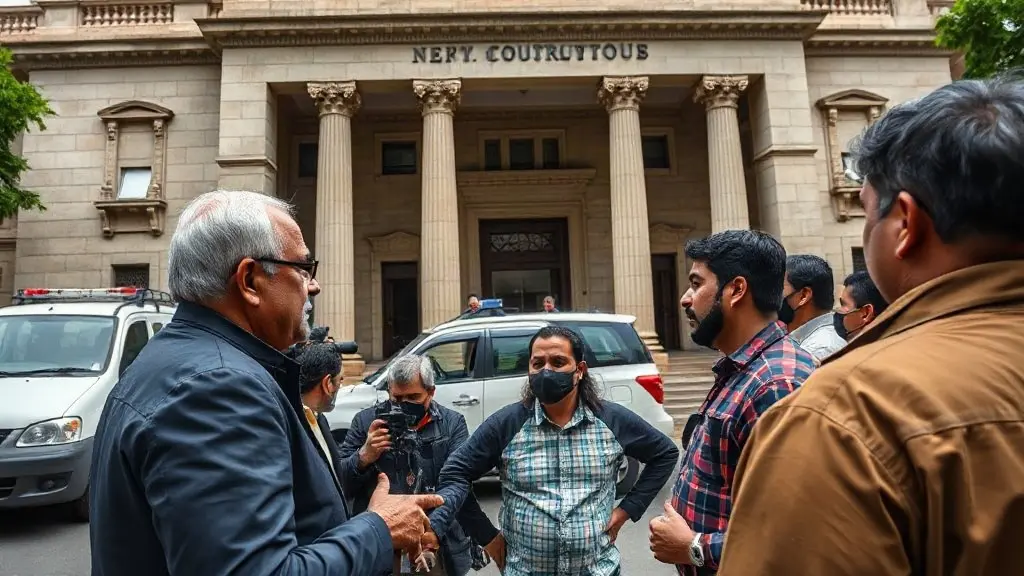
The Supreme Court of India witnessed intense arguments during a hearing concerning the high-profile Lakhimpur Kheri violence case, as senior advocates Prashant Bhushan and Siddharth Dave engaged in a sharp exchange of words before a bench headed by Justice Surya Kant.
According to courtroom reporting documented by News18 Hindi's judicial dispatch, the courtroom confrontation erupted over procedural submissions, trial timelines, and conditions linked to the bail status of key accused persons, including Ashish Mishra, the son of former Union Minister of State Ajay Mishra Teni. The bench intervened to calm tempers and ensure that proceedings remained centered on legal merits rather than interpersonal friction between counsel.

The Roots of the Heated Courtroom Argument
The dispute in courtroom chambers centered around the pace of trial court proceedings in Uttar Pradesh and monitoring mechanisms established by the apex court. Advocate Prashant Bhushan, representing the families of victims who lost their lives during the October 2021 incident in Lakhimpur Kheri, raised strong objections regarding procedural steps and trial progression. In response, Senior Advocate Siddharth Dave, appearing for the defense, pushed back forcefully against accusations of deliberate delay or systemic avoidance of statutory timelines.
The verbal friction between the two prominent advocates intensified as each side sought to characterize the ongoing local trial proceedings. While Bhushan argued for heightened judicial scrutiny over bail terms and witness security, Dave maintained that defense counsel had consistently adhered to judicial directions without seeking unwarranted adjournments.
As the exchange escalated, the bench headed by Justice Surya Kant intervened to defuse tensions. The presiding judge made it clear that the bench would not entertain peripheral accusations or unnecessary friction, urging counsel to maintain courtroom decorum and focus strictly on the constitutional questions and factual records placed before the court.

Heated — verified documentary press visual.
Context of the Lakhimpur Kheri Proceedings
The legal background of this dispute traces back to October 3, 2021, when eight people—including four protesting farmers, a local journalist, and three occupants of an SUV—were killed during a demonstration against controversial agricultural reform laws in Tikunia, located within the Lakhimpur Kheri district of Uttar Pradesh.
Ashish Mishra was named as the prime accused in the violent incident. Following his arrest and subsequent legal challenges, the Supreme Court took suo motu cognizance and later intervened on multiple occasions to oversee the constitution of a Special Investigation Team (SIT) and appoint a retired high court judge to monitor the ongoing inquiry, as tracked by detailed court records published by News18. In January 2023, the apex court granted interim bail to Mishra under strict conditional terms, including a restriction barring him from staying in Uttar Pradesh or the National Capital Territory of Delhi, except for attending trial proceedings.
Procedural Friction and Judicial Clarification
During periodic progress reviews of the trial, tensions frequently emerge over witness examination schedules and legal filings. The latest hearing reflected these recurring pressures. Legal observers point out that the Supreme Court has consistently balanced two competing legal imperatives: ensuring a speedy trial for the victims' families while preserving the statutory fair-trial rights of the accused.
When exchanges between Bhushan and Dave threatened to stall the primary business of the list, Justice Surya Kant reminded both sides that personal grievances have no place in constitutional adjudication. The bench noted that court oversight is intended to guarantee that justice is delivered methodically and transparently, without undue prejudice to either side.
| Procedural Milestone | Case Detail / Direction | Judicial Objective |
|---|---|---|
| Incident Date | October 3, 2021 (Tikunia, Lakhimpur) | Originating event resulting in eight casualties |
| SIT & Monitoring | Monitored by a retired High Court judge | Ensuring fair and independent investigation |
| Interim Bail Order | Granted conditionally in January 2023 | Subject to non-entry into UP and NCT Delhi |
| Trial Oversight | Regular progress reports from trial court | Avoiding prolonged witness fatigue and delays |
Clarifying Judicial Designations: CJI and Supreme Court Leadership
The coverage of this matter has also prompted public queries regarding judicial leadership designations in India. While some initial media headlines colloquially referred to the bench's senior judge using the acronym CJI, it is important to clarify that CJI stands specifically for the "Chief Justice of India"—the administrative head of the country's federal judicial branch and the master of the court roster.
Justice Surya Kant serves as a senior puisne judge of the Supreme Court of India. In judicial reporting, proceedings before benches led by senior judges frequently draw national attention, particularly when presiding over sensitive trials involving politically connected figures, as detailed in ongoing coverage by national judicial reporting desks.
What Comes Next in the Lakhimpur Kheri Case?
The trial court in Uttar Pradesh continues to record witness depositions under the periodic oversight of the Supreme Court. The top court continues to monitor the pace of witness examinations, receiving status reports from the district judge regarding estimated completion timelines.
The conditions governing the interim release of the accused remain subject to periodic review by the apex court. The court has reiterated that any attempt to influence witnesses, intimidate families, or cause willful procedural delays could lead to immediate reconsideration of interim bail protections. For now, the bench has directed both parties to adhere strictly to scheduled arguments and cooperate with the trial court to ensure a swift, fair, and orderly conclusion to the legal process.