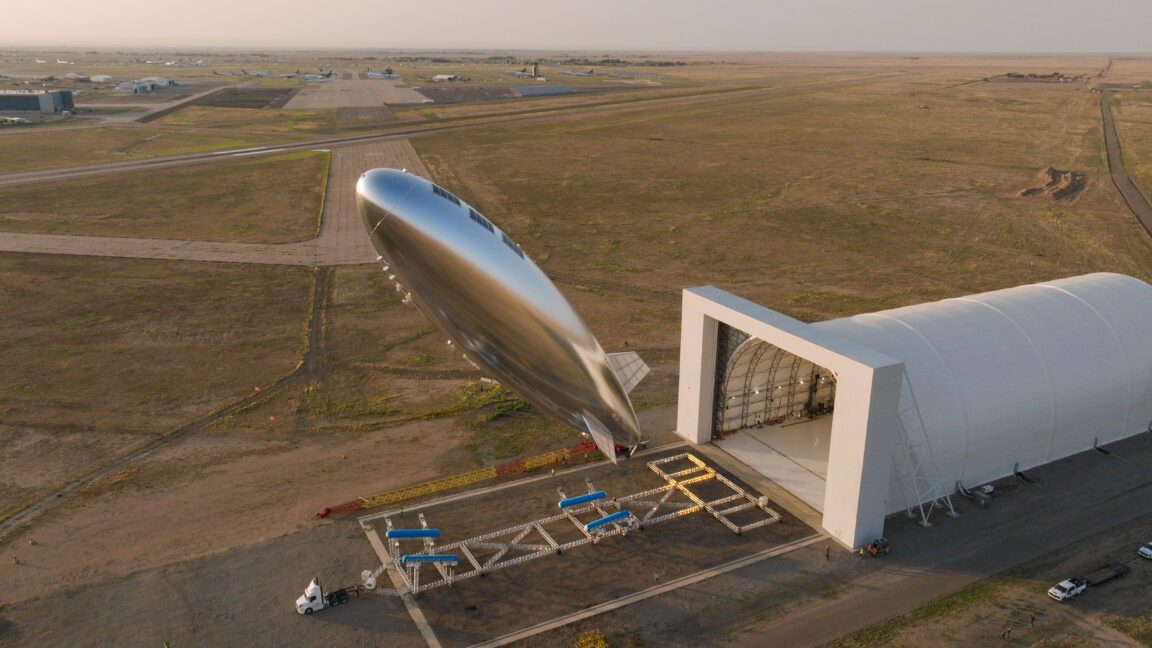
A stratospheric airship has completed a transpacific flight from the United States to Japan to validate the concept of using high-altitude platforms as cellular towers in the sky, according to reporting by Ars Technica — Main Feed.
The long-distance demonstration, conducted using aerospace company Sceye's platform, evaluated the vehicle's capability to operate at extreme altitudes while serving as an airborne telecommunications hub. Operating high above commercial air traffic, the platform is designed to provide broadband and cellular coverage to areas on the ground where conventional infrastructure is compromised or unavailable.
Proving Connectivity for Emergency Response
Recent testing confirmed that Sceye’s high-flying platform can deliver critical communications services during disaster scenarios, according to the report. When catastrophic events such as earthquakes, tsunamis, or severe storms knock out ground-based cell towers and power grids, airborne platforms can bridge communications gaps for both first responders and affected populations.
By operating in the stratosphere, these unmanned airships function similarly to low-altitude satellites, but with the ability to maintain closer proximity to the ground. This reduced distance helps lower signal latency and allows standard mobile devices to connect without requiring specialized satellite ground equipment.
Expanding Airborne Infrastructure
The transpacific journey marks a notable technical milestone in demonstrating that lighter-than-air vehicles can navigate sustained, long-range routes across open oceans. Successfully maintaining control and altitude during an intercontinental transit proves the airship's operational viability in varied atmospheric conditions.
As aerospace and telecommunications companies continue to explore alternatives to traditional cellular networks, stratospheric systems represent a growing segment of redundant communication architecture. The successful flight to Japan illustrates how high-altitude platforms may soon play a functional role in disaster recovery protocols, offering rapid deployment when ground-level infrastructure fails.