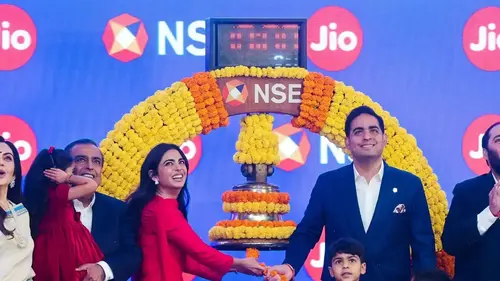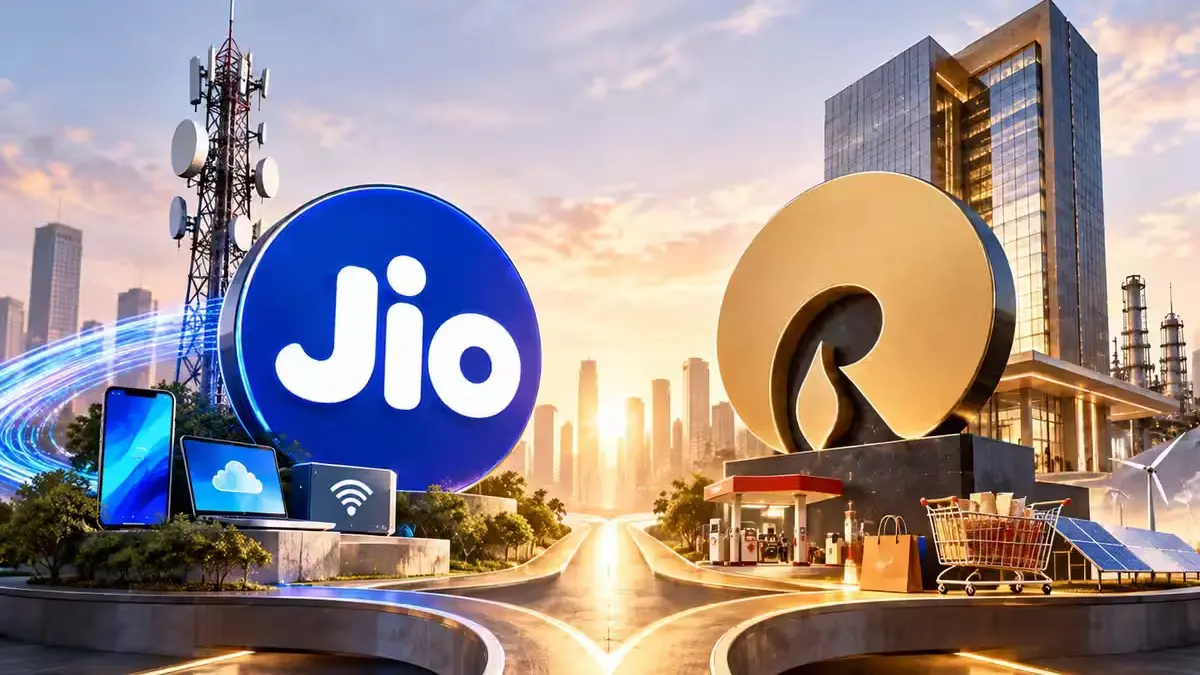
Dalal Street is recalculating the valuation trajectory of conglomerate Reliance Industries Limited (RIL) as its telecom juggernaut, Jio, advances toward independent public trading. The debut offers domestic and global institutional investors a direct mechanism to value India’s largest digital connectivity provider on a standalone basis, dismantling long-standing conglomerate holding discounts.
According to market analysis reported by The Economic Times, the standalone listing will provide clearer enterprise visibility into telecom cash flows, subscriber monetisation, and average revenue per user (ARPU). However, equity strategists emphasize that a sustained upward re-rating for parent entity RIL hinges equally on performance milestones across its other critical pillars: Reliance Retail, the legacy Oil-to-Chemicals (O2C) segment, and long-term capital allocation in New Energy.

Unbundling the Digital Powerhouse
For nearly a decade, Jio functioned as an engine of value creation within RIL’s consolidated balance sheet, attracting billions in private equity and sovereign capital during its pre-listing rounds. An independent exchange debut introduces precise price discovery for its 5G network rollouts, cloud infrastructure, and consumer enterprise services.
Market participants noted that standalone trading removes ambiguities surrounding capital expenditure absorption. Investors seeking direct exposure to India's burgeoning telecommunications and digital infrastructure sector can allocate capital specifically into Jio without exposure to cyclical refining margins or petrochemical swings.
| Business Segment | Current Valuation Driver | Post-Listing Strategic Focus |
|---|---|---|
| Jio (Telecom & Digital) | ARPU expansion, 5G monetisation | Independent quarterly scrutiny, dividend yields |
| Reliance Retail | Store expansion, omnichannel growth | Consumer wallet share, potential future unbundling |
| Oil-to-Chemicals (O2C) | Global refining spreads, crude demand | Free cash flow engine funding transition assets |
| New Energy | Capital expenditure, green hydrogen | Commercial viability timeline, global partnerships |

Rating Test — verified documentary press visual.
Implications for Reliance Industries Shareholders
While Jio’s market arrival represents a liquidity event and value-unlocking benchmark, parent firm RIL must still navigate shifting macroeconomic conditions across its traditional cash cow businesses. Volatility in global crude benchmarks directly influences O2C margins, which historically financed digital expansion across early 4G and 5G buildouts.
Furthermore, institutional investors are closely monitoring RIL’s massive investments into clean fuels, solar gigafactories, and battery storage. Until those New Energy assets generate operational cash flows, parent company shares will trade on a composite matrix balancing Jio’s digital growth against commodity cyclicality.