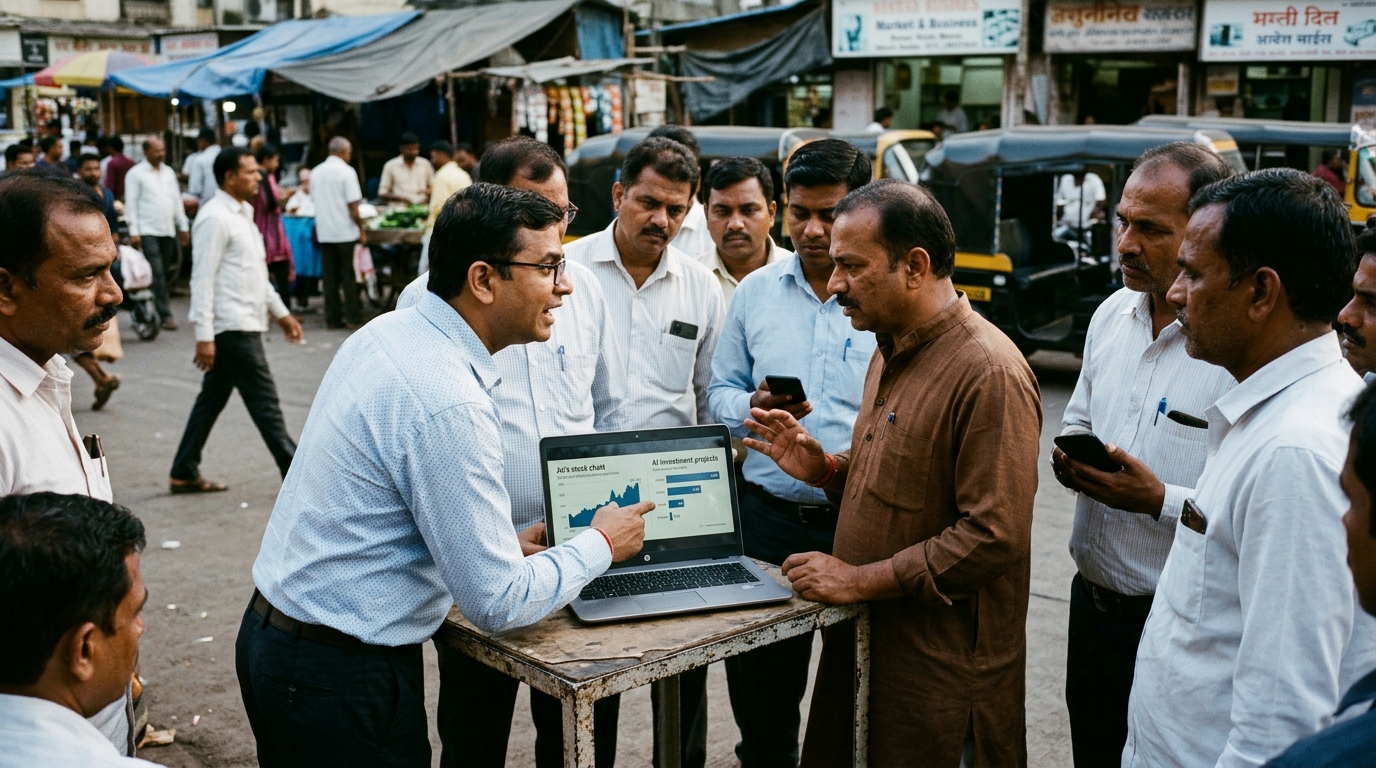
Reliance Jio Platforms opened its initial public offering on Indian bourses on Thursday, achieving full subscription within the first two hours of bidding while Chairman Akash Ambani detailed plans to deploy capital into enterprise artificial intelligence infrastructure.
The swift subscription pace, corroborated by local market dispatches, marked one of the fastest capital-raising milestones recorded in Indian financial history. Institutional investors and retail participants rapidly exhausted the primary allocation tranches shortly after order books opened on the National Stock Exchange and Bombay Stock Exchange.
According to an operational update reported by a Kannada.news18.com dispatch, Ambani framed the public offering not merely as a liquidity mechanism, but as a deliberate capital alignment to support Jio’s transition from a telecommunications utility into a deep-technology ecosystem.
Shifting Capital from Telecom Pipes to Deep Computing
Jio disrupted India's wireless communications market in 2016 by offering free national calling and deeply discounted high-speed mobile data, forcing legacy operators into debt restructuring and consolidation. Since that entry, the company secured major minority backing from global technology giants, including Meta Platforms and Google parent Alphabet, accumulating strategic resources alongside cash reserves.
Addressing post-listing capital allocation, Ambani emphasized that the company's next phase of equity creation relies on building indigenous artificial intelligence capabilities, cloud infrastructure, and enterprise machine-learning services. Rather than chasing short-term pricing power on domestic consumer mobile tariffs, management intends to deploy computing capacity designed to run localized AI applications across retail, agricultural logistics, and small business software.
The technical disclosure indicates that while commercial 5G spectrum deployment is largely complete across major urban districts, the associated software stack remains under active modernization. The company faces the computational trade-off between standard data traffic routing and the heavy server load demanded by generative models and localized neural processing.
Market Reception and Rapid Subscription Velocity
Market response exceeded initial brokerage expectations during morning trading hours. Qualified institutional buyers, non-institutional bidders, and high-net-worth accounts rapidly locked in commitments across multiple bidding tiers.
Financial coverage from regional market reporting by The Economic Times confirmed that total demand crossed 100 percent of the aggregate share pool within 120 minutes of market opening, setting a historical record for an offering of this capital scale.
Equity research desks attributed the velocity to Jio’s combined consumer scale—boasting more than 450 million active wireless subscribers—and the clear corporate boundary established between its digital platform and the broader petroleum-and-retail operations of parent entity Reliance Industries Limited.
Evaluating Valuations Against Technology Reality
Despite the immediate rush to buy, seasoned market commentators urged investors to weigh growth multiples against genuine technical execution. Zerodha founder and chief executive Nithin Kamath publicly cautioned market entrants to separate structural technology development from speculative listing gains.
As recorded in analysis highlighted by Vijay Karnataka business coverage, Kamath noted that retail participants must evaluate platform monetisation models rigorously, balancing historical balance-sheet strengths against the long capital cycles required to make consumer AI tools profitable.
Building domestic artificial intelligence models involves substantial capital expenditure on graphics processing units (GPUs), specialised sovereign data hosting, and significant power supply infrastructure. While Jio retains exclusive sovereign access to substantial domestic user data pools, transforming conversational or generative tools into enterprise software revenue takes sustained engineering execution, with recurring commercial software contracts yielding slower returns than prepaid mobile recharge plans.
Governance and Upcoming Market Milestones
Institutional analysts are monitoring how capital proceeds from the primary issue will be segregated between general debt repayment to Reliance Industries and targeted research expenditures at Jio Platforms' software labs in Navi Mumbai.
The initial public offering period will remain open through its scheduled regulatory subscription window, concluding with final share allotment reconciliations managed by registrar portals and depositary systems next week.
The verified next step requires the stock exchange boards and the Securities and Exchange Board of India (SEBI) to complete share credit confirmations ahead of official secondary market trading, where Jio’s enterprise technology claims will face ongoing valuation scrutiny from global institutional funds.