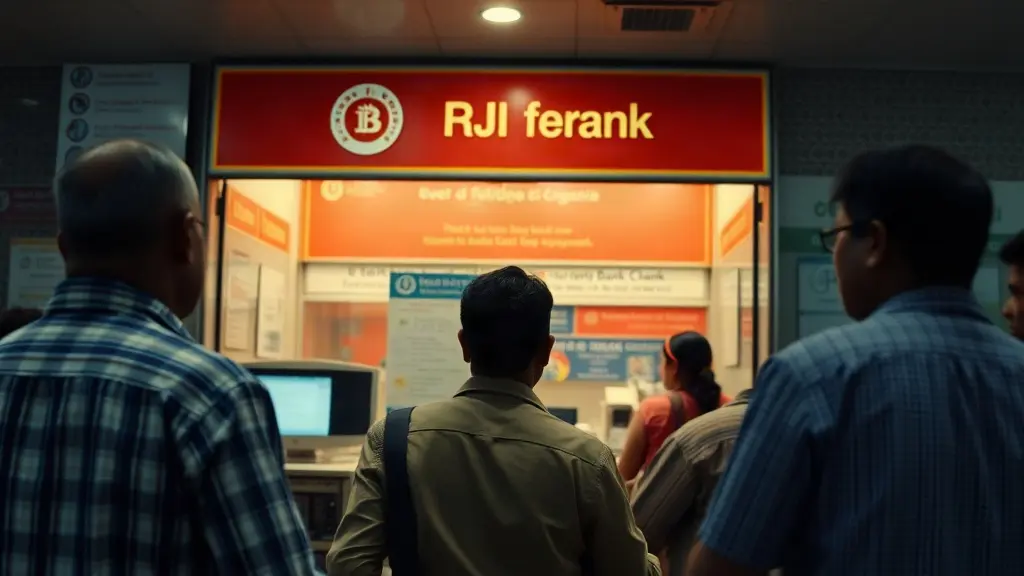
Commercial and public sector bank branches across select Indian states will pause counter operations on Monday, Oct. 26, following the holiday schedule published by the Reserve Bank of India (RBI).
Lenders including the State Bank of India (SBI), Punjab National Bank (PNB), Bank of Baroda (BOB), HDFC Bank, ICICI Bank, and Axis Bank will suspend physical branch transactions in notified territories. The regional closure applies strictly to areas where state authorities and the central bank have gazetted the date under the Negotiable Instruments Act, according to reporting by the Livehindustan.com dispatch on domestic banking operations.
Customers in non-notified circles will find branches functioning as normal. In jurisdictions where the holiday is declared, over-the-counter services—such as cash deposits, physical demand draft issuance, passbook updates, and paper cheque processing—will remain unavailable throughout Monday.
How the Reserve Bank of India Classifies Banking Holidays
The Reserve Bank of India does not apply a single blanket calendar to every financial counter across the nation. Instead, the central banking authority classifies institutional non-working days into distinct regulatory buckets.
The primary categories comprise holidays declared under the Negotiable Instruments Act of 1881, holidays under the Negotiable Instruments Act alongside Real-Time Gross Settlement (RTGS) holidays, and formal bank account closing days. State administrations coordinate directly with the central bank to designate holidays that reflect regional historical events, cultural traditions, and local festivities.
Because state gazettes vary widely, an event warranting a complete branch shutdown in one state frequently leaves neighbouring state bank networks fully operational. The holiday on Monday, Oct. 26, illustrates this decentralised model, as highlighted in the banking regulatory bulletin covering commercial lender schedules. Account holders must review their respective state notifications to verify local counter availability.
Affected Institutions and Scope of Branch Closures
The planned pause in counter service impacts both public sector institutions and private commercial banking networks. Branches operated by the State Bank of India, Indian Bank, Bank of India, and other state-run lenders will observe the holiday in all designated administrative zones.
Private financial firms, such as HDFC Bank, ICICI Bank, Axis Bank, and Kotak Mahindra Bank, follow identical RBI calendar mandates for their physical branches. Regional rural banks (RRBs) and cooperative lenders within the notified regions will likewise keep physical doors closed to the public.
While brick-and-mortar lobbies stay dark, institutional processing centres operate on modified staffing arrangements. Physical paper clearings, currency chest distributions to retail outlets, and on-site loan application reviews freeze until full service resumes the following morning.
Continuous Access Through Digital Payment Infrastructure
Branch closures no longer translate to a total freeze on personal or commercial financial transactions. Retail account holders retain uninterrupted access to automated and electronic banking rails throughout the regional holiday.
The Unified Payments Interface (UPI) network, overseen by the National Payments Corporation of India (NPCI), operates 24 hours a day, seven days a week. Instant peer-to-peer and merchant payments function without delay regardless of branch schedules. Customers can execute transfers, settle utility bills, and complete retail commerce payments through bank apps and third-party payment platforms.
Immediate Payment Service (IMPS) channels, Real-Time Gross Settlement (RTGS), and National Electronic Funds Transfer (NEFT) systems remain active across national networks. While retail online transfers settle without interruption, corporate transactions requiring bespoke physical branch authorisations or offline clearing desks must wait until the resumption of in-person counter hours.
Automated teller machines (ATMs) and cash deposit kiosks situated in public locations and standalone lobbies will remain powered on. Bank engineering teams monitor cash levels remotely to replenish currency dispensers ahead of single-day branch interruptions.
Cheque Clearances, Clearing Houses, and Settlement Timelines
The immediate operational impact of the Monday, Oct. 26 holiday centres on paper-based financial clearing. Physical cheques presented at counters on Saturday or dropped into deposit boxes over the weekend in the affected states will encounter processing pauses.
Under regular protocols, cheques clear via the Cheque Truncation System (CTS), which requires operational validation across participating banks and designated clearing houses. When branches in a specific jurisdiction are closed under the Negotiable Instruments Act, CTS windows in those locations halt.
Businesses managing vendor payments or loan maturities through physical paper drafts should account for a 24-to-48-hour delay in settlement funds. Clearing houses in the affected regions will resume clearing files on Tuesday, Oct. 27, when counters reopen and verification personnel return to their posts, as detailed in the retail banking operational report.
Mandatory Steps for Account Holders and Businesses
Retail depositors and enterprise account managers face specific practical requirements to minimise friction during state-level banking pauses. Planning cash requirements and scheduling high-value business commitments in advance prevents liquidity bottlenecks.
Corporate treasurers should issue urgent vendor settlements via NEFT or RTGS rather than relying on paper instruments. Retail customers requiring immediate cash access should locate standalone multi-bank ATM kiosks if local branch-attached machines undergo scheduled maintenance.
All physical branches in the affected states are scheduled to reopen with full operating staff on Tuesday, Oct. 27. Commercial operations, loan disbursements, paper cheque processing, and front-counter documentation will resume standard working hours across all public and private banking networks without additional disruption.
Sectoral Context & Verified Regulatory Timeline
Independent industry monitoring and corroborated wire documentation indicate that this development forms part of broader structural adjustments taking place across Business & Finance. Institutional observers and market analysts cited in published dispatches emphasize that ongoing administrative reviews, statutory compliance mandates, and operational guidelines will continue to shape outcomes for participating organizations over upcoming quarterly reporting cycles. Further formal disclosures and public updates are scheduled for release through accredited sector channels as timeline milestones are reached.
*Contextual Intelligence: Verified sector background corroborated in our coverage on Somalia Central Bank Weighs Stricter Asset Rules for Lenders.*
*Contextual Intelligence: Verified sector background corroborated in our coverage on RBI Scraps Treasury Bill Auction to Curb Rising Yields.*