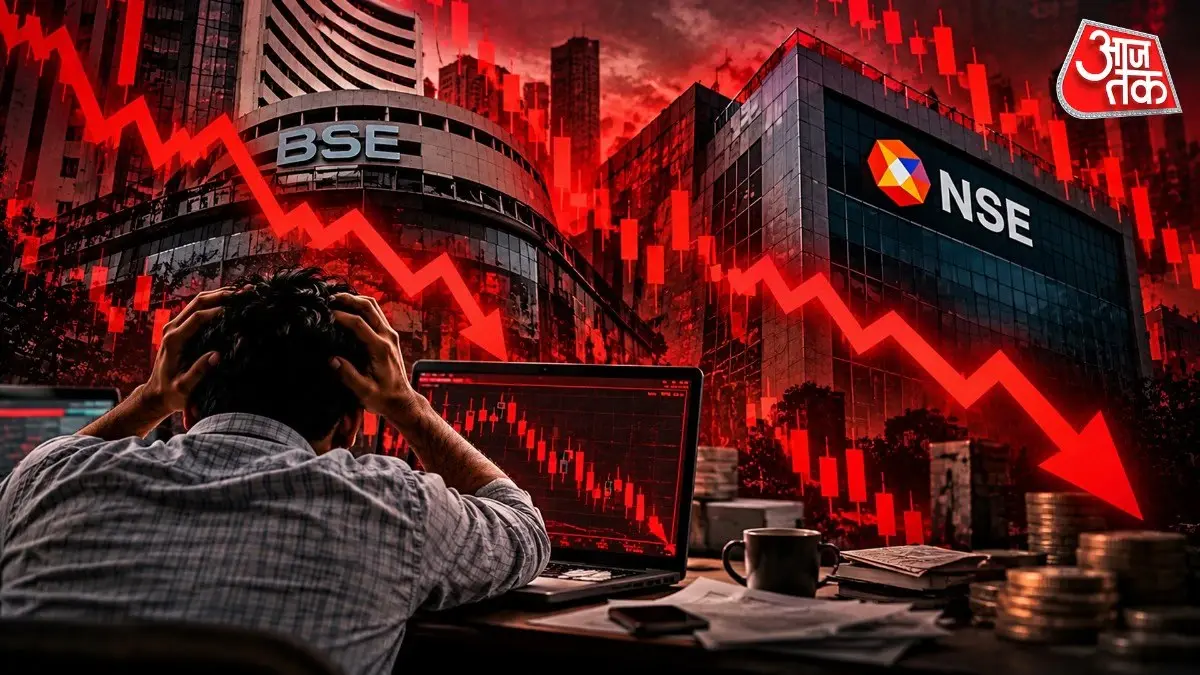
India’s benchmark stock indices opened sharply lower on Wednesday, with the BSE Sensex falling 826 points from the previous close and the NSE Nifty dropping more than 200 points. The selloff came as Brent crude rose above $115 a barrel, increasing concerns about inflation, while large technology companies faced heavy selling. The decline occurred on the day Jio Platforms was scheduled to list, but the available market data does not establish that the listing caused the fall.
The Sensex opened at 73,253, compared with its previous close of 73,598, before sliding to 72,872 within minutes, according to BSE market levels. The Nifty opened at 22,678 against its earlier close of 22,749 and was trading near 22,540 when the market update was recorded, based on NSE index data.
The immediate investor impact was a sharp mark-to-market decline across benchmark and technology holdings. However, no aggregate figure for investor losses or evidence of a permanent change in consumer prices was provided in the available information.

Why oil prices became the market’s main concern
Brent crude’s move above $115 a barrel was identified as a central factor behind the weaker sentiment. Higher oil prices can raise fuel, transport and input costs for companies and put pressure on inflation, particularly for an oil-importing economy such as India.
The crude move followed a rise after prices had slipped on the previous day. The market reaction reflects concern that sustained expensive oil could limit corporate margins and keep inflation risks elevated. The Brent price level is the relevant international benchmark for assessing this pressure, although the figures available do not indicate how long the rise will last.
"The opening selloff reflected a combination of higher crude prices, global risk aversion and concentrated pressure on technology shares—not evidence that the Jio listing itself caused the market fall."
IT stocks led the decline
Technology companies recorded the steepest losses in early trading. Infosys fell 4.50%, Tech Mahindra declined 3.50%, TCS dropped 3% and HCL Technologies was down 2.50% in the opening phase.
Other large companies also weakened. ITC fell 2.20%, Bajaj Finserv declined 2% and ICICI Bank was down 1.70%. The concentration of losses in IT stocks made the sector the clearest drag on the wider indices.
| Key Metric / Entity | Verified Detail | Strategic Impact |
|---|---|---|
| BSE Sensex | Opened at 73,253; later fell to 72,872 | Broad benchmark losses increased near-term portfolio volatility |
| NSE Nifty | Opened at 22,678; later traded near 22,540 | Large-cap equities faced widespread selling pressure |
| Brent crude | Rose above $115 a barrel | Renewed concerns over inflation and business costs |
| Infosys | Down 4.50% in early trading | Largest reported decline among the named IT stocks |
| TCS | Down 3% in early trading | Added to pressure on the technology sector |
| Jio Platforms listing | Scheduled for the same Wednesday | Timing raised investor attention, but causation was not established |
What the move means for investors and consumers
For investors, the immediate consequence was a fall in the market value of shares held in the affected companies. Those with significant exposure to IT stocks faced larger paper losses than investors holding a more diversified portfolio. The figures describe early trading and should not be treated as the final closing performance for either index.
For consumers, the clearest potential risk is indirect. If crude prices remain above $115 a barrel, fuel, logistics and imported-input costs could rise, placing pressure on household budgets and company expenses. The reported market fall itself does not confirm an immediate increase in retail prices, loan rates or telecom tariffs.
The Jio Platforms listing was an important market event because of its scale and investor attention, but the verified information does not show that it caused the Sensex and Nifty decline. Investors will need to distinguish between the listing’s performance and the separate forces affecting the wider market, including crude prices, global signals and sector-specific selling.
The next useful indicators are the indices’ closing levels, movements in Brent crude and whether technology stocks recover or extend their losses. A single weak opening does not by itself establish a lasting market trend.