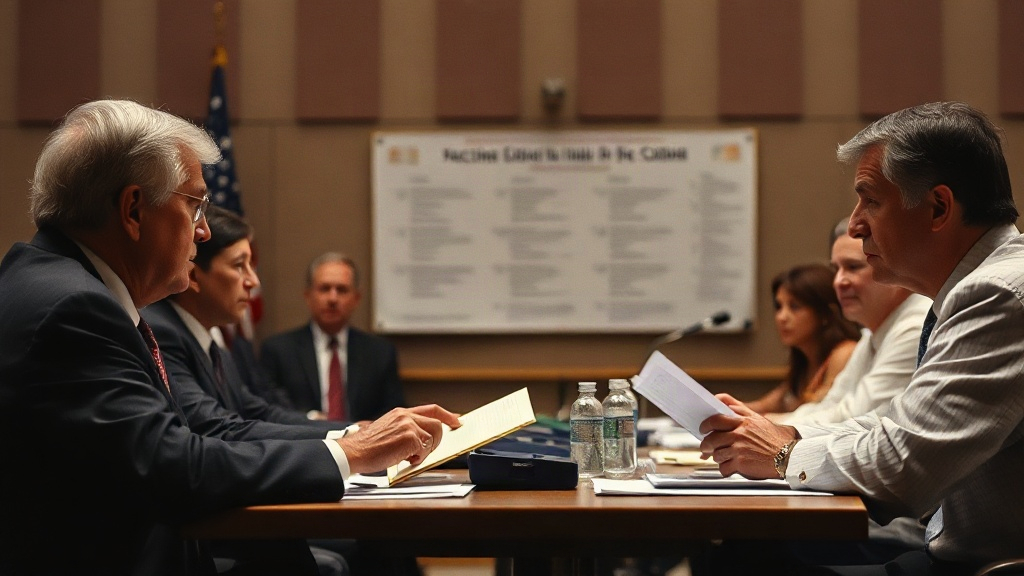
BETHESDA, Md. — The oversight board of the National Institutes of Health's Clinical Center Research Hospital delivered an unprecedented public rebuke to Health Secretary Robert F. Kennedy Jr., warning that his political efforts to promote unproven vaccine injury claims threaten to tarnish the institution's premier global reputation.
During a regularly scheduled advisory meeting, board chair Jack Leslie diverted from the planned agenda to address an unannounced event staged by Kennedy inside the hospital. Leslie spent six minutes detailing how political stunts risk compromising the facility's mission as a haven for clinical trials.
"Some might prefer I not speak out against these efforts, but I think that that would be a failing as an advisory board if we were silent," Leslie told the gathered panel, directly challenging the cabinet official overseeing federal health policy.
The Bethesda Stunt and the Unannounced Ceremony
The dispute began when Kennedy made a surprise appearance at the Bethesda, Maryland campus to host a promotional ribbon-cutting ceremony for his signature vaccine injury clinic. The event took career hospital staff by surprise and bypassed routine institutional communications.
During the appearance, Kennedy appeared alongside high-ranking administration appointees and a panel of individuals presenting claims of long-term vaccine harm. Participants sat behind official placards labeled "vaccine injured," answering questions about chronic health conditions without presenting verified clinical records or peer-reviewed documentation.
The public display was documented in detail by an Arstechnica.com dispatch, which outlined how executive political theater collided directly with the operating protocols of the world's largest clinical research hospital.
Leslie took direct aim at the presentation, explaining that while investigating potential adverse reactions remains valid medical science, turning the Clinical Center into a political backdrop undermines its standing as an objective scientific sanctuary.
Protecting the 'House of Hope'
The NIH Clinical Center has operated for decades as the premier research hospital in the United States, colloquially known among patients, oncologists, and rare-disease specialists as the "House of Hope." The facility admits patients only when they are enrolled in active, hypothesis-driven clinical trials.
Most individuals admitted to the hospital face rare genetic conditions, advanced cancers, or undiagnosed neurological disorders that community and academic medical centers cannot resolve. Treatments provided inside the center are experimental and funded through federal research appropriations rather than private insurance billings.
Leslie pointed out that the facility's operational foundation relies completely on public trust. If prospective trial participants begin viewing the clinical facility as an ideological instrument rather than an impartial laboratory, enrollment in critical trials could decline precipitously.
Independent health researchers and legal scholars noted that this friction reflects broader concerns raised across federal health operations, as detailed in an official regulatory filing regarding research autonomy and administrative procedure.
Patients agree to submit to unproven protocols, biopsies, and experimental pharmacology specifically because they trust the institutional oversight. Staging partisan panels inside those same corridors, board members cautioned, erodes the credibility that clinical researchers have cultivated over generations.
Distinguishing Scientific Scrutiny from Ideological Theater
In his remarks, Leslie took pains to clarify that the advisory board does not oppose thorough scientific inquiry into adverse events associated with immunization. On the contrary, rigorous surveillance remains a standard component of pharmacological safety.
"Serious reactions are rare, but real," Leslie stated during the meeting. He added that patients who suspect they have experienced lasting adverse reactions from therapeutic interventions or vaccines deserve systematic evaluation and dignity rather than dismissive rhetoric.
"People who believe they've been injured should be taken seriously," Leslie told the board, drawing a sharp line between methodical medical review and public performances designed to support broad political narratives.
Federal surveillance networks such as the Vaccine Adverse Event Reporting System, managed jointly by the Food and Drug Administration and the Centers for Disease Control and Prevention, already collect voluntary post-market incident reports. However, translating self-reported symptoms into confirmed clinical causation requires double-blind methodologies, control groups, and detailed molecular workups.
By establishing a specialized venue inside the Clinical Center without publishing strict inclusion criteria, diagnostic baselines, or trial endpoints, critics argue the administration risks generating ambiguous data that cannot withstand scientific peer review.
Executive Pressure and Research Independence
The clash at the Clinical Center highlights an intensifying struggle across the Department of Health and Human Services. Career researchers and administrative advisory bodies increasingly find themselves caught between executive mandates and scientific norms.
Kennedy has spent decades alleging links between standard childhood immunizations and complex developmental conditions, claims repeatedly refuted by massive international epidemiological studies. Since assuming control of the department, he has sought to institutionalize inquiries into his long-standing health hypotheses.
The deployment of Clinical Center assets for a targeted clinic represents one of the most direct attempts yet to leverage federal laboratory infrastructure in support of these initiatives. As outlined in a published technical report analyzing federal clinical trial governance, establishing clinical wards without institutional protocol review threatens established standards for human subject protections.
Advisory board members privately and publicly voiced alarm over the precedent. Allowing political appointees to establish clinical programs without standard institutional review board approval risks violating baseline federal guidelines governing clinical operations.
The board's decision to break ranks publicly signals that resistance from scientific leaders within the agency is moving from informal backchannels into on-the-record administrative sessions.
Operational Impact and Next Steps
The immediate question facing the Clinical Center is how the newly dedicated clinic will interface with the hospital's existing clinical programs. Administrative officials have not released an approved clinical trial protocol detailing which patients qualify for admission, what diagnostic tests will be administered, or how privacy rights will be protected.
Furthermore, questions remain regarding how research funds will be apportioned to support the clinic's operating costs, staff physicians, and diagnostic imaging equipment. Allocating federal hospital beds requires formal budgetary authorizations that usually take months of internal committee review.
The advisory board lacks direct statutory authority to unilaterally shut down clinics ordered by the Secretary of Health and Human Services. However, its formal oversight findings carry significant weight with congressional appropriations committees, which dictate annual discretionary spending for the National Institutes of Health.
Lawmakers on key health subcommittees are expected to examine whether federal resources and clinical facility space were diverted appropriately for the ribbon-cutting event and the subsequent clinic operations.
With hospital leadership openly sounding alarms, the advisory board is expected to request a formal briefing from departmental officials regarding the clinical parameters, safety controls, and ethical safeguards governing Kennedy's new initiative.
*Contextual Intelligence: Verified sector background corroborated in our coverage on Intel Secures FCC Robot Ban Waiver to Shield Fabs.*
*Contextual Intelligence: Verified sector background corroborated in our coverage on Anthropic Backers Log Massive Paper Gains Ahead of IPO.*