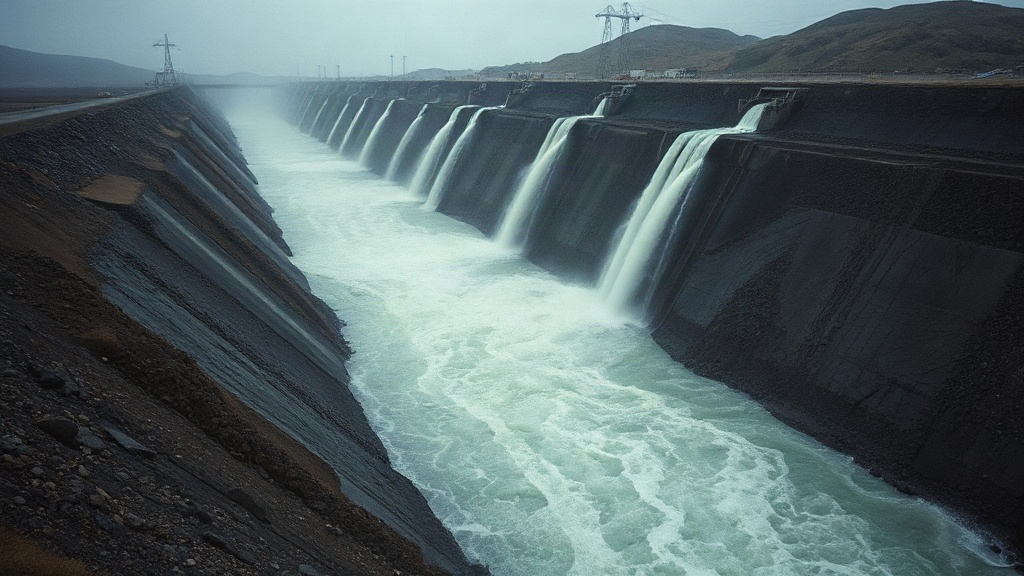
Intensifying weather events driven by global climate shifts threaten to wash hazardous mining contaminants into rivers and open oceans, putting marine ecosystems and coastal food supplies under unprecedented chemical stress.
Industrial mining operations around the world rely on massive containment ponds to store tailings, which are the pulverized rock, chemical slurries, and toxic byproducts left behind after extracting copper, gold, nickel, and other essential minerals. These storage structures were largely engineered to withstand historical weather patterns. However, accelerating precipitation extremes, prolonged droughts that crack earthen embankments, and rapid flash floods increasingly challenge the structural thresholds of existing facilities, as detailed in an Energylivenews.com dispatch tracking global environmental vulnerabilities.
When structural failures occur or untreated runoff escapes active and legacy sites, toxic contaminants do not remain localized. Instead, fast-moving river networks transport dissolved metals directly to continental shelves, coastal estuaries, and open sea fisheries, causing contamination that persists for decades.
The Hydrology of Tailings Storage Failures
Tailings dams rank among the largest engineered earthworks on the planet. Many exceed dozens of meters in height and hold millions of cubic meters of saturated mine tailings, liquid processing reagents, and acidic water.
Most modern mining operations utilize wet storage to keep residual sulfide minerals submerged under water, preventing exposure to atmospheric oxygen that triggers acid mine drainage. Yet this reliance on standing water makes tailings dams uniquely vulnerable to precipitation shocks. Sudden deluges add immense hydrostatic pressure against earthen retaining berms, raising internal pore-water pressures to points where solid soil walls undergo sudden liquefaction.
Once a retention wall liquefies or is overtopped by uncontrolled floodwaters, the contents pour downhill as high-velocity slurry waves. The resulting sediment floods overwhelm local water treatment systems and quickly enter adjacent river corridors. Riverbeds carry the contamination downstream across entire catchment basins, depositing heavy metals along floodplains before delivering the remaining toxic loads straight into coastal marine biomes.
Chemical Contaminants and Marine Disruption
Tailings slurries contain complex mixtures of heavy metals, including arsenic, cadmium, lead, copper, and zinc, alongside residual industrial processing chemicals like cyanide and xanthates.
When these metals reach marine environments, they interact with saline waters in ways that alter their bioavailability. Dissolved copper, for instance, impairs the sensory systems of marine wildlife, disrupting salmon navigation and inhibiting coral larval settlement. Filter-feeding bivalves, such as oysters and mussels, accumulate high concentrations of cadmium and lead in their tissues without showing immediate mortality, allowing lethal toxins to enter the human seafood supply chain silently.
Beyond immediate toxicity, acid-generating tailings lower the local pH of freshwater estuaries. This acidity causes metals locked in estuary sediment beds to redissolve and remobilize, transforming calm river deltas into recurring sources of ocean pollution long after surface floodwaters recede. Documentation published in a published technical report shows that legacy pollution sites can shed toxic plumes for generations whenever unseasonable storms disturb river bottom sediment.
Legacy Mine Sites Face Compounding Hazards
While active mining projects possess dedicated operational teams and pumping equipment to manage storm water, thousands of abandoned and orphaned mine sites across North America, South America, Africa, and Europe lack active management.
Many of these legacy sites were built during the nineteenth and twentieth centuries before modern geotechnical design standards existed. Operators frequently constructed containment berms upstream using loose, uncompacted tailings rather than engineered rockfill. Over decades, freeze-thaw cycles and root intrusion have quietly undermined the structural cohesion of these unmonitored structures.
As extreme precipitation events grow more severe, these abandoned containment ponds face elevated risk of catastrophic collapse. When unmonitored dams fail, days or weeks can elapse before environmental authorities detect the breaches, leaving millions of gallons of contaminated water to migrate unchecked into public waterways and downstream estuaries.
Economic and Regulatory Repercussions
The economic fallout of mine tailings reaching marine waters extends well beyond site cleanup expenses. Commercial coastal fisheries, which sustain millions of jobs globally, face long-term closures when harvest zones register unsafe heavy metal levels.
Regulatory authorities are responding by revisiting the physical design baselines required for mining permits. Environmental regulators in several mining jurisdictions are beginning to phase out conventional upstream tailings dams in favor of dry-stacking methods, where water is mechanically extracted from tailings before disposal, eliminating the risk of catastrophic liquid slurry spills. According to an official regulatory filing, environmental protection bodies are evaluating mandatory insurance policies to fund emergency containment repairs at high-risk facilities situated upstream of major river networks.
Adopting dry-stack technologies and structural retrofits carries substantial capital expenditure hurdles. Dewatering slurries demands continuous power and specialized filtration presses, raising the per-ton processing cost for industrial producers. Mining enterprises must weigh these capital costs against the severe legal liabilities, environmental clean-up fines, and loss of operating licenses that accompany catastrophic dam breaches.
Technical Monitoring and Disaster Mitigation
Mining companies and civil engineering agencies are turning toward advanced hydrological sensor networks and satellite radar monitoring to detect early warning signs of dam instability. Synthetic Aperture Radar (SAR) systems mounted on orbital satellites can measure millimeter-scale shifts in dam wall surfaces, alerting engineers to internal structural shifting before physical cracking becomes visible to ground inspectors.
Real-time autonomous sensors placed inside dam walls measure groundwater piezometric pressure continuously. If heavy rains drive pore pressure past critical safety margins, automated diversion sluices and auxiliary spillways can channel excess floodwaters away from sensitive tailings basins into secondary catchment zones.
Yet technical monitoring alone cannot fully eliminate risk in regions hit by unprecedented rainfall totals that exceed maximum design tolerances. As global climate patterns continue to bring shifting precipitation dynamics, the international mining industry faces an inescapable structural mandate: fundamentally redesign liquid waste containment systems to keep toxic chemical legacies from reaching the world's oceans.
*Contextual Intelligence: Verified sector background corroborated in our coverage on Meta Faces $25B Fine Order Over New Mexico Child Safety.*
*Contextual Intelligence: Verified sector background corroborated in our coverage on Meta Ordered to Pay $25B Fine Over Cambridge Analytica Case.*


