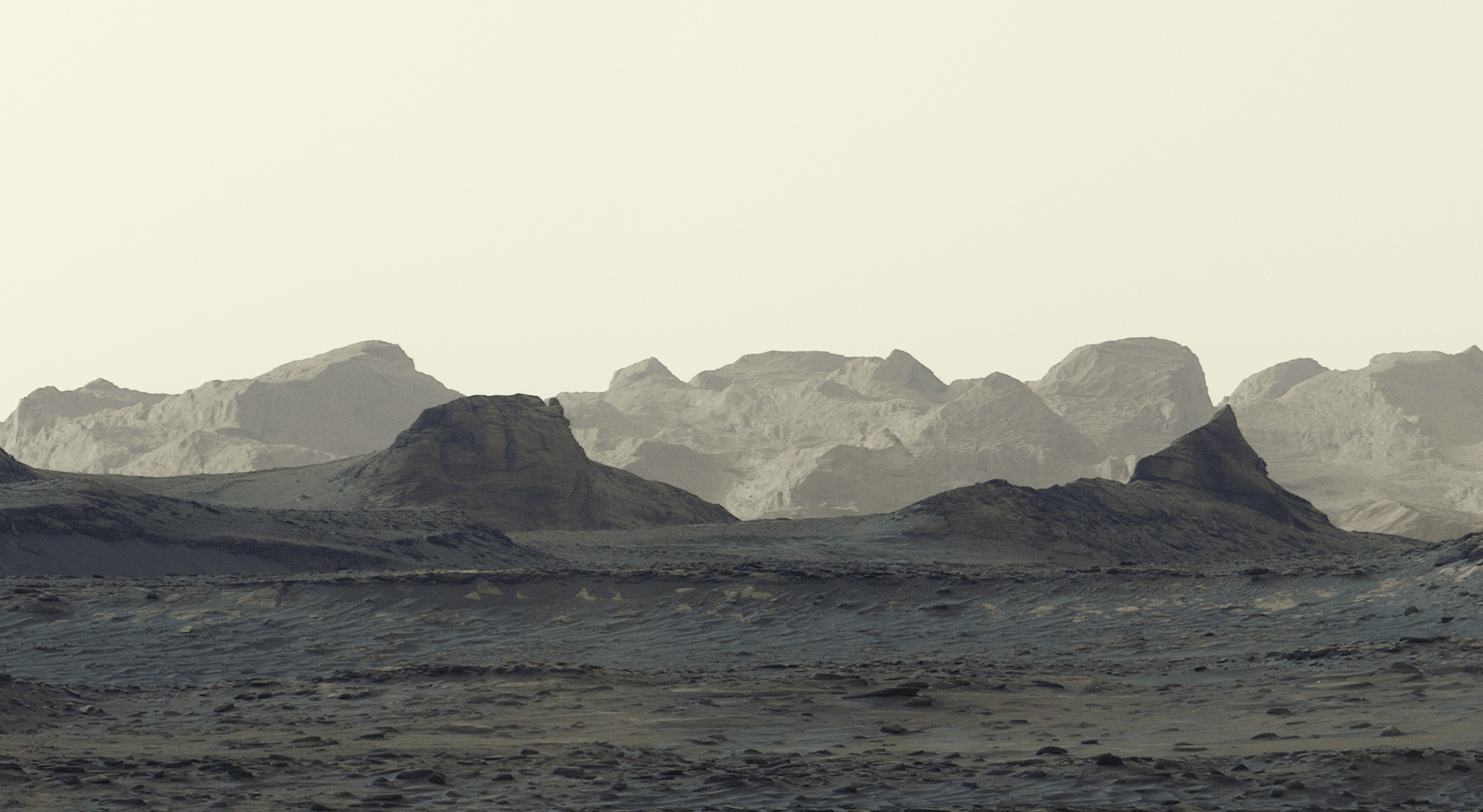
NASA’s Curiosity rover has captured a detailed view of dawn on Mars, revealing elongated ridges carved by ancient wind erosion in a newly released panoramic image.
The close-up image, released on Oct. 6, 2026, showcases prominent geological structures known as yardangs. According to reporting by NASA — Breaking News, the panorama provides the most detailed view yet of distant Martian cliffs shaped by continuous atmospheric weathering, offering unprecedented clarity on terrain that mission researchers have studied from afar.
Close-Up on Martian Yardangs
The prominent rock ridges visible in the morning light represent classic examples of yardangs—elongated, streamlined landforms sculpted primarily by wind-driven sand abrasion over extensive periods. While these wind-formed cliffs have been tracked across Martian terrain throughout Curiosity’s mission, previous orbital and surface photography lacked the resolution achieved in the latest composite.
The newly documented features provide clear observational evidence of how Martian surface winds alter bedrock and redistribute sedimentary layers across the planet's arid landscape.
Unprecedented Detail for Science Teams
Curiosity’s observation marks a significant milestone for mission scientists who have long anticipated a detailed look at these specific rock formations. The resolution obtained in the early Martian daylight allows researchers to examine the fine structural layering and erosional patterns embedded in the yardangs.
By studying the angles, layering, and physical degradation visible in the new images, planetary scientists aim to reconstruct the historical wind patterns and environmental conditions that shaped the region. Curiosity continues its scientific survey across the Red Planet, transmitting high-resolution data to help unravel the geological history of the Martian surface.