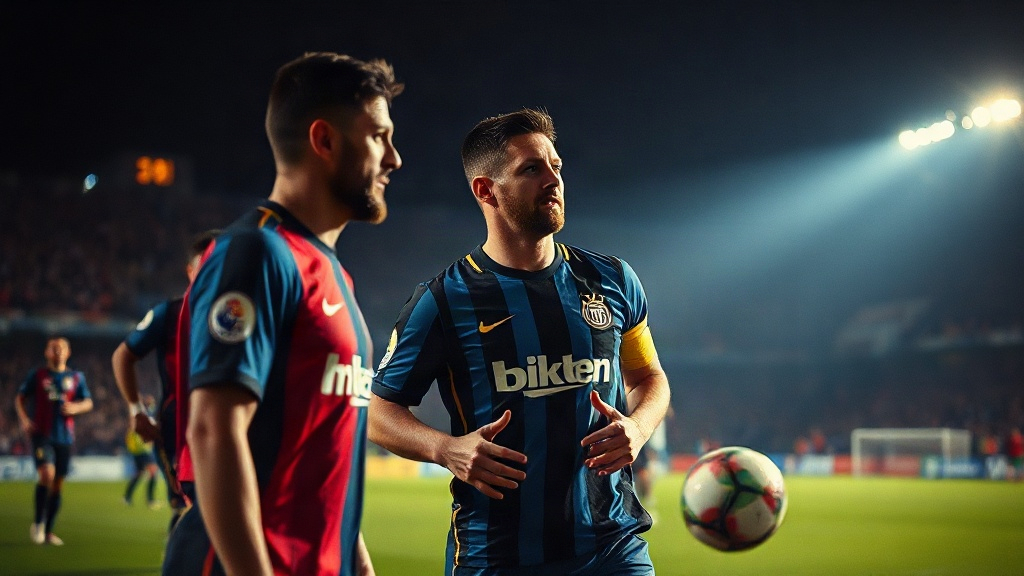
HARRISON, N.J. — Inter Miami CF played without captain Lionel Messi on Saturday afternoon at Red Bull Arena, leaving the Argentine forward off the matchday roster against the New York Red Bulls to manage an ongoing right hamstring issue.
Miami head coach Gerardo Martino opted to rest the eight-time Ballon d'Or winner after medical reviews indicated that continuous minutes on cold, damp surfaces risked aggravating minor muscle tightness. The decision directly altered the tactical balance of the Major League Soccer Eastern Conference clash, forcing Miami to rely on secondary playmakers while New York reorganized its defensive lines to exploit the visitor's reduced frontline speed.
According to an analysis detailed in the Athlonsports.com dispatch, Miami's coaching staff made the determination during late pre-match evaluations to prioritize long-term player availability over an isolated regular-season road fixture. The South Florida club entered the weekend managing a condensed schedule spanning domestic league matches and continental tournament commitments, creating substantial physical strain on senior international stars.
Workload Management and Muscular Fatigue
Messi's absence stemmed directly from muscle fatigue sustained during recent high-intensity tournament fixtures. The forward previously exited a competitive fixture after feeling tightness in his right leg, prompting medical staff to administer scans and impose a dedicated physical therapy regimen.
Martino repeatedly emphasized throughout team training sessions that the club would avoid taking medical risks with veteran starters during early regular-season road trips. The physical demands of the MLS campaign, coupled with travel logistics, heightened the club's cautious approach toward soft-tissue injuries. Cold weather conditions in northern New Jersey further reinforced the medical department's recommendation to hold the playmaker out of competition.
Without their primary chance creator, Miami turned to experienced forwards Luis Suárez and Leonardo Campana to anchor the attack. However, Messi's ability to unlock compact defensive blocks through central through-balls and diagonal switches remained entirely missing from Miami's setup, placing heavy responsibility on the midfield pairing to control the tempo of play.
Red Bulls' Tactical Adjustments
The New York Red Bulls altered their preparatory scheme once official team sheets confirmed Messi's scratch from the squad. Under head coach Sandro Schwarz, New York typically relies on a relentless high-pressing system designed to disrupt opposing defenders deep in their own territory.
As outlined in pre-game tactical coverage from the Red Bull New York tactical briefing, the home side sought to choke off passing lanes to Miami's holding midfielders and force turnovers near the final third. Without Messi demanding double coverage between the lines, New York's central center-backs pushed their defensive line ten yards higher up the pitch, shrinking the operational space available to Suárez and forcing Miami to contest aerial duels.
The absence of Messi also changed the psychological dynamic inside Red Bull Arena. While visiting supporters filled substantial portions of the venue hoping to witness the Argentine playmaker, the home club capitalized on the resulting shift in momentum, applying immediate pressure from the opening whistle and dominating territory through direct physical transitions.
Projected Lineups and Tactical Roster Realignment
Martino's starting selections reflected the squad depth pressures that Miami faces across multiple competitions. Roster adjustments published prior to kickoff and corroborated by the World Soccer Talk projected lineups confirmed that Miami altered its structural formation, deploying extra defensive shielding in front of the back four.
Miami's adjusted tactical plan placed greater creative burdens on wing play and set pieces. Without Messi taking direct free kicks or corner deliveries, Miami distributed dead-ball duties among its auxiliary midfielders, reducing their efficiency on attacking restarts. The tactical realignment exposed Miami's vulnerability to rapid counter-attacks, particularly whenever outside backs pushed forward into offensive positions without adequate cover.
New York exploited these transitional gaps repeatedly. The Red Bulls channeled possession quickly into wide areas, delivering dangerous crosses into the penalty box and testing Miami's central defensive partnership throughout both halves of play.
Broader Impact on Eastern Conference Standings
The decision to withhold Messi carries direct consequences for the Eastern Conference table during the first third of the MLS campaign. Inter Miami entered the week fighting for pole position in the conference, where dropped points on the road allow rival contenders to close the gap quickly.
For Miami, balancing domestic point accumulation against international cup progression represents an enduring strategic challenge. Martino and the club front office have openly prioritized tournament success alongside securing a favorable postseason seeding. Sacrificing regular-season road fixtures by benching marquee veterans underscores an acknowledgment that squad durability matters more than short-term regular-season points in March and April.
Opposing clubs throughout MLS have noted Miami's stark statistical drop-off in matches played without Messi. The club averages fewer goals per match, generates lower expected goal values, and surrenders a higher rate of possession turnovers when the Argentine playmaker is unavailable. New York's aggressive game plan demonstrated a clear tactical blueprint for other conference rivals to follow.
Medical Protocols and Upcoming Match Fixtures
Inter Miami's medical team plans to continue daily treatment on Messi's hamstring, monitoring the muscle's response to increased running loads and high-speed directional changes before clearing him for full team training sessions.
Club doctors have refrained from establishing a rigid public recovery timeline, opting instead to evaluate the player on a match-by-match basis. Miami faces several decisive home and away fixtures over the coming weeks, including high-stakes knockout competition where Messi's inclusion remains essential to the club's competitive aspirations.
Martino confirmed during post-match briefings that Messi will rejoin group exercises once tests confirm zero lingering tightness. Until medical clearance arrives, Inter Miami must find reliable tactical answers to maintain its standing near the top of the Eastern Conference table without relying on the sport's most decorated player.