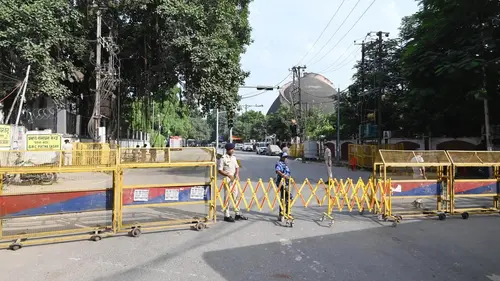
Following nearly a week of continuous public demonstrations led by local women, the administration of Ladakh has agreed to formally evaluate proposals to declare the high-altitude territory a dry region. The consensus emerged during emergency consultations between top government officials and prominent community organizations in Leh.
Demonstrators mounted a six-day sit-in demanding an immediate rollback of the territory's liberalized excise framework. Protesters carried placards reading "Don’t trade public health for government revenue" and voiced strong opposition to the expansion of commercial alcohol vends into fragile border valleys. In response to the unrest, the Lieutenant Governor’s administration convened a multi-stakeholder meeting featuring delegates from the Ladakh Buddhist Association, the All Ladakh Gompa Association, Anjuman Imamia-Leh, and the All Ladakh Tour Operators Association.
"The demand for declaring Ladakh a completely dry UT is a significant matter that requires careful deliberation and consultation with all concerned stakeholders, for which all agreed," stated Ladakh Chief Secretary Ashish Kundra following the talks. According to reporting from The Hindu, Kundra noted that the administration remains open to a middle-ground compromise while maintaining flexibility over public policy decisions.

Origins of the Excise Policy Dispute
The public backlash stems from an excise overhaul rolled out on May 31. Under that policy, the administration authorized a tenfold increase in retail alcohol outlets—expanding permitted storefronts from two to 20—while introducing sales licenses across remote areas including Nubra, Changthang, Sham, and Zanskar.
The updated regulations also allowed alcohol consumption within hotel rooms, drastically simplified the application pipeline by cutting required documentation from 16 forms down to six, and eliminated the need to secure explicit approval from local district administrations. While commercial tourism operators and hospitality venues gained direct access, local religious and civic leaders warned that unrestricted retail availability would disrupt social stability and public health across ecologically sensitive mountain communities.
| Excise Dimension | Prior Regulation | May 31 Revised Policy | Protesters' Demand |
|---|---|---|---|
| Authorized Retail Outlets | 2 permitted stores | 20 expanded stores | Complete shutdown / Zero stores |
| Geographic Coverage | Centralized hubs | Remote sectors (Nubra, Zanskar) | Total territory-wide prohibition |
| Licensing Bureaucracy | 16 required verification forms | 6 streamlined documents | Reinstatement of strict municipal oversight |
| District Approvals | Mandatory local clearance | Bypassed / Deregulated | Reinstatement of community consent veto |
| Hotel Room Service | Restricted | Permitted consumption | Revocation of public consumption permits |
Path Forward for Regional Governance
Chief Secretary Kundra indicated that the dialogue provided essential space for community representatives to voice objections and highlighted the necessity for continued civic engagement. The administration announced that an expanded forum with broader stakeholder representation will be organized shortly if initial reviews warrant deeper mediation.
For Ladakh, resolving the issue requires navigating trade-offs between tourism-driven economic revenues and local cultural, health, and environmental priorities. Whether the union territory ultimately institutes full prohibition or enacts a revised middle-ground framework will depend on upcoming formal reviews.