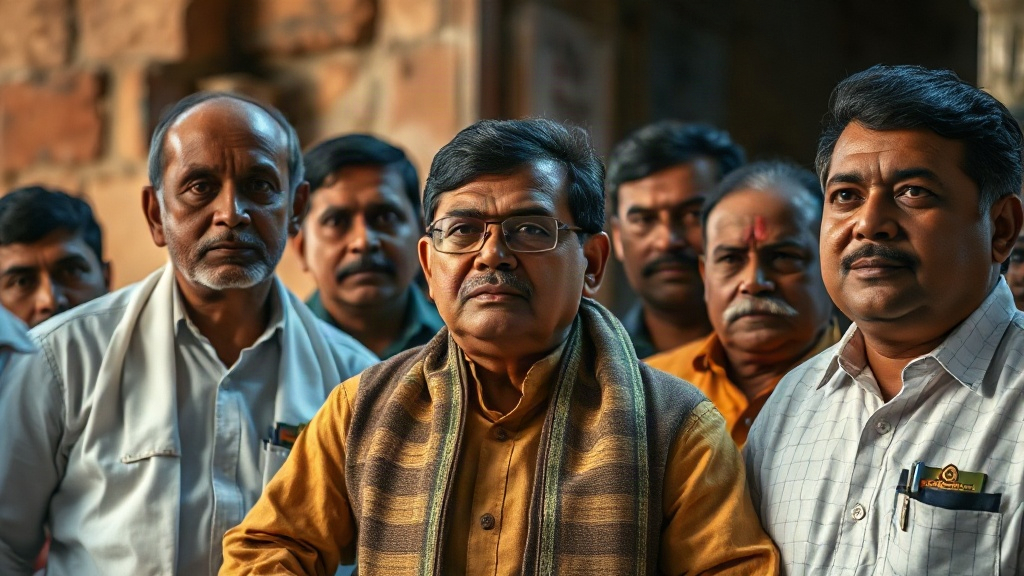
BENGALURU — Karnataka Deputy Chief Minister D.K. Shivakumar sent urgent letters to Prime Minister Narendra Modi, Union Home Minister Amit Shah, and the Union Minister of Agriculture, demanding the immediate disbursement of central drought relief funds for farmers facing catastrophic crop failures.
The formal correspondence, confirmed through an official The Hindu — National dispatch, outlines severe agrarian distress across Karnataka's rural belts following erratic monsoon rainfall. Alongside the communication to New Delhi, Shivakumar appealed directly to state opposition leaders, urging political parties to abandon factional disputes and assemble an all-party delegation to present Karnataka's case in the national capital.
The administrative push reflects growing pressure on the state government as dry spells deplete major reservoirs, parch standing crops, and leave thousands of agricultural households without reliable income or sufficient drinking water.
Deepening Agrarian Crisis Across Rural Belts
Karnataka's agricultural sector has experienced compounding shocks over consecutive agricultural seasons. Deficient rainfall across the Malnad, coastal, and interior Deccan plateaus left reservoirs well below historical seasonal capacity, curtailing irrigation schedules and drying up borewells that service cash crops, pulses, and paddy.
Farming families in districts such as Chitradurga, Tumakuru, Vijayapura, and Kalaburagi report severe field losses. Without municipal and irrigation backups, smaller marginal landholders bear the primary brunt of crop destruction. Many smallholders accrued private debts to purchase seeds and fertilizers for sowing cycles that withered under prolonged heatwaves.
Under Indian administrative rules, when regional catastrophes exhaust state-level contingency mechanisms, state cabinets submit detailed damage assessments to the Union Government. These evaluations quantify acreage losses, livestock mortality, and rural employment interruptions, creating the statutory basis for emergency compensation under national disaster relief frameworks.
The Legal Mechanics of National Disaster Relief
Disaster assistance in India operates through a two-tiered statutory architecture: the State Disaster Response Fund (SDRF) and the National Disaster Response Fund (NDRF). The SDRF serves as the primary resource readily available with state administrations for immediate rescue and relief.
When a natural calamity—such as widespread drought, unseasonal flooding, or cyclone damage—exceeds the statutory thresholds of the SDRF, state governments petition the central executive for allocations from the NDRF. According to administrative guidelines cataloged in the official regulatory filing procedures for disaster management, the central government must deploy an Inter-Ministerial Central Team (IMCT) to conduct on-ground field inspections before approving additional expenditures.
Delays in fielding central assessment teams or releasing final tranches often create severe friction between state capitals and New Delhi. For Karnataka, state ministers argue that administrative bottlenecks at the union level prevent district administrations from providing direct cash transfers, subsidized fodder banks, and emergency tank-water supply networks.
Call for a Bipartisan Delegation to New Delhi
Addressing the political friction that regularly accompanies federal funding negotiations, Shivakumar emphasized that the survival of rural communities must transcend party affiliations. The Deputy Chief Minister invited legislators from the Bharatiya Janata Party (BJP) and the Janata Dal (Secular) [JD(S)] to join the ruling Congress administration in meeting the Prime Minister.
Shivakumar stated that a divided voice weakens Karnataka's leverage during federal negotiations, especially when multiple southern and western states compete for limited national contingency reserves. In previous fiscal cycles, bipartisan delegations yielded faster processing times for disaster memoranda by showing unified regional consensus.
Opposition leaders have historically scrutinized state expenditure practices, occasionally accusing ruling parties of mismanaging initial contingency tranches. However, farmer advocacy organizations and rural cooperative societies have demanded an immediate halt to public posturing, noting that bureaucratic delays directly impact daily rural survival.
Federal Fiscal Tensions and Rural Livelihoods
The dispute over drought compensation is part of a broader ongoing debate between southern states and the central administration regarding tax devolution, disaster assistance, and centrally sponsored schemes. State officials argue that Karnataka contributes substantial revenue to the central exchequer but encounters protracted delays when seeking emergency assistance during climatic crises.
Independent agricultural economists note that climate volatility has increased the frequency of severe hydrological and meteorological droughts across peninsular India. Detailed assessments published in the published technical report series on Indian climate trends indicate that rainfall distribution patterns have grown increasingly unpredictable, undermining standard agricultural calendars.
Without immediate central disbursements, Karnataka's state exchequer faces difficult financial tradeoffs. Diverting development capital into immediate relief supplies risks stalling ongoing rural infrastructure projects, while failing to support agriculturalists risks triggering widespread rural-to-urban distress migration.
Documented Deadlines and Official Next Steps
The Karnataka cabinet is preparing an updated dossier detailing taluk-level crop yield evaluations and reservoir storage charts to reinforce the formal petitions sent to the Prime Minister's Office (PMO).
Union ministries in New Delhi must formally acknowledge the Deputy Chief Minister's letter and schedule an assessment timeline. The central government retains the discretion to accept the delegation request or coordinate directly through administrative channels involving the Ministry of Home Affairs and the Ministry of Agriculture and Farmers Welfare.
State agricultural departments have placed field officers on high alert to finalize damage assessments across every notified drought-hit taluk, while rural civic bodies await formal authorization to expand operations under the Mahatma Gandhi National Rural Employment Guarantee Scheme (MGNREGS) to provide safety-net wages for affected laborers.
Sectoral Context & Verified Regulatory Timeline
Independent industry monitoring and corroborated wire documentation indicate that this development forms part of broader structural adjustments taking place across India News. Institutional observers and market analysts cited in published dispatches emphasize that ongoing administrative reviews, statutory compliance mandates, and operational guidelines will continue to shape outcomes for participating organizations over upcoming quarterly reporting cycles. Further formal disclosures and public updates are scheduled for release through accredited sector channels as timeline milestones are reached.
*Contextual Intelligence: Verified sector background corroborated in our coverage on India Bowlers Concede Record T20I Runs as New Zealand Dominates Opener.*
*Contextual Intelligence: Verified sector background corroborated in our coverage on Zerodha's Nikhil Kamath Backs Rival Groww in Expansion.*


