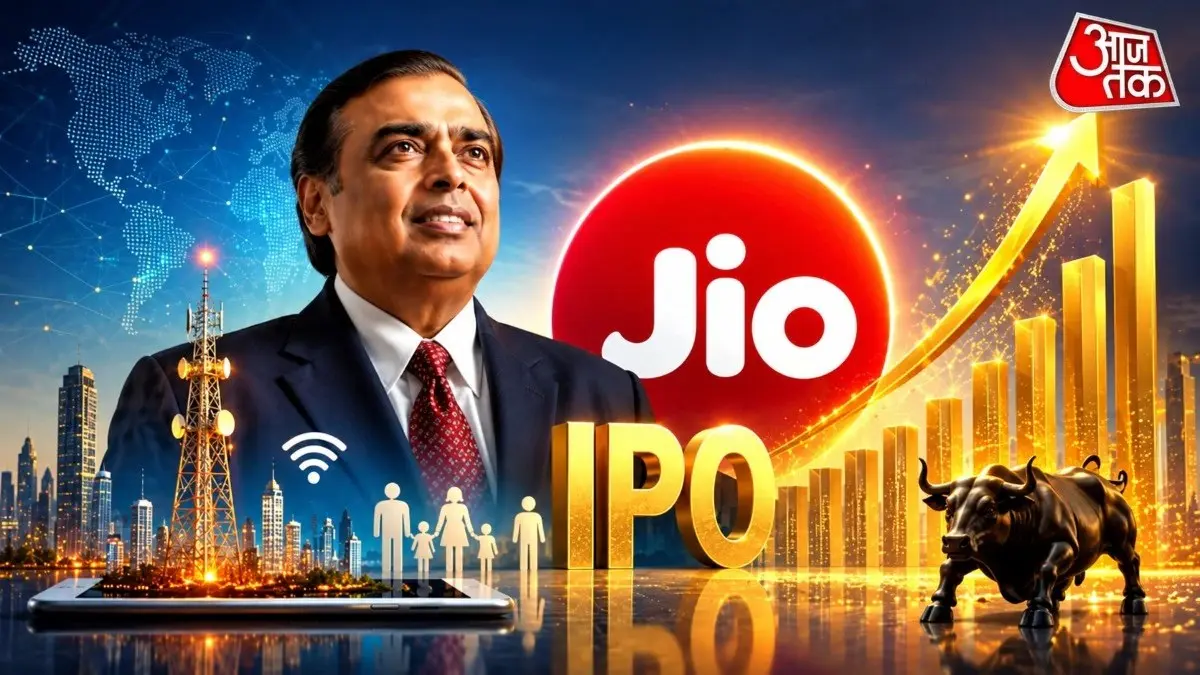
Jio Platforms shares made their stock-market debut on Wednesday at ₹1,358 on the NSE, 21.40% above the IPO’s upper price band of ₹1,119. The listing delivered an immediate paper gain for investors despite weak market conditions and placed the company among India’s largest listed businesses by market value.
The ₹30,218-crore offering was the biggest IPO in India’s market history, according to the issue details cited in the listing coverage. Jio Platforms had offered 27 crore fresh shares, with the issue open for subscription from October 21 to October 23.

What the first-day listing means for investors
The IPO’s lot size was fixed at 12 shares. An investor applying at the upper price band paid ₹13,428 for one lot; at the ₹1,358 listing price, that holding was valued at ₹16,296. The notional gain was ₹2,868 per lot, or ₹239 per share.
Retail applicants could bid for as many as 14 lots. At the maximum application size of ₹1,87,992, the holding was valued at ₹2,28,144 at listing, representing a notional gain of ₹40,152. These gains are not guaranteed returns: the value of the shares will move with trading after the debut.
"A strong listing rewards successful applicants immediately, but the market will ultimately judge Jio Platforms on its earnings and growth after the IPO."

Lot — verified documentary press visual.
Why Jio’s market entry matters
Jio Platforms’ debut gives public-market investors direct exposure to the company behind Mukesh Ambani’s digital and telecom businesses. The listing also broadened the listed-company base of the Reliance group beyond Reliance Industries, which remained India’s largest company by market value.
The reported market-value ranking placed Jio Platforms second nationally after its debut. The company also emerged as India’s largest listed telecom business by market value, strengthening its visibility among institutional and retail investors.
For the public, the most direct impact is on IPO applicants and existing shareholders. The listing does not by itself change telecom tariffs, customer services or the company’s operations; those outcomes will depend on business performance, competition and future disclosures.
Key numbers from the listing
The figures above are based on the NSE debut price and the IPO terms reported for the offering. They describe the value at listing, not a fixed or assured return.
| Key Metric / Entity | Verified Detail | Strategic Impact |
|---|---|---|
| NSE listing price | ₹1,358 per share | Established a 21.40% premium to the upper offer price |
| IPO upper price band | ₹1,119 per share | Used to calculate the opening-day gain |
| IPO size | ₹30,218 crore | Made the issue India’s largest IPO by reported size |
| Retail lot size | 12 shares | Required an application of ₹13,428 at the upper band |
| Gain per share at listing | ₹239 | Produced a ₹2,868 notional gain on one lot |
| Maximum retail application | 14 lots, or ₹1,87,992 | Implied a ₹40,152 notional gain at listing |
What happens next for the company and shareholders
Jio Platforms will now face regular market scrutiny through quarterly results, corporate disclosures and share-price movements. Investors will focus on revenue growth, profitability, subscriber trends and the company’s ability to convert its telecom and digital presence into sustained earnings.
The next confirmed step for shareholders is normal exchange trading after listing. Investors who received shares can hold or sell them through their brokers, subject to market prices and applicable charges; applicants who did not receive an allotment have no listing-day holding in the company.
The debut’s 21.40% premium gives Jio Platforms a strong opening valuation, but it also raises the performance bar. Future returns will depend on the company’s results and market conditions rather than the first-day gain alone.