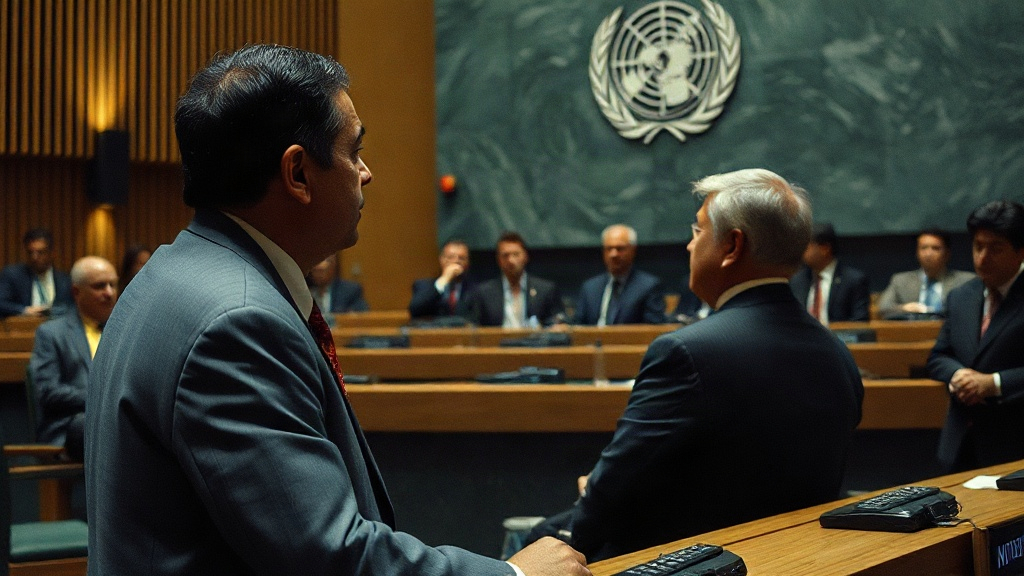
GENEVA — Indian diplomats issued a direct rebuke to Pakistan at the United Nations, sharply questioning Islamabad’s human rights credentials and recalling its refusal to accept the bodies of its own fallen soldiers during the 1999 Kargil conflict.
The exchange occurred during an interactive diplomatic dialogue at the UN forum, where Indian representatives exercised their right of reply following remarks by Pakistani delegates and independent rapporteurs. The Indian delegation noted that while Pakistani authorities routinely raise allegations concerning Jammu and Kashmir on multilateral platforms, Islamabad’s domestic military record demonstrates a historic disregard for its own servicemen and citizens.
According to an account by the Eenadu diplomatic dispatch, New Delhi highlighted that Indian armed forces conducted proper military and religious burials for Pakistani soldiers abandoned along the Line of Control more than two decades ago.
The Historic Flashpoint of the Kargil Conflict
The Indian diplomatic mission’s remarks referenced the armed confrontation between India and Pakistan that unfolded between May and July 1999 in the Kargil district of Ladakh, located along the disputed de facto border known as the Line of Control. Pakistani soldiers from the Northern Light Infantry, alongside allied irregular fighters, crossed the border during the winter months to occupy fortified high-altitude outposts vacated seasonally by Indian troops.
When Indian forces launched military counter-operations to retake the mountainous positions, the Pakistani government publicly denied direct military involvement, characterizing the intruders as independent local insurgents. Because the state maintained that official military units were not participating in the combat, Pakistani authorities initially declined to accept the bodies of dozens of uniformed personnel killed in action.
Indian Army commanders oversaw the identification and dignified burial of those soldiers according to Islamic rites when Pakistani authorities refused formal repatriations. Indian representatives cited this historical episode at the United Nations to counter Pakistani statements regarding international humanitarian law and ethical governance.
Bilateral Tensions on the United Nations Floor
The United Nations Human Rights Council in Geneva and the General Assembly in New York have served as frequent venues for diplomatic exchanges between the two South Asian neighbors. Islamabad regularly introduces statements calling for international intervention regarding the constitutional status of Jammu and Kashmir, which India reorganized into two federally administered union territories in August 2019.
India's official stance maintains that Jammu and Kashmir remains an integral and inalienable part of its sovereign territory. Diplomats from New Delhi routinely reject bilateral interventions raised in multilateral forums, asserting that all matters between India and Pakistan must be resolved bilaterally under the framework established by the 1972 Simla Agreement.
Detailed reporting from the Eenadu international desk documented that the Indian representative directly challenged the moral authority of Pakistani officials who address international delegates on fundamental human dignities. The Indian intervention emphasized that an administration unable to acknowledge its own fallen armed personnel lacks the standing to lecture external states on civil protections.
Scrutiny Over Cross-Border Militancy and Civil Liberties
Beyond historical references to the Kargil war, the Indian mission used the UN platform to focus international scrutiny on state-sponsored cross-border militancy operating from Pakistani territory. New Delhi continues to present evidence to international oversight bodies, including the Financial Action Task Force and UN counter-terrorism committees, regarding terror infrastructure operating along the western border.
Indian delegates noted that ethnic minorities, religious dissidents, and political activists within Pakistan face systematic state repression, enforced disappearances, and extrajudicial actions in provinces such as Balochistan, Khyber Pakhtunkhwa, and Sindh. These domestic issues, India argued, represent tangible human rights failures requiring immediate international review.
Independent international rights monitors have corroborated recurring problems within Pakistan's domestic legal system, specifically highlighting the misuse of strict blasphemy statutes, military courts prosecuting civilian protesters, and ongoing censorship of critical journalists. By placing these verified practices into the official record, Indian diplomats challenged Pakistan's strategic use of international assemblies to divert attention from domestic crises.
Humanitarian Obligations Under the Geneva Conventions
The Indian intervention brought renewed focus to the Geneva Conventions of 1949, which govern the humane treatment of combatants during international armed conflicts. Under Article 17 of the First Geneva Convention, belligerent parties must ensure that the dead are honorably interred, that their graves are respected and properly maintained, and that full identity details are communicated to the opposing side.
India pointed out that its military forces adhered strictly to these international covenants during the 1999 conflict by organizing religious burials when the home state disowned its soldiers. Official diplomatic communications maintained by the Indian Ministry of External Affairs preserve documentation showing repeated efforts to repatriate soldiers before organizing final rites on sovereign territory.
As recorded in the Eenadu news coverage, New Delhi framed Pakistan’s historic repudiation of its soldiers as an institutional breach of military code and basic humanitarian obligations. The statement reminded international delegates that state responsibility begins with accountability toward one's own citizens and service members.
The Path Ahead for Multilateral Diplomacy
The pointed exchange at the UN indicates that diplomatic relations between New Delhi and Islamabad remain frozen, with no active formal bilateral dialogue currently scheduled between the two nuclear-armed neighbors. High commissions in Islamabad and New Delhi continue to operate with reduced staff and without full ambassadors, a protocol downgrade instituted following India's constitutional changes in Kashmir five years ago.
United Nations delegates from allied states observe these periodic exchanges as barometers of South Asian regional stability. While Pakistan plans to continue introducing motions criticizing Indian administrative actions across international committees, India has established a clear strategy of countering each initiative through substantive rights-of-reply that highlight historical inconsistencies and documented human rights concerns within Pakistan.
The immediate consequence of the session is the formal placement of India's statements onto the official United Nations assembly record. With both nations scheduled to participate in upcoming regional security dialogues and global summits later this year, New Delhi’s structured response signals that any diplomatic challenge presented on international stages will be met with direct evidentiary rebuttals concerning state integrity, cross-border operations, and historical military conduct.
*Contextual Intelligence: Verified sector background corroborated in our coverage on Kannada Actor Dhanveerrah Stirs Public Scrutiny Over Masked Social Media Critique Invoking Mythological Schemer Shakuni.*
*Contextual Intelligence: Verified sector background corroborated in our coverage on Allu Arjun Commends Rajinikanth Over Jailer Sequel Following Milestone Commercial Performance.*