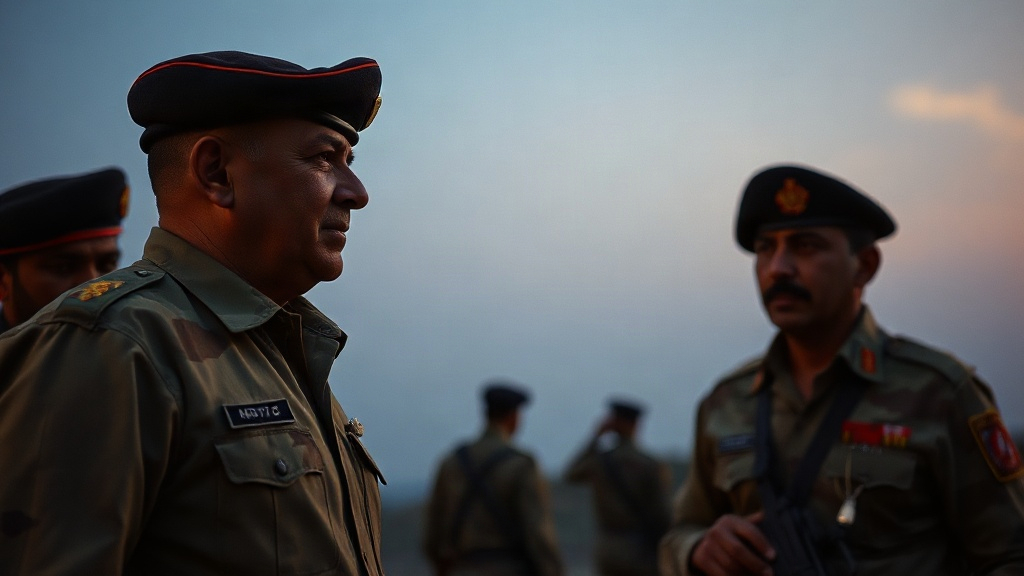
NEW DELHI — India affirmed on Thursday that stability along the Line of Actual Control deteriorates whenever Chinese troops deviate from mutually established patrolling norms, responding directly to operational assessments of persistent confrontations along the contested frontier in Arunachal Pradesh.
The Ministry of External Affairs reiterated that genuine progress in bilateral relations remains impossible without sustained peace and tranquility along the northern borders. The official statement follows public remarks by the Director General of the Indo-Tibetan Border Police, the specialized paramilitary force charged with guarding India's high-altitude border with China, who disclosed ongoing physical friction points in the eastern sector.
According to an operational review detailed in The Hindu — National dispatch, New Delhi's diplomatic posture remains tethered to strict enforcement of bilateral border management pacts. Indian diplomats emphasized that peaceful engagement cannot be compartmentalized from ground realities where soldiers stand face-to-face across disputed ridgelines.
Paramilitary Disclosures and Operational Friction in the Eastern Sector
The immediate diplomatic clarification was triggered by candid disclosures from the leadership of the Indo-Tibetan Border Police (ITBP). The paramilitary chief noted that Indian personnel deployed in the remote, rugged heights of Arunachal Pradesh continue to encounter frequent transgressions and contested patrols by the Chinese People's Liberation Army (PLA).
Unlike traditional international boundaries, the 3,488-kilometer Line of Actual Control is neither fully demarcated on maps nor marked on the ground. Both militaries maintain overlapping claims in multiple sectors, relying on established patrol routes and past protocols to avoid close-quarter physical engagement. When units cross these historic limits, tensions escalate rapidly.
The ITBP operates in coordination with the Indian Army under severe climatic and geographic constraints in the eastern Himalayas. The force maintains border outposts across treacherous terrain ranging from 9,000 to over 18,000 feet above sea level, where logistical access often relies on air maintenance and forward mountain tracks.
Paramilitary assessments indicate that Chinese patrol parties have repeatedly tested Indian forward postures by altering their standard deployment cadences. These maneuvers force Indian units to deploy tactical counter-patrols to halt Chinese entry into areas traditionally monitored by Indian forces.
The Anatomy of Patrol Divergence Along Undemarcated Ridges
Official border protocols established between New Delhi and Beijing in 1993, 1996, and 2005 were drafted precisely to avoid confrontation when patrols encounter one another. These pacts require both sides to exercise immediate restraint, avoid aggressive posturing, and display bilingual banner warnings instructing the opposing side to return to their baseline positions.
Trouble begins when one military unilaterally alters its movement patterns, advances beyond recognized claim lines, or constructs temporary infrastructure designed to block the other side's customary route. The Ministry of External Affairs pointed out that deviations from these long-standing, tacit understandings destabilize entire sectors along the LAC.
In Arunachal Pradesh, the terrain consists of heavily forested valleys and razor-thin Himalayan ridgelines where visual observation is frequently obstructed by dense cloud cover. Small patrol parties operating on foot can stumble into immediate proximity before ground commanders can establish radio contact or set up visual buffer zones.
When Chinese units push beyond their conventional turnaround points, Indian border guards are instructed under revised standard operating procedures to hold their ground firmly without discharging firearms. This dynamic creates high-pressure standoffs where dozens of heavily equipped troops face each other across meters of barren snow and rock.
Diplomatic Architecture and New Delhi's Precondition for Normalization
Addressing the operational updates, the Ministry of External Affairs made clear that the Indian government rejects any narrative suggesting the border situation has returned to normal while troops remain locked in localized contestation. Official diplomatic statements have repeatedly tied broader economic, trade, and multilateral engagement with Beijing to verifiable stability on the border.
Diplomats stressed that peace and tranquility along the entire perimeter constitute the indispensable prerequisite for overall ties. This formulation has formed the bedrock of Indian foreign policy toward China since the bloody Galwan Valley clash in June 2020, which dismantled decades of managed coexistence.
Beijing has frequently argued that the boundary dispute should be relegated to an appropriate, isolated track while trade, investment, and diplomatic meetings continue unimpeded. New Delhi has systematically rejected that argument, holding that economic integration cannot thrive while troops face mortal risks along an unstable border.
The strategic posture outlined in reporting by The Hindu's foreign affairs desk highlights that India will continue to insist on mutual disengagement, de-escalation, and verifiable compliance with established patrolling patterns before considering any comprehensive diplomatic reset.
Multiple rounds of Corps Commander-level talks and meetings under the Working Mechanism for Consultation and Coordination on India-China Border Affairs (WMCC) have achieved partial disengagements at select friction points in eastern Ladakh. However, the eastern sector presents separate operational challenges that require constant diplomatic vigilance.
Strategic Geography of the Arunachal Frontier
Arunachal Pradesh covers roughly 1,126 kilometers of the border with the Tibet Autonomous Region, representing the largest continuous operational sector of the LAC. China periodically asserts baseless territorial claims over the entire Indian state, referring to it unilaterally in state propaganda as southern Tibet—a claim Indian authorities consistently reject as absurd and legally void.
The strategic reality on the ground is shaped by critical corridors such as the Tawang tract, the Subansiri valley, the Siang river basin, and the far eastern mountain passes of Walong and Kibithu. Each of these geographic axes features differing degrees of road access and forward defensive depth.
Over the past decade, China has aggressively built dual-use border infrastructure on its side of the McMahon Line. This includes high-speed highway networks, expanded military airbases, high-altitude radar arrays, and well-fortified model border villages known as Xiaokang settlements.
India has responded with an unprecedented push to modernize its own border infrastructure. The Ministry of Road Transport and Highways and the Border Roads Organisation have constructed vital strategic passages, including the Sela Tunnel, to provide all-weather connectivity to forward military bases near Tawang.
These infrastructural advancements allow both nations to mobilize patrol units much faster than in previous decades. As physical access improves, the frequency of patrol contacts increases, making absolute fidelity to established patrolling patterns essential to prevent tactical maneuvers from spiraling into strategic crises.
Civilian Impact and Life Along the Himalayan Borderlands
For residents living in the border villages of Arunachal Pradesh, friction along the LAC translates directly into disruption of traditional livelihoods, grazing rights, and seasonal agriculture. Indigenous communities such as the Monpa, Tagin, Adi, and Mishmi have inhabited these valleys for generations, frequently using high-altitude pastures that lie near contested patrol corridors.
When tensions flare between military patrols, local district administrations are forced to restrict the movement of local herders and civilian gatherers for security reasons. Families who rely on seasonal yak grazing find their traditional migratory routes cordoned off by defensive deployments.
To counter depopulation in remote border areas, the Indian government launched the Vibrant Villages Programme, providing direct capital investment into local infrastructure, road connectivity, tourism facilities, and basic telecommunications. The initiative aims to retain civilian populations in sensitive border tracts, recognizing that local inhabitants serve as the primary eyes and ears of national defense.
Local administrative officials emphasize that stability along the border is a humanitarian and developmental necessity. Without secure roads and peaceful ridgelines, schools struggle to retain staff, medical evacuations via mountain roads become perilous, and commercial transport faces frequent security checks.
Institutional Mechanisms and Verification Protocols
Preventing isolated patrol confrontations from triggering wider military conflict relies on a delicate network of institutional communication channels. Ground-level mechanisms include forward flag meetings between local unit commanders, established hotlines between brigade headquarters, and structured border personnel meetings at designated locations such as Bum La and Kibithu.
When a patrol divergence occurs, ground commanders are tasked with documenting the exact coordinates, time of contact, and visual evidence before arranging an emergency flag meeting. Through these sessions, both sides present their operational maps to contest or justify the movements of their troops.
However, field implementation often breaks down when strategic directives from senior military commands supersede local agreements. Defense analysts note that Chinese patrol units frequently operate under strict instructions from theater commands, leaving little room for ground commanders to adjust their maneuvers during live standoffs.
India's armed forces have instituted strict surveillance frameworks to ensure objective evidence is recorded during every border encounter. High-altitude long-range drones, satellite reconnaissance, and body-worn cameras are now routinely deployed alongside forward patrols to document transgressions in real time.
This continuous evidentiary record enables the Ministry of External Affairs to present concrete operational data during bilateral diplomatic exchanges, directly confronting claims that Indian troops were responsible for provoking friction.
Diplomatic Stalemate and the Road to De-escalation
The fundamental challenge confronting negotiators in New Delhi and Beijing is the divergent interpretation of where the Line of Actual Control actually lies. In the absence of signed maps detailing mutual perceptions of the alignment, both sides operate based on historical records, past patrol reach, and strategic convenience.
While India has consistently advocated for clarifying the LAC by exchanging maps, China has historically resisted the process, preferring to maintain strategic ambiguity. This ambiguity allows the PLA to shift its patrol presence opportunistically, applying pressure along different sectors when geopolitical conditions favor escalation.
Indian defense leadership has made it clear to international counterparts that unilaterally altering the status quo is intolerable. Diplomatic statements from South Block have continuously emphasized that real de-escalation requires not merely the cessation of aggressive patrols, but also the thinning out of heavy rear deployments, including armored formations and artillery regiments positioned along access corridors.
Both sides maintain tens of thousands of frontline troops deployed along the broader Himalayan frontier, backed by combat aviation assets and integrated air defense networks. Operating in sub-zero temperatures for extended periods strains human endurance and military equipment, creating an inherently volatile environment.
Diplomatic channels through the Working Mechanism for Consultation and Coordination remain open, providing a formal venue to review boundary incidents. Yet, as the foreign ministry noted, diplomatic dialogue is entirely dependent on whether military units on the ground abide by agreed protocols.
What Lies Ahead for Border Diplomacy
The immediate focus for Indian border managers is preventing localized incidents in Arunachal Pradesh from escalating into broader standoffs similar to those witnessed across the western sector in Ladakh. Ground commanders have been directed to maintain high operational readiness while adhering strictly to existing non-lethal rules of engagement.
Official bilateral discussions are scheduled to continue through military and diplomatic channels, with New Delhi pressing for specific, verifiable adherence to past patrol schedules. Indian negotiators are expected to demand that Chinese forces cease altering patrol cadences in sensitive sectors of Arunachal Pradesh during upcoming rounds of the border mechanism.
The ultimate resolution of border friction depends on whether Beijing is prepared to honor bilateral agreements signed over three decades of diplomatic engagement. Until verifiable mechanisms are restored on the ground and Chinese troops return to their baseline patrol routes, the Indian security apparatus will remain deployed in full strength along the Himalayan heights.
*Contextual Intelligence: Verified sector background corroborated in our coverage on Indian Mixed Doubles Pair Breaks 72-Year Asian Table Tennis Medal Drought.*
*Contextual Intelligence: Verified sector background corroborated in our coverage on Kerala Clears Vigilance Inquiry Into CPI(M) Politician P.P. Divya Over ₹12-Crore Modular Toilet Contract.*


