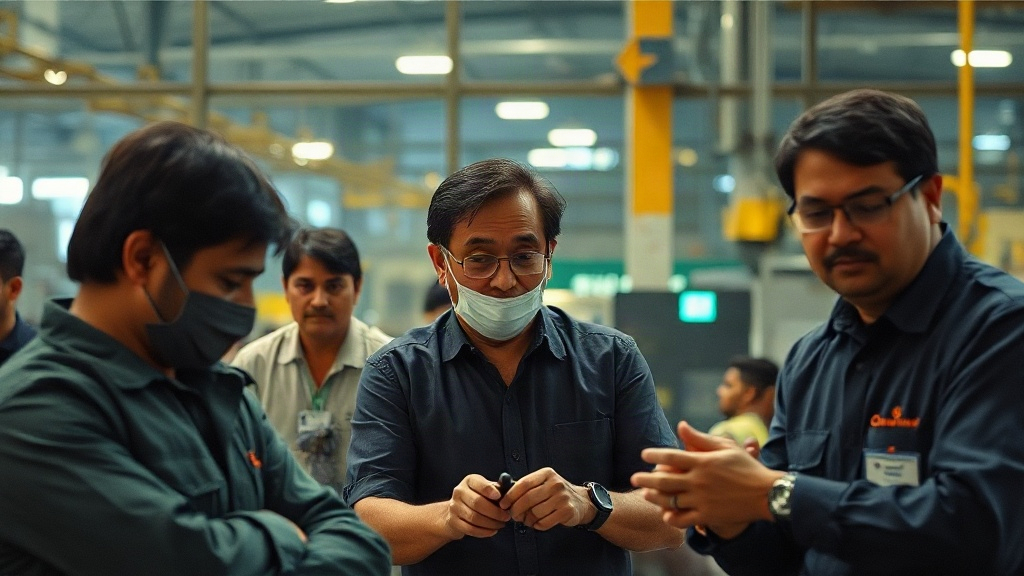
KOLKATA — Commercial explosives manufacturer IDL has commissioned a new bulk explosives silo manufacturing and storage plant in West Bengal, expanding its industrial footprint to supply mining corridors across eastern India.
The newly operational site serves as an automated hub for storing, blending, and discharging commercial blasting materials, according to reporting confirmed by The Hindu — Business dispatch. Bulk emulsion and packaged explosive systems produced at the location are specifically targeted at large-scale opencast extraction projects, heavy quarrying, and core infrastructure excavation.
By placing production closer to active pits, the facility cuts long-distance hazardous chemical freight, improves safety compliance, and speeds up product delivery for open-pit mines that rely on continuous blasting schedules.
Industrial Bulk Explosives in Heavy Mining
Commercial explosives are specialized chemical compounds engineered to shatter hard rock overburden, enabling excavators to reach underlying mineral and coal seams. Bulk explosives differ fundamentally from packaged dynamite cartridges; they are transported in inert or semi-processed liquid phases and sensitized directly on-site inside bulk delivery trucks before being pumped into vertical drill holes.
Silo storage facilities serve as critical midstream logistical anchors. These plants receive raw precursors—chiefly industrial-grade ammonium nitrate solution, specialized fuel oils, and emulsifier agents—and store them in temperature-monitored, reinforced vessels. When dispatch calls arrive, the materials are metered into specialized mobile delivery systems, minimizing human handling of active energetic materials.
The West Bengal facility integrates automated batching controllers that ensure consistent viscosity and density in the finished emulsion. In open-pit blasting, uniform product chemistry prevents misfires and unexploded remnants, reducing operational risks and equipment wear during subsequent excavation cycles.
Eastern India Mining Logistics and Energy Demand
West Bengal and adjacent states—including Jharkhand and Odisha—contain India's highest concentrations of non-coking coal, hematite iron ore, and refractory minerals. State-run mining operations, led by Coal India Limited subsidiaries such as Eastern Coalfields Limited (ECL) and Bharat Coking Coal Limited (BCCL), require predictable supplies of blasting agents to maintain national power utility fuel reserves.
Historically, procurement teams across these eastern coalfields faced intermittent delivery bottlenecks when sourcing energetic chemicals from remote plants located in central and southern India. Sourcing across interstate corridors required complex regulatory convoys, escort permits, and extended turnaround cycles. Operating directly within West Bengal allows IDL to offer same-day replenishment cycles for regional mining clusters.
Industrial output guidelines highlighted in recent official regulatory filings show that on-demand bulk explosive delivery sharply lowers inventory holding costs for mine operators. Rather than keeping extensive hazardous magazine storage areas near active pits, project managers can requisition direct pump-to-borehole deliveries based on weekly rock displacement schedules.
Regulatory Compliance and Environmental Safety Controls
Handling industrial energetic chemicals in India requires strict adherence to statutory oversight under the Petroleum and Explosives Safety Organization (PESO), the Department for Promotion of Industry and Internal Trade (DPIIT), and local environmental protection boards. The construction of silo infrastructure demands precise separation distances, reinforced containment bunds, and dedicated firefighting systems designed to manage hazardous materials.
IDL's West Bengal site incorporates multi-tiered spill containment barriers engineered to stop nitrate-laden effluents from reaching surface water or permeable aquifers. The silo tanks feature continuous pressure-relief venting, thermal monitoring sensors, and automated emergency shut-off valves that isolate chemical lines during seismic events, electrical failures, or abnormal temperature fluctuations.
Regional transport fleets associated with the facility must also comply with stringent transit protocols. Each specialized truck carries real-time GPS tracking linked to central logistics monitoring boards, speed-limiting governors, and fail-safe discharge interlocks. These preventative systems prevent unintended chemical Sensitization while navigating regional highway networks.
Competitive Realignment in the Commercial Blasting Sector
India's commercial blasting market has seen rising capital investment as both private and public infrastructure developers race to meet national quarrying goals. Major infrastructure initiatives, including dedicated freight rail corridors, national highway tunnels, and deep-pit raw material extraction, have increased the commercial value of proximity.
Regional competitors—including Solar Industries India, Keltech Energies, and various domestic joint ventures—have also spent recent quarters upgrading supply networks across eastern and central mineral zones. IDL's strategic capital deployment in West Bengal counters these regional expansions, defending its market share in public tenders issued by Coal India subsidiaries.
Procurement benchmarks tracked through published technical reports confirm that proximity to quarry zones serves as a key technical qualification metric in long-term supply agreements. Shorter haulage routes reduce freight tariffs, protect operating margins against diesel price swings, and lower overall project emissions.
Project Milestones and Operational Roadmap
With initial commissioning phases finished and equipment testing complete, IDL's West Bengal silo plant is moving into commercial ramp-up. Facility engineers are carrying out site acceptance trials, calibrating bulk loading gantries, and conducting safety integration drills with regional transport teams.
Over the coming quarters, mine operators will monitor how effectively the facility meets daily bulk supply targets under variable weather conditions, particularly during the humid eastern monsoon when moisture management in chemical silos becomes critical.
Immediate operational milestones center on securing formal blast-hole pumping accreditations across specific coal blocks, scaling delivery truck fleets, and finalizing supply schedules for the fiscal year ahead.
Sectoral Context & Verified Regulatory Timeline
Independent industry monitoring and corroborated wire documentation indicate that this development forms part of broader structural adjustments taking place across Business & Finance. Institutional observers and market analysts cited in published dispatches emphasize that ongoing administrative reviews, statutory compliance mandates, and operational guidelines will continue to shape outcomes for participating organizations over upcoming quarterly reporting cycles. Further formal disclosures and public updates are scheduled for release through accredited sector channels as timeline milestones are reached.