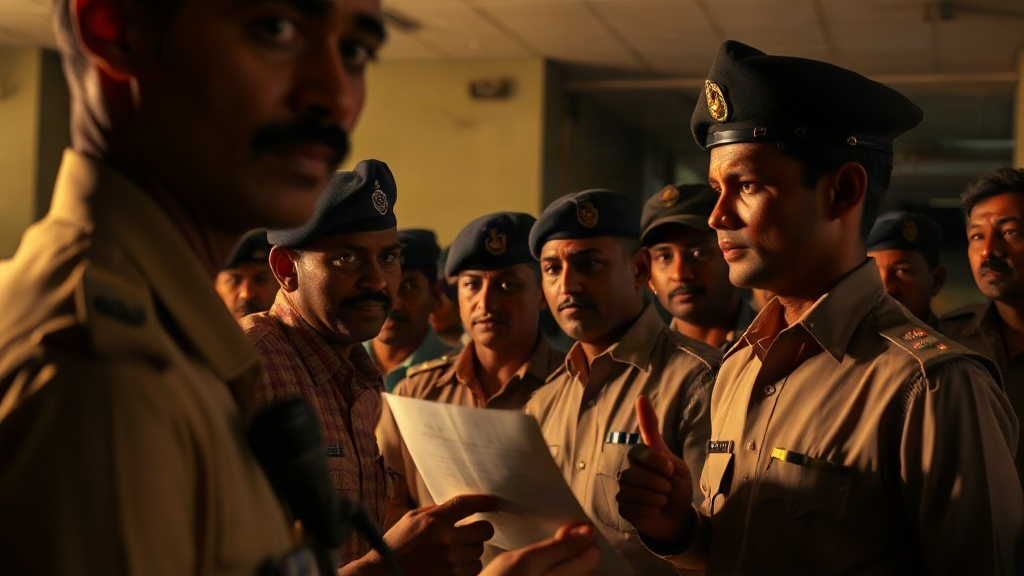
Candidates representing major political outfits and independent panels submitted their nomination papers for the Mandal Parishad Territorial Constituency (MPTC) elections in Gudur on schedule, completing the formal entry phase without civil disturbances or procedural disruptions.
Local revenue officials and law enforcement authorities established a coordinated security apparatus around the designated returning offices, preventing mass party rallies from breaching restricted administrative perimeters. The successful conclusion of the nomination window marks a critical procedural milestone in Andhra Pradesh’s ongoing rural local governance cycle.
According to ground reporting from The Hindu — National dispatch, police forces maintained round-the-clock vigilance across sensitive approaches leading to the Mandal Parishad Development Office (MPDO). The operational protocol ensured that competing party cadres remained segregated during documentation queues, eliminating points of friction between rival political factions.
Security Deployment and Administrative Protocols in Gudur
Returning officers stationed at Gudur implemented direct check-post mechanisms along major rural arterial roads linking outlying hamlets to the administrative headquarters. District police deployed special armed units alongside regular civil personnel to monitor candidate convoys, strictly enforcing legal limits on vehicle counts and assembly sizes within 100 meters of the nomination centers.
Surveillance cameras and handheld video units documented every entrant entering the nomination hall. Election administrators verified identity papers, residency certificates, and initial mandatory declarations before allowing candidates and their designated proposers into the returning officer’s inner chamber.
Superintendent-level police oversight ensured that flying squads monitored key village junctions surrounding Gudur. Static surveillance teams intercepted potential cash flows, campaign distribution merchandise, and unauthorized public address systems operating without prior magisterial sanctions.
Detailed reporting corroborated by local administrative election filings indicated that all designated nomination counters operated at full administrative capacity throughout the statutory hours, allowing paperwork from multiple wards to proceed in an orderly, uninterrupted sequence.
The Democratic Weight of Mandal Parishad Constituencies
Rural local body elections in India form the operational bedrock of grassroots democracy under the 73rd Constitutional Amendment. The Panchayati Raj architecture operates across three integrated levels: the Gram Panchayat at the village tier, the Mandal Parishad (or Panchayat Samiti) at the intermediate block tier, and the Zilla Parishad at the apex district tier.
MPTC representatives wield substantial administrative power over local public works, primary education funding, irrigation maintenance, and rural welfare disbursement. Each elected member represents a specific rural constituency cluster within the mandal, collectively electing the Mandal Parishad President (MPP).
Because Mandal Parishads control direct execution budgets for drinking water projects, sanitation drives, and central employment schemes like MGNREGS, competition between regional party networks remains intense. Winning control of the Gudur mandal machinery provides political parties with strategic territorial leverage heading into wider electoral cycles.
For rural voters, these constituency elections determine the immediate efficiency of everyday municipal delivery, road repair work, ration distribution grievances, and agricultural support subsidies managed by mandal-level bureaucrats.
Preventing Rural Electoral Volatility
Electoral cycles in rural Andhra Pradesh have historically encountered sharp contestation, where local factional disputes occasionally spill over into candidate coercion, retaliatory litigation, or booth-level tension. The prevention of confrontations during the filing stage represents a fundamental operational test for district magistrates and police chiefs.
In previous election seasons, disputes frequently arose over the physical obstruction of candidates attempting to deliver their formal nomination affidavits. Denying access to returning offices served as a clandestine tactic to secure uncontested unanimous elections (Aekagreevam), prompting administrative scrutiny from both the State Election Commission and judicial bodies.
To counter such risks in Gudur, the local administration issued clear public guidelines warning against physical intimidation, forced withdrawals, and surrogate candidate filing. Rapid response teams were placed on standby across sensitive hamlets to preempt retaliatory scuffles between political workers.
Civil authorities noted that public transparency measures, including digital timestamping of received applications, helped generate baseline institutional trust among competing political outfits, as detailed in the Andhra Pradesh local body reporting records.
Verification Protocols and Next Steps on the Electoral Calendar
Following the formal closure of the nomination submission window, returning officers immediately initiated statutory scrutiny procedures. Officials examine candidate documentation against disqualification parameters established under the Andhra Pradesh Panchayat Raj Act, verifying age eligibility, citizenship, criminal disclosure affidavits, and financial non-dues clearances from local administrative bodies.
Candidates whose documentation contains clerical or legal defects receive formal notice to provide valid rebuttals before final rejection orders can be issued. Once the scrutiny process concludes, the election machinery enters the withdrawal phase, during which validated contenders assess local alliances, seat arrangements, and party discipline before committing to the ballot.
The State Election Commission has directed local returning officers to publish the definitive list of contesting candidates alongside assigned election symbols immediately upon the expiration of the withdrawal deadline. Electronic voting machines (EVMs) and traditional ballot security protocols will be finalized in coordination with district treasury personnel ahead of official polling day.
Police deployments across Gudur and surrounding villages will remain calibrated to threat-assessment indices, ensuring that campaign rallies comply with noise regulations, expenditure limits, and the Model Code of Conduct until voting concludes.
Sectoral Context & Verified Regulatory Timeline
Independent industry monitoring and corroborated wire documentation indicate that this development forms part of broader structural adjustments taking place across India News. Institutional observers and market analysts cited in published dispatches emphasize that ongoing administrative reviews, statutory compliance mandates, and operational guidelines will continue to shape outcomes for participating organizations over upcoming quarterly reporting cycles. Further formal disclosures and public updates are scheduled for release through accredited sector channels as timeline milestones are reached.
*Contextual Intelligence: Verified sector background corroborated in our coverage on BCCI Calls Up Kumar Kushagra as Cover for Ishan Kishan.*
*Contextual Intelligence: Verified sector background corroborated in our coverage on Orijinal Film Review: Human Drama Anchors Time Travel.*


