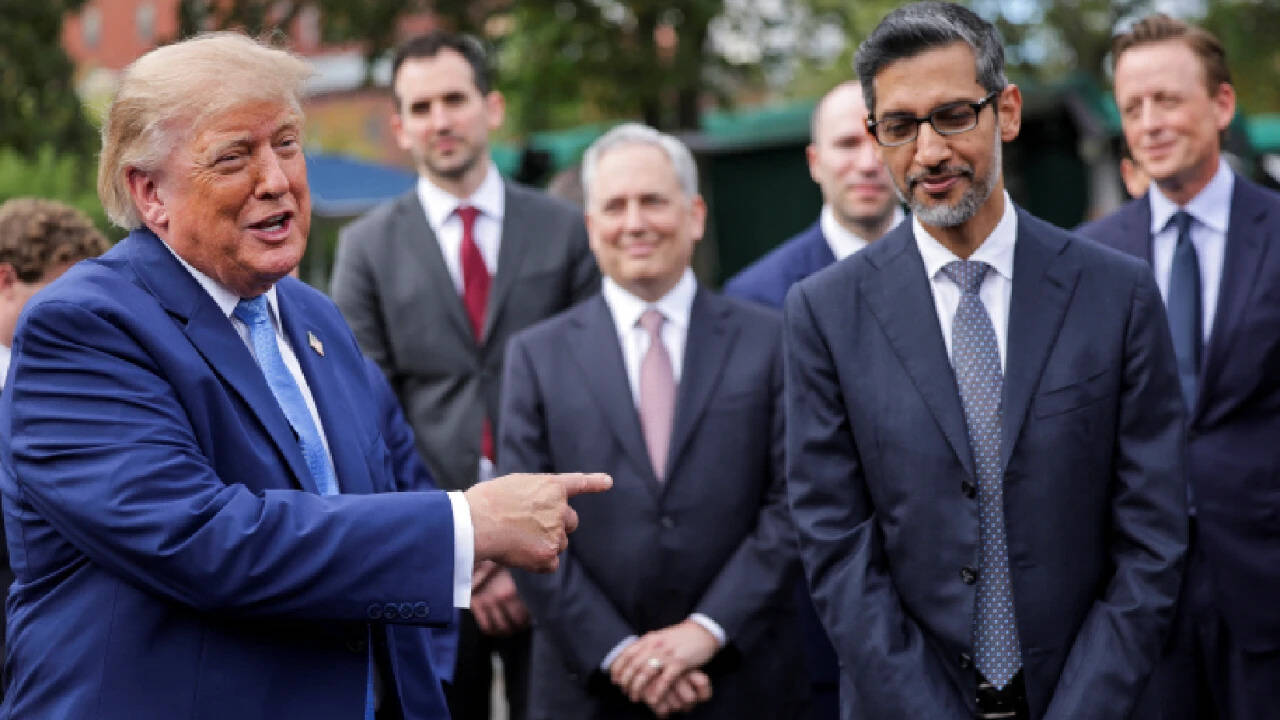
Google declined a proposal from Donald Trump seeking to rename an oceanic body after himself, choosing instead to enforce established global cartographic conventions, according to reporting detailed in a Times of India — Top Stories dispatch by Chidanand Rajghatta. The decision keeps Google Maps and its broader geospatial index aligned with multilateral geographical authorities rather than unilateral political requests.
Alphabet Chief Executive Officer Sundar Pichai upheld the platform's long-standing neutral policy regarding public geographical data. The move comes as global technology platforms face mounting scrutiny over how their search engines, algorithms, and digital maps handle politically charged demands.
For users in India and worldwide who rely on Google Maps for daily transit, commercial shipping, and aviation logistics, the tech giant's refusal preserves a single, internationally verified baseline of geographic names. Inconsistent naming conventions on consumer digital platforms would otherwise disrupt international navigation and create diplomatic confusion between sovereign governments.
Global Geographic Standards and International Bodies
Google Maps does not independently create or alter major maritime boundaries or the names of the world's oceans. Cartographic nomenclature across international waters relies primarily on consensus established by intergovernmental institutions, including the International Hydrographic Organization and the United Nations Group of Experts on Geographical Names.
These bodies govern naming procedures to prevent territorial disputes and maintain uniform navigation charts for commercial vessels and defense fleets. Private technology platforms operating mapping software routinely follow these recognized international consensus lists to prevent sovereign conflicts.
When sovereign nations or political figures seek unilateral changes to global waters, map providers risk legal penalties or regional bans if they deviate from established protocols. By turning down the proposal, Google avoided setting a precedent that could invite competing name changes from political leaders across Asia, Europe, and Latin America.
High-Stakes Tech Diplomacy in Washington
Pichai's cartographic decision reflects the delicate relationship between Silicon Valley leadership and American political leadership. During his presidency and subsequent campaigns, Donald Trump frequently challenged major American technology companies over content moderation, search result visibility, and perceived corporate bias.
Alphabet executives have repeatedly testified before the United States Congress regarding algorithmic transparency. As detailed in the Times of India Washington bureau reporting, Pichai has maintained a measured approach, prioritizing strict adherence to technical and bureaucratic rules to avoid accusations of partisanship.
Tech companies operating multi-billion-dollar global businesses must protect their credibility across hundreds of jurisdictions. Capitulating to non-standard geographic demands in one country inevitably sparks reciprocal demands from other world capitals, undermining the reliability of digital reference systems.
Digital Cartography and Geopolitical Sensitivity
Digital maps are not merely consumer convenience tools; they represent legal boundaries, exclusive economic zones, and maritime trade routes. In India, foreign digital map providers must strictly comply with the Geospatial Information Regulation framework, which penalizes incorrect representation of international borders, territorial waters, and sovereign lines of control.
Similar regulations exist across Southeast Asia and the Middle East, where competing maritime claims—such as those in the South China Sea and the Persian Gulf—remain perpetual flashpoints. In those regions, Google frequently displays localized boundary versions based on the viewer's IP address, balancing local statutory compliance against global cartographic neutrality.
When it comes to universal international waters such as the Atlantic, Pacific, Indian, Arctic, and Southern Oceans, no single nation possesses the unilateral authority to rename a basin. The refusal described by the Times of India international coverage demonstrates the guardrails technology platforms maintain against political intrusion into baseline geographic data.
Commercial maritime operations rely heavily on stable, standardized coordinates. Introducing vanity naming or politically motivated shifts to basic physical geography would complicate international maritime insurance, port entry filings, and cross-border shipping agreements.
Corporate Governance Under Sundar Pichai
Sundar Pichai, who grew up in Chennai, India, before rising through Alphabet's product management ranks to take the company's helm, has built a reputation for deliberate, rules-based administration. Throughout his tenure as CEO of Google and Alphabet, Pichai has steered the enterprise through antitrust lawsuits in the United States and the European Union, competition inquiries by the Competition Commission of India, and public disputes with foreign heads of state.
Pichai's handling of mapping inquiries shows how Alphabet uses documented governance guidelines as a shield against political pressure. When political figures demand bespoke exceptions to search indexes or public maps, Google relies on public product guidelines to deliver formal refusals.
This governance model protects the platform's multi-layered commercial ecosystem, which includes Google Cloud infrastructure contracts with foreign governments, international telecommunications cable systems running beneath the oceans, and software services delivered to billions of daily users.
Unresolved Pressures on Platform Neutrality
The episode leaves open the broader question of how digital platforms will navigate future demands from powerful political executives as digital cartography and physical reality become increasingly intertwined. With artificial intelligence models and search tools drawing directly from digital map databases, the integrity of underlying reference data remains vital.
Neither Google nor representatives for Donald Trump have announced any formal legal challenges or administrative filings regarding international maritime designations. For now, the world's oceans remain classified under the names ratified by international hydrographic treaties, with Google Maps maintaining its universal naming convention across all public versions.
Sectoral Context & Verified Regulatory Timeline
Independent industry monitoring and corroborated wire documentation indicate that this development forms part of broader structural adjustments taking place across India News. Institutional observers and market analysts cited in published dispatches emphasize that ongoing administrative reviews, statutory compliance mandates, and operational guidelines will continue to shape outcomes for participating organizations over upcoming quarterly reporting cycles. Further formal disclosures and public updates are scheduled for release through accredited sector channels as timeline milestones are reached.


