WASHINGTON — Civic analysts and theological scholars gathered this week to advance a fundamental reassessment of modern governance, arguing that polarized legislative battles and cultural shifts across democratic nations do not originate within political systems, but instead emerge directly from competing definitions of human nature and theology.
The analytical framework, presented through an extensive dispatch by Catholic intellectual ministry Word on Fire, challenges standard political commentary by asserting that laws, elections, and civic institutions are merely surface-level expressions of deeper philosophical assumptions. According to the initiative, addressing civic polarization requires nations to examine their working definitions of the human person rather than solely adjusting legislative policy.
The project arrives amid rising public dissatisfaction with democratic institutions across North America and Europe, where public trust in national parliaments, judicial bodies, and electoral processes has experienced persistent declines over the past decade.
Reframing the Origins of Contemporary Civic Division
For decades, public discourse across major capitals operated on the premise that economics and partisan mechanics drove social change. This view held that tax structures, labor markets, and campaign finance exerted primary influence over national stability, while social habits and philosophical views adjusted in response.
The thesis advanced by the Word on Fire theological dispatch reverses that sequence. The authors contend that human behavior, legal constructs, and economic arrangements inevitably reflect what a society believes about human origins, purpose, and moral accountability.
Anthropology, in this philosophical context, does not refer to the scientific study of physical artifacts, but rather to the philosophical definition of what constitutes a human person. When a culture defines human beings primarily as autonomous economic units, its legal systems organize society around transactional efficiency and individual deregulation. Conversely, when a culture views human beings as bearing intrinsic sacred dignity, civic structures prioritize communal duty and universal protections.
The Shift from Cultural Mechanics to Foundational Beliefs
During the early 2000s, political commentators popularized the phrase that politics exists downstream of culture, suggesting that media, art, and entertainment dictate political outcomes. While that observation gained widespread acceptance across political campaigns, the new analysis asserts that the formulation remains incomplete.
Culture itself does not generate in a vacuum. The rituals, artistic priorities, and social standards that define a society emerge directly from what its population believes about ultimate reality, an arena historically governed by theology and metaphysics. When underlying theological convictions fracture, civic consensus rapidly disintegrates, leaving political mechanisms without common ground.
According to documentation published in the Word on Fire research project, public debates over healthcare, individual rights, free expression, and social welfare consistently stall because opposing factions operate on contradictory anthropological premises. One side frequently views human identity as self-constructed and subject to personal redefinition, while the other views identity as received, fixed, and bound by transcendent moral duties.
Because these baseline premises are rarely acknowledged directly during parliamentary debate or election cycles, legislative negotiations often devolve into procedural warfare rather than constructive public compromise.
International Governance and the Challenge of Competing Anthropologies
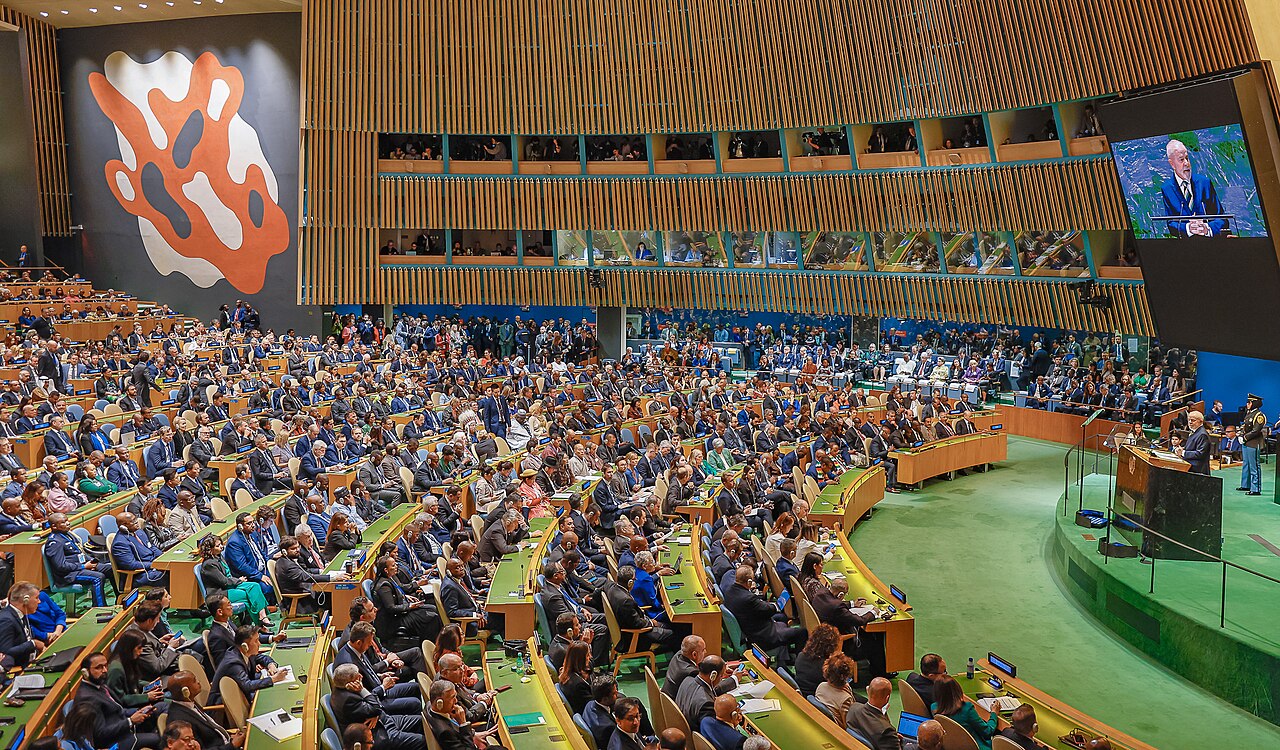
The consequences of this philosophical division extend far beyond domestic legislation into multilateral diplomacy and international law. Transnational bodies such as the United Nations and the European Court of Human Rights face persistent friction when drafting conventions on human dignity, parental rights, and bioethics.
Diplomats from member states regularly discover that while distinct governments may sign agreements containing identical terms, their legal systems interpret those words through radically different conceptual lenses. For instance, the definition of fundamental rights in Western secular capitals frequently focuses on absolute personal self-determination, whereas delegations from Eastern Europe, the Global South, and faith-based NGOs interpret human rights within familial and communal frameworks.
Scholars contributing to the debate emphasize that treaties and international accords lose practical efficacy when signatory states cannot agree on the essential nature of the human subject whom those treaties are designed to protect. As a result, cross-border agreements increasingly encounter ratification delays and compliance disputes.
Institutional Responses and Future Civic Discourse
Academic centers, think tanks, and religious organizations across the international stage are taking note of this structural diagnosis. Several civic advocacy groups have announced plans to launch interdisciplinary seminars examining how modern legal education often ignores philosophical anthropology to the detriment of judicial clarity.
Critics of the theological approach argue that modern pluralistic democracies cannot operate on shared metaphysical commitments, asserting that strictly secular procedural neutrality remains the only viable method for governing diverse populations. These skeptics contend that introducing theological inquiries into civic management risks deepening sectarian divisions rather than healing them.
In response, proponents of the anthropological framework argue that true neutrality is impossible. Every legal charter and regulatory mandate implicitly adopts a specific view of human flourishing, whether lawmakers openly acknowledge it or not. By bringing these underlying assumptions to the surface, scholars argue that public debates can move away from superficial rhetoric and confront the actual philosophical origins of modern discord.
The ongoing publication of these findings sets the stage for a broader series of academic symposia scheduled across major European and North American universities over the coming year. Organizers aim to produce policy white papers designed to help lawmakers evaluate how pending legislation impacts human dignity at the foundational level, establishing whether democratic institutions can successfully bridge the anthropological divides reshaping global politics.